
 Worksheets
Chemistry Part 1 Review
Total questions: 82
Worksheet time: 57mins
Name
Class
Date
1.
The phase of matter with a definite volume but indefinite shape is a
a)
solid
b)
liquid
c)
gas
2.
The phase of matter with a definite shape and volume is a
a)
solid
b)
liquid
c)
gas
3.
Gases have a...
a)
definite shape and volume
b)
indefinite shape and volume
c)
definite shape and indefinite volume
4.
What best describes the motion of atoms in a solid?
a)
vibrating slowly in place
b)
sliding past each other
c)
moving rapidly in all directions
5.
Adding heat energy causes the atoms to...
a)
move slower
b)
move faster
c)
get bigger
d)
get smaller
6.
Removing heat energy (cooling) causes the atoms to
a)
spread apart
b)
move closer together
c)
get larger
d)
get smaller
7.

Which phase of matter is represented by the atoms in this diagram?
a)
solid
b)
liquid
c)
gas
8.
The phase of matter in which the atoms are moving the fastest is
a)
solid
b)
liquid
c)
gas
9.

Which phase of matter is represented by the atoms in this diagram?
a)
solid
b)
liquid
c)
gas
10.

The water droplets on this glass of water is showing the following phase change
a)
melting
b)
evaporation
c)
freezing
d)
condensation
11.

The water leaving the ocean in the water cycle is representing this phase change
a)
melting
b)
evaporation
c)
freezing
d)
condensation
12.

What phase change is represented by the dry ice in this picture?
a)
evaporation
b)
condensation
c)
sublimation
d)
melting
13.
What two phase changes require heat energy to be absorbed?
a)
melting and freezing
b)
melting and boiling
c)
freezing and boiling
d)
freezing and condensation
14.
What phase change occurs due to a release of heat energy?
a)
melting
b)
condensation
c)
evaporation
d)
boiling
15.

What section of the phase change graph would you find a solid being heated?
a)
A-B
b)
B-C
c)
C-D
d)
D-E
16.
What section of the phase change graph would you find a liquid being heated?
a)
A-B
b)
B-C
c)
C-D
d)
D-E
17.
What section of the phase change graph would you find a gas being heated?
a)
A-B
b)
C-D
c)
D-E
d)
E-F
18.

According to this graph, what is the melting point temperature of this substance? (in degrees)
a)
40
b)
70
c)
100
d)
140
19.
According to this graph, what is the boiling point temperature of this substance? (in degrees)
a)
40
b)
70
c)
100
d)
140
20.
What happens to the temperature while a substance is changing phase?
a)
increases
b)
decreases
c)
stays the same
21.
To change a solid to a liquid, what do you add?
a)
heat
b)
water
c)
cold
d)
mass
22.

This picture is an example of a ____________.
a)
solid
b)
liquid
c)
gas
d)
plasma
23.

This is an example of a _________.
a)
solid
b)
liquid
c)
gas
d)
plasma
24.
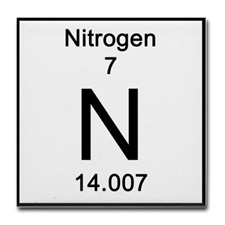
What is the number of protons that the element in this image contain?
a)
14
b)
7
c)
15
d)
18
25.

What is the atomic mass of "F"
a)
9
b)
18
c)
17
d)
19
26.
all matter is made of what
a)
energy
b)
atoms
c)
electrons
d)
compounds
27.
The positive particles of an atom are
a)
electrons
b)
positrons
c)
neutrons
d)
protons
28.
the central region of an atom where its neutrons and protons are is its
a)
nucleus
b)
electron cloud
c)
core
d)
center
29.
an atom with atomic number 6 would have how many protons
a)
6
b)
12
c)
3
d)
cannot be determined
30.
Particles in an atom that are neutral and have no charge are
a)
negatrons
b)
electrons
c)
neutrons
d)
protons
31.
An atoms overall charge is
a)
positive
b)
depends on its mood
c)
neutral
d)
negative
32.
Which of the following is a negatively charged subatomic particle?
a)
Electron
b)
Proton
c)
Neutron
d)
Quark
33.
The particles that are found in the nucleus of an atom are
a)
neutrons and electrons
b)
electrons only
c)
protons and neutrons
d)
protons and electrons
34.
electrons have this type of charge?
a)
negative
b)
positive
c)
neutral
35.
"C" is the element symbol for which element?
a)
calcium
b)
carbon
c)
chlorine
d)
cadmium
36.
What is the atomic symbol for sodium?
a)
Na
b)
So
c)
NaCl
d)
S
37.
What is the atomic number for an element with three protons?
a)
2
b)
1
c)
3
d)
6
38.
Most of the mass in an atom is concentrated in the...
a)
electrons
b)
nucleus
c)
protons
d)
empty space
39.
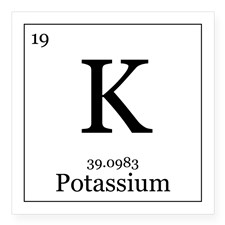
How many neutron are in the atom "K"?
a)
7
b)
2
c)
39
d)
12
40.

What is the number of protons that the element in this image contain?
a)
14
b)
7
c)
15
d)
18
41.

What does the 1.00794 stand for?
a)
Hydrogen
b)
atomic number
c)
atomic mass
d)
atomic explosion
42.
What is the mass number?
a)
the number of protons
b)
the number of protons and neutrons
c)
the number of neutrons
d)
the number of protons and electrons
43.
What is the chemical symbol for Chlorine
a)
C
b)
Cl
c)
Ch
d)
Ce
44.
What element contains 26 protons?
a)
Iron
b)
Sodium
c)
Aluminum
d)
Helium
45.
What kind of properties can only be observed when a substance changes into a different substance?
a)
physical properties
b)
chemical properties
c)
liquid properties
d)
real properties
46.
Which of the following is a sign that a chemical reaction has occurred?
a)
change in shape
b)
melting
c)
formation of a gas
d)
dissolving
47.
Is hammering wood together to build a house a chemical or physical change?
a)
chemical
b)
physical
48.
Is melting butter for popcorn a chemical or physical change?
a)
chemical
b)
physical
49.
Is bleaching your hair a physical or chemical change?
a)
physical
b)
chemical
50.

Is burning wood a chemical or physical change?
a)
chemical
b)
physical
51.
A change in the size, shape, or state of matter.
a)
chemical change
b)
physical change
c)
chemical reaction
d)
electron change
52.
Which of the following is NOT an example of a physical change?
a)
crumpled paper
b)
pencil sharpening
c)
shrunken clothing
d)
sour milk
53.

Photosynthesis is an example of a
a)
physical change
b)
chemical change
54.
Adding baking soda and vinegar together and it fizzes and creates carbon dioxide.
a)
Chemical
b)
Physical
55.
Which is a Chemical property?
a)
Thermal Conductivity
b)
Density
c)
Malleability
d)
Flammability
56.
Which of the following is a chemical property of water?
a)
Reacts with pure sodium.
b)
Boils at 100 oC.
c)
Dissolves sugar easily.
d)
Has a density of 1 gm/mL
57.
One cup of water is left outside for two days when it was checked there was only half a cup left. What happened?
a)
evaporation; chemical change
b)
condensation; physical change
c)
evaporation; physical change
d)
condensation; chemical change
58.
Which of these grouping of elements could have the characteristic of luster (shiny)?
a)
Metal
b)
Nonmetal
c)
metalloids
d)
Both metals and metalloids
59.
Which of these grouping of elements could have the characteristic of brittle?
a)
Metal
b)
Nonmetal
60.
Which of the following is a good conductor of heat?
a)
Metal
b)
Nonmetal
c)
Metalloid
61.
Which of these is a property of metals?
a)
It's malleable
b)
It can't conduct electricity
c)
They are used in food
d)
It's very brittle
62.
One property of a nonmetals is that it is a good conductor of electricity?
a)
true
b)
false
63.
All of the following would classify an element as a metal except?
a)
Dull
b)
Luster
c)
Malleable
d)
Hard
64.

What are the columns (up and down) on the Periodic Table?
a)
Non-metals
b)
Metals
c)
Periods
d)
Groups
65.
Which of the following properties refers to the ability of metals to be drawn into wires?
a)
A. malleability
b)
B. compressibility
c)
C. ductility
d)
D. luster
66.
Which of the following property of metal can reflect light
a)
A. malleability
b)
B. compressibility
c)
C. ductility
d)
D. luster
67.
If a substance breaks easily, it is said to be ________________.
a)
A. Magnetic
b)
B. Brittle
c)
C. Conductive
d)
D. Ductile
68.
Metals appear to the _______ of the dark ziz-zag line on the periodic table.
a)
A. right
b)
B. middle
c)
C. left
69.
Nonmetals occur to the ________of the dark zig-zag on the periodic table.
a)
A. right
b)
B. middle
c)
C. left
70.
What element in Group 1 is not a metal but a nonmetal?
a)
Helium
b)
Lithium
c)
Hydrogen
d)
Oxygen
71.
Silicon is a semiconductor and has properties of both metals and nonmetals. What type of element is Silicon?
a)
Metal
b)
Nonmetal
c)
Metalloid
d)
Pretty
72.
A pure substance that cannot be broken down into anything simpler is a/an-
a)
atom
b)
element
c)
cell
d)
compound
73.

The period for Bromine is ___________.
a)
3
b)
2
c)
4
74.

Beryllium is in group number______.
a)
Group 2
b)
Group 3
c)
Group 4
d)
Group 7
75.
The periodic table has __ periods.
a)
18
b)
8
c)
2
d)
7
76.
What period and group is Silver (Ag)?
a)
Period 2, Group 1
b)
Period 3, Group 16
c)
Period 5, Group 11
d)
Period 2, 14
77.

Which terms can be used to describe the group?
a)
Transition Metals
b)
Post Transition Metals
c)
Non Metals
d)
Metaloids
78.
Elements in a ..................have similar chemical properties.
a)
period
b)
group
c)
row
79.
What element is in Group 2, Period 4?
a)
Ca (calcium)
b)
Br (bromine)
c)
Be (beryllium)
d)
He (helium)
80.
What element is in Group 8, Period 1?
a)
Ar (argon)
b)
H (Hydrogen)
c)
Be (beryllium)
d)
He (helium)
81.
What element is in Group 5, Period 6?
a)
Ca (calcium)
b)
Bi (bismuth)
c)
P (phosphorus)
d)
C (carbon)
82.

What are the rows (left to right) on the Periodic Table?
a)
Non-metals
b)
Metals
c)
Periods
d)
Groups
100 %

