
 Worksheets
CHemIStry PTE Review
Total questions: 80
Worksheet time: 2hrs 44mins
Name
Class
Date
1.

The horizontal row on the periodic table is called a
a)
group
b)
family
c)
period
d)
atomic number
2.

A vertical column is called...
a)
group
b)
tower
c)
period
d)
crew
3.

Which of the following is the most metallic element in period 3?
a)
Boron (B)
b)
Sodium (Na)
c)
Argon (Ar)
d)
Silicon (Si)
4.

Which of these element is the least metallic?
a)
Potassium (K)
b)
Carbon (C)
c)
Sulfur (S)
d)
Neon (Ne)
5.
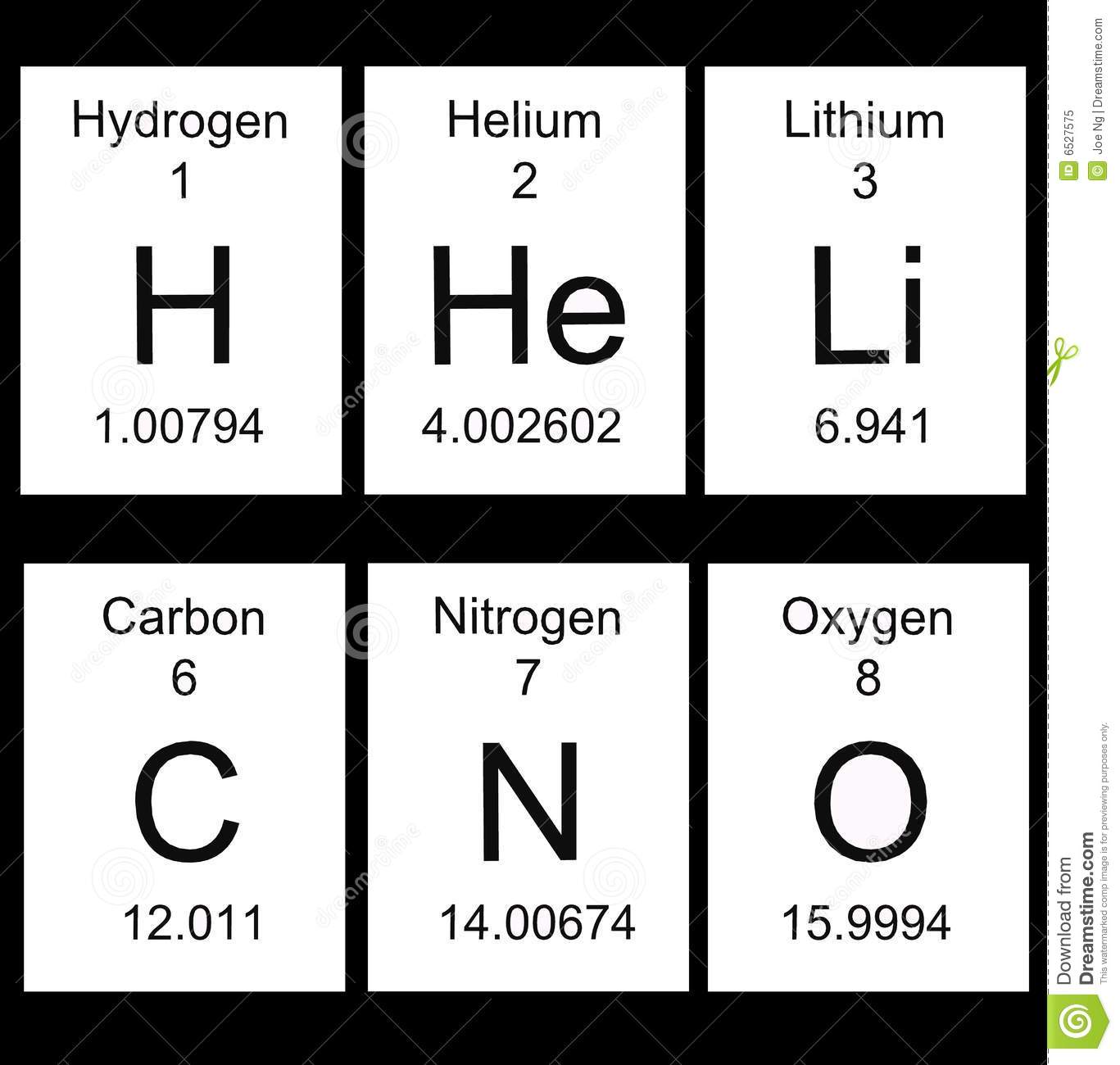
The number at the bottom of each square on the periodic table is the ...
a)
atomic number
b)
atomic mass
c)
chemical symbol
d)
element name
6.
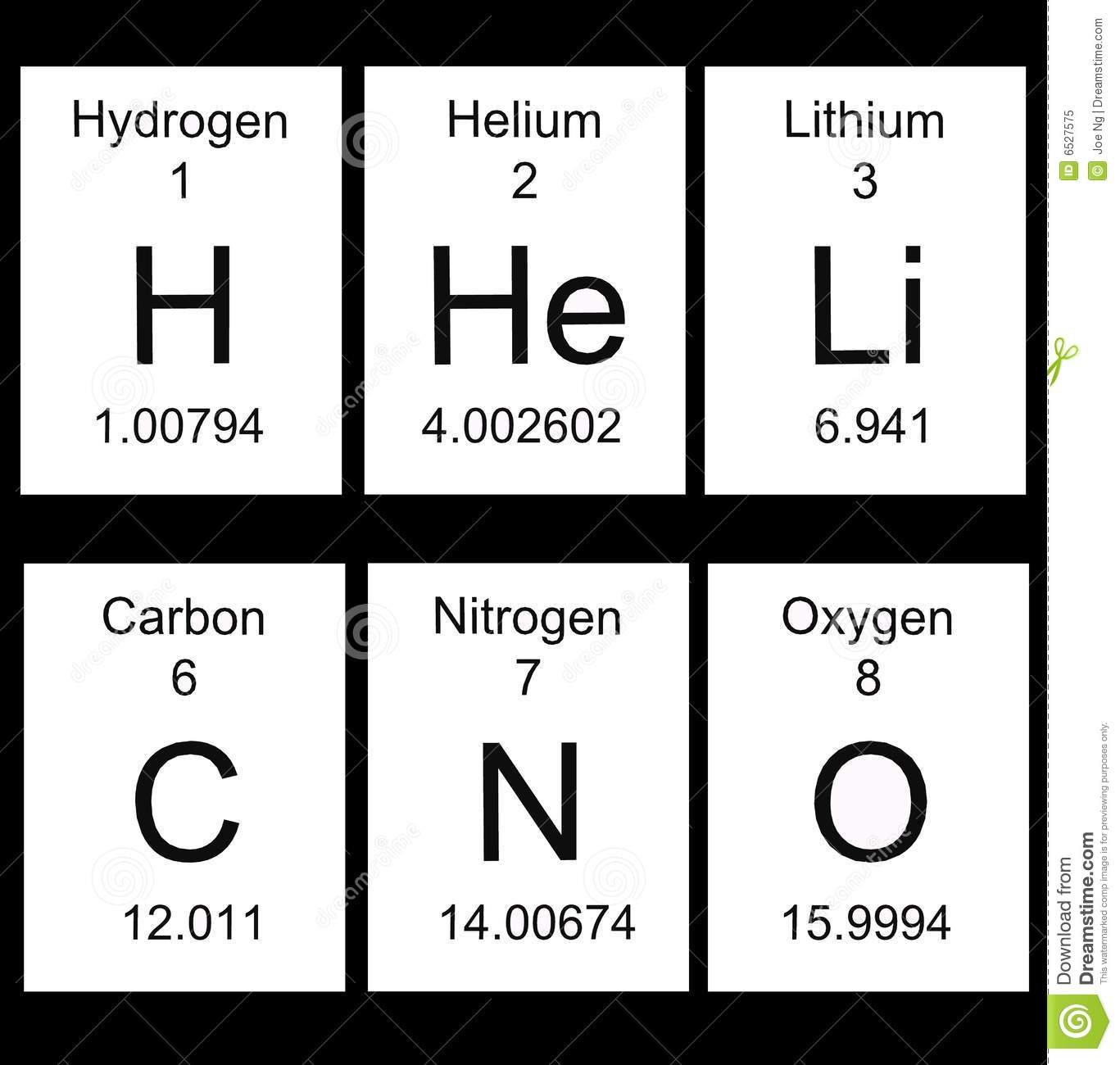
The number at the top of each square on the periodic table is the ...
a)
atomic number
b)
atomic mass
c)
Chemical Symbol
d)
Element Name
7.
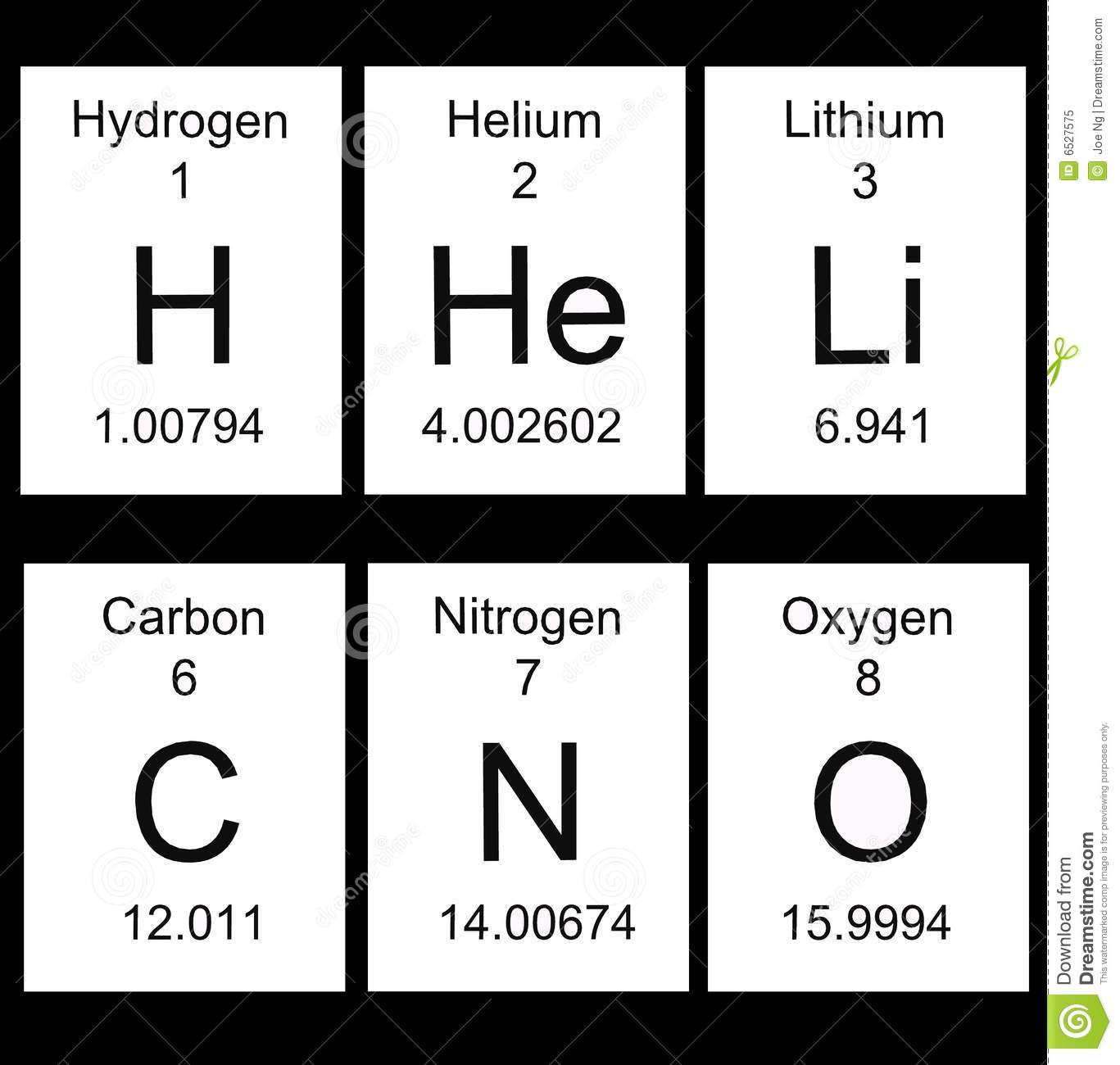
What is the chemical symbol for Lithium?
a)
H
b)
He
c)
Li
d)
N
8.

All of the actinides are ___________.
a)
stable
b)
radioactive
c)
shiny
d)
named after scientists
9.

Most of the elements on the periodic table are classified as _____.
a)
Metals
b)
Nonmetals
c)
Metalloids
d)
Periods
10.
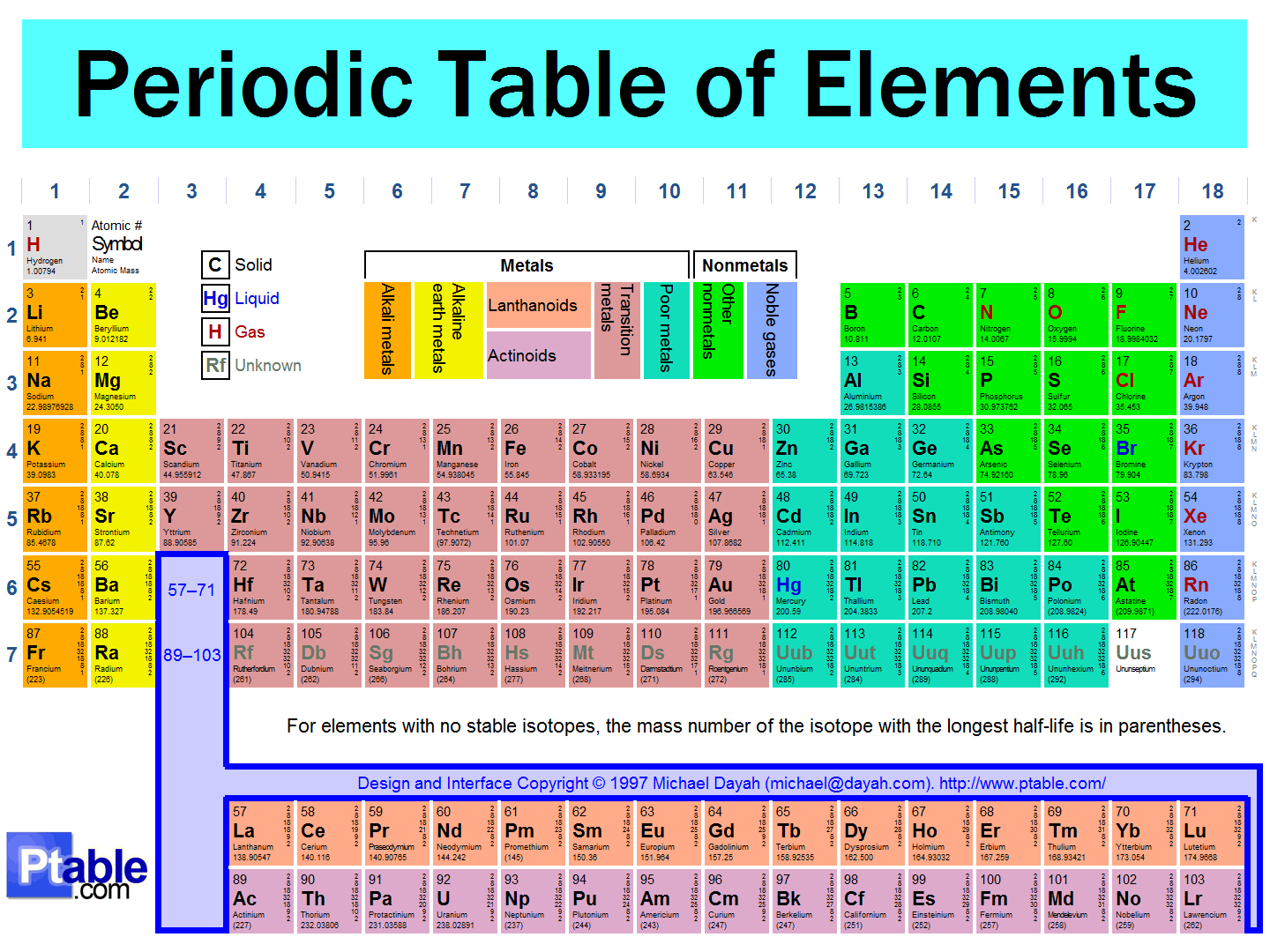
This class of elements are sometimes called "semiconductors."
a)
Metals
b)
Nonmetals
c)
Metalloids
d)
Groups
11.
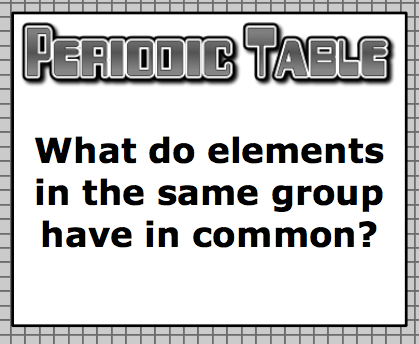
a)
energy levels
b)
valence electrons
c)
protons
d)
neutrons
12.
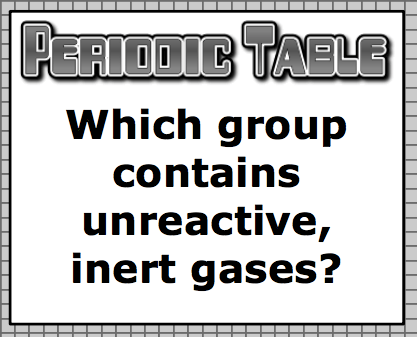
a)
Group 1
b)
Group 17
c)
Group 2
d)
Group 18
13.
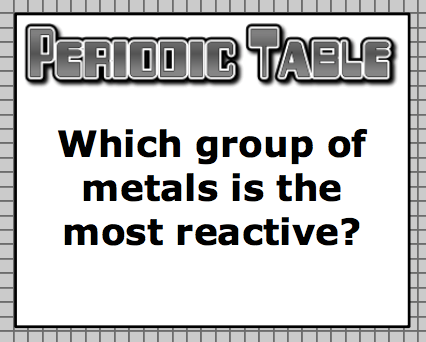
a)
Group 1
b)
Group 17
c)
Group 18
d)
Group 2
14.
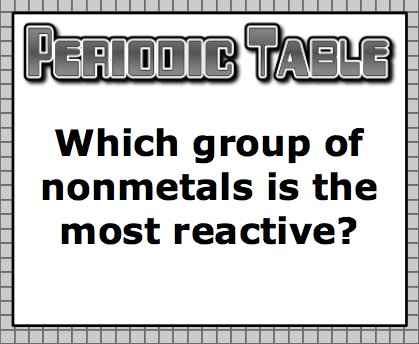
a)
Group 1
b)
Group 17
c)
Group 18
d)
Group 2
15.
A ___________ is an arrangement of elements in columns
a)
columns
b)
rows
c)
periodic table
d)
electron shell
16.
Each column in the periodic table is called a
a)
period
b)
group
c)
cluster
d)
unit
17.
The atomic number tells you what?
a)
number of electrons
b)
number of protons
c)
number of neutrons
d)
both electrons and protons in an atom.
18.
Which group of the periodic table is composed of inert (not reactive) gases?
a)
alkali metals
b)
alkaline earth metals
c)
halogens
d)
noble gases
19.
Which element is not a metal?
a)
W
b)
Re
c)
Al
d)
B
20.

The atoms along the staircase are called
a)
metals
b)
nonmetals
c)
metalloids
d)
noble gases
21.
Which is a halogen?
a)
Helium
b)
Chlorine
c)
Oxygen
d)
Neptune
22.
Which is an alkali metal?
a)
Magnesium
b)
Iron
c)
Sodium
d)
Europium
23.
A horizontal row of elements in the periodic table.
a)
column
b)
group
c)
period
24.
A vertical column in the periodic table. Elements share similar properties.
a)
row
b)
group
c)
period
25.
Elements in a ..................have similar chemical properties.
a)
period
b)
group
c)
row
26.
A neutron has a charge of
a)
+2
b)
No charge
c)
-1
d)
+1
27.
Which of the following will have a larger radius than Zinc?
a)
Gallium
b)
Aluminum
c)
Magnesium
d)
Strontium
28.
Which of the following will have a higher electronegativity than arsenic (As)?
a)
Carbon (C)
b)
Neon (Ne)
c)
Antimony (Sb)
d)
Germanium (Ge)
29.
Which of the following will have a lower ionization energy than Scandium (Sc)?
a)
Helium (He)
b)
Titanium (Ti)
c)
Calcium (Ca)
d)
Magnesium (Mg)
30.
As atoms of elements in group 16 are considered in order from top to bottom, the electronegativity of each successive element....
a)
decreases
b)
increases
c)
remains the same
d)
none of the above
31.
As you move down the periodic table atoms get bigger. This is because ____________.
a)
The atoms have more mass.
b)
The atoms have more protons.
c)
The atoms have more energy levels
d)
The atoms have more neutrons
32.
As you move across the periodic table atoms tend to get smaller because, ______________.
a)
the atoms have more mass.
b)
the atoms have less mass
c)
the atoms have more protons.
d)
the atoms have less electrons.
33.
Electronegativity is...
a)
the ability of an atom to attract/ accept electrons
b)
the ability of an atom to lose electrons
c)
the energy required to remove an electron from a specific atom
d)
how easy it is to make friends.
34.
Ionization energy is...
a)
the energy required to add an electron to a specific atom
b)
how much energy it takes to remove an electron from an atom
c)
the energy required to shield the outer electrons from the nucleus
d)
a measure of the ability of an atom to attract electrons
35.
The atom with the largest atomic radius in Group 18 is -
a)
Ar
b)
He
c)
Kr
d)
Rn
36.
Metals have the largest -
a)
atomic radius and electronegativity
b)
electronegativity and ionization energy
c)
atomic radius only
d)
ionization energy and atomic radius
37.
Which statement correctly and completely identifies a trend?
a)
Atomic radius decreases across a period and increases down a group.
b)
Electronegativity decreases across a period and decreases down a group.
c)
Ionization energy increases across a period and increases down a group.
d)
Ionic radius increases across a period and increases down a group.
38.
Electronegativity __________ from left to right within a period and __________ from top to bottom within a group.
a)
decreases, increases
b)
increases, increases
c)
increases, decreases
d)
stays the same, increases
39.
Atomic radius generally increases as we move __________.
a)
down a group and from right to left across a period
b)
up a group and from left to right across a period
c)
down a group and from left to right across a period
d)
up a group and from right to left across a period
40.
A negatively charged subatomic particle that exists in various energy levels outside the nucleus of an atom
a)
neutron
b)
electron
c)
proton
d)
subatomic particle
41.
The chart scientists use to organize and classify all the known elements
a)
elements chart
b)
the chart
c)
Periodic Table of the Elements
d)
Period table
42.

How many electrons does Si contain? (click to see image)
a)
14
b)
28
c)
2
d)
4
43.

What atom is represented here?
a)
Carbon
b)
Nitrogen
c)
Oxygen
d)
Fluorine
44.

How many valence electrons are represented here?
a)
7
b)
5
c)
2
d)
8
45.

Where are the metalloids / semimetals located on the periodic table?
a)
Blue
b)
Red
c)
Green
46.
How many unpaired electrons would lithium have?
a)
1
b)
2
c)
3
d)
0
47.
How many sig figs are there?
100.00
100.00
a)
1
b)
3
c)
4
d)
5
48.
How many sig figs are there?
100000000
100000000
a)
1
b)
9
c)
10
49.
How many sig figs are there?
4004
4004
a)
1
b)
2
c)
3
d)
4
50.
How many sig figs are there?
0.000008
0.000008
a)
1
b)
2
c)
6
d)
7
51.
What is 0.658 rounded to 1 significant figure?
a)
0
b)
0.66
c)
0.7
d)
0.658
52.
Metalloids have ___________________
a)
Only properties of a metal
b)
Only properties of a non-metal
c)
Can have properties of both metals and non-metals
53.
Which particles make up the nucleus of an atom?
a)
protons and neutrons
b)
electrons and protons
c)
electrons, protons, and neutrons
d)
electrons and neutrons
54.

Which letter represents a neutron?
a)
A
b)
B
c)
C
d)
D
55.
Which letter represents an electron?
a)
A
b)
B
c)
C
d)
D
56.
Which letter represents the nucleus?
a)
A
b)
B
c)
D
d)
E
57.

In this picture, the Electrons are found in which color?
a)
Blue
b)
Red
c)
Green
58.

How many neutrons are in a Gold atom?
a)
79
b)
196
c)
118
d)
275
59.

What does the 1.00794 stand for?
a)
Hydrogen
b)
atomic number
c)
atomic mass
d)
atomic explosion
60.
The subatomic particle with a negative charge is the
a)
electron
b)
proton
c)
neutron
d)
nucleus
61.
What is the atomic mass equal to?
a)
the number of protons
b)
the number of protons and neutrons
c)
the number of neutrons
d)
the number of protons and electrons
62.
In the modern periodic table elements are arranged by:
a)
atomic mass
b)
atomic number
c)
valence electrons
d)
number of isotopes
63.
Which process produces alpha particles?
a)
Alpha decay
b)
Beta decay
c)
Gamma decay
d)
Nuclear fusion
64.
Which process produces beta particles?
a)
Alpha decay
b)
Beta decay
c)
Gamma decay
d)
Nuclear fusion
65.
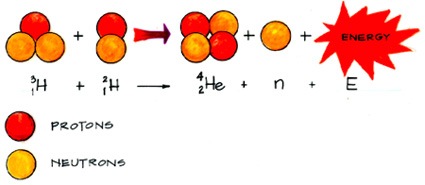
Which process involves the joining of small nuclei?
a)
Beta decay
b)
Alpha decay
c)
Nuclear fission
d)
Nuclear fusion
66.

Which process involves the splitting of large nuclei?
a)
Beta decay
b)
Alpha decay
c)
Nuclear fission
d)
Nuclear fusion
67.

Arrange in order of increasing ability to penetrate matter.
a)
Beta, gamma, alpha
b)
Alpha, gamma, beta
c)
Gamma, beta, alpha
d)
Alpha, beta, gamma
68.
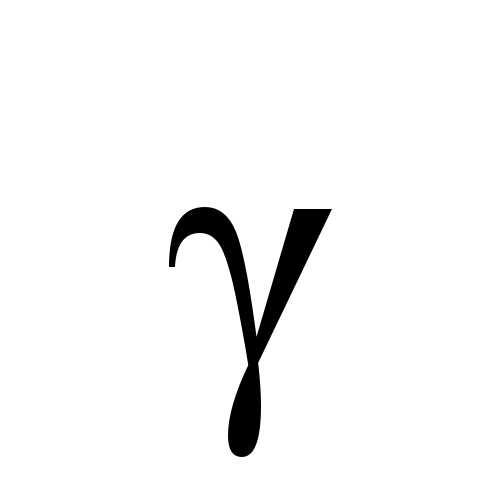
Has the symbol
a)
Alpha
b)
Beta
c)
Gamma
d)
electron
69.

Has the symbol
a)
Alpha
b)
Beta
c)
Gamma
d)
proton
70.
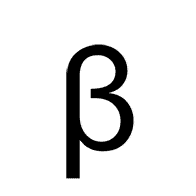
Has the symbol
a)
Alpha
b)
Beta
c)
Gamma
d)
neutron
71.

In order of most to least penetrating radiation we have
a)
Alpha , Beta, Gamma
b)
Beta , Gamma , Alpha
c)
Gamma, Beta, Alpha
d)
Gamma, Alpha, Beta
72.
Has a mass of 4 and a charge of +2
a)
Alpha
b)
Beta
c)
Gamma
d)
neutron
73.
What two colors are the cat's hat in "The Cat in the Hat"?
a)
Red and White
b)
Red and Blue
c)
Blue and White
d)
White and Black
74.

How many days are in August?
a)
28
b)
30
c)
31
d)
912
75.
How many colors are in a rainbow?
a)
5
b)
6
c)
7
d)
8
76.
Name Batman’s crime fighting partner
a)
Robin
b)
Bat Mobile
c)
Bruce Wayne
d)
Spider Man
77.
Who does the animated character Princess Fiona marry?
a)
Shrek
b)
Donkey
c)
Prince Charming
d)
Prince Phillip
78.
Who was the 16th president of the United States?
a)
Barack Obama
b)
Abraham Lincoln
c)
Thomas Jefferson
d)
George Washington
79.
Where did the Olympic Games originate?
a)
Greece
b)
USA
c)
Canada
d)
Germany
80.
Finding Nemo was a story of a father trying to find his son. The sequel came out and it was titled
a)
Finding Nemo again
b)
Finding Merlin
c)
Finding Water
d)
Finding Dory
100 %

