
 Worksheets
Chemistry 2020 Unit 7
Total questions: 75
Worksheet time: 2hrs 35mins
Na1+ F1-
K1+ S2-
Al3+ O2-
Is the following compound ionic or covalent?
LiBr
Ionic
Covalent
Is the following compound ionic or covalent?
PBr5
Ionic
Covalent
Is the following compound ionic or covalent?
Cl2
Ionic
Covalent
Is the following compound ionic or covalent?
Cu(NO3)2
Ionic
Covalent
Is the following compound ionic or covalent?
A material that forms a crystal lattice
Ionic
Covalent
Is the following compound ionic or covalent?
BaI2
Ionic
Covalent
Is the following compound ionic or covalent?
Ag2O
Ionic
Covalent
Is the following compound ionic or covalent?
A material that LOSES and GAINS electrons
Ionic
Covalent
Is the following compound ionic or covalent?
A material that contains two nonmetals
Ionic
Covalent
Is the following compound ionic or covalent?
A material that contains a metal and a nonmetal
Ionic
Covalent
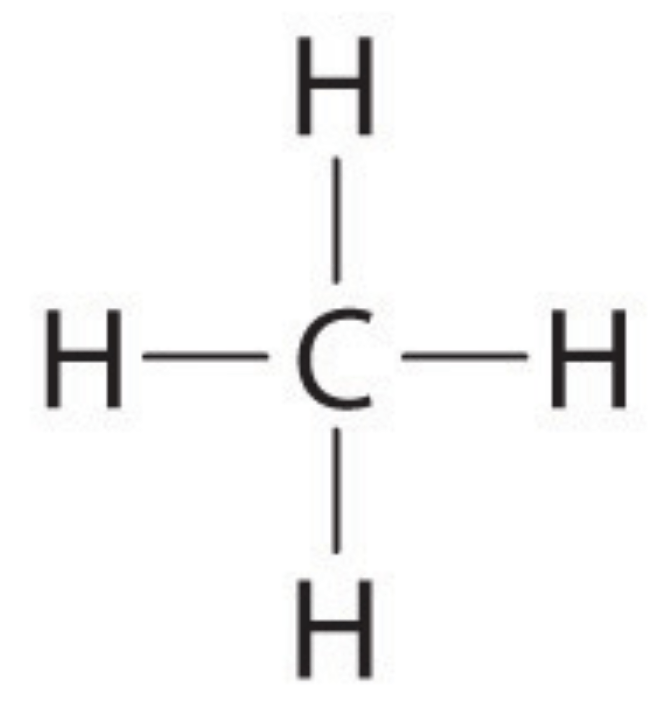
Classify the following molecule.
polar
nonpolar

Classify the following molecule.
polar
nonpolar

Is the following molecule polar or nonpolar?
polar
nonpolar
Electronegativity is a measurement of the ability of a nucleus to:
attract bonding electrons
attract other nuclei
attract electrons in the non-valence energy levels
Which substance contains particles held together by metallic bonds?
Ne (g)
Ni (s)
Cl2 (g)
N2 (s)
Which element consists of positive ions immersed in a “sea” of mobile electrons?
Magnessium
Bromine
Iodine
Argon
Element X is in Group 2 and element Y is in Group 17. What happens when a compound is formed between these two atoms?
X gains electrons from Y to form a covalent bond.
X gains electrons from Y to form an ionic bond.
X loses electrons to Y to form a covalent bond.
X loses electrons to Y to form an ionic bond.
The ability to conduct electricity in the solid state is a characteristic of metallic bonding. This characteristic is best explained by the presence of
mobile protons
high ionization energy
Mobile electrons
high electronegativity
What is the maximum number of covalent bonds that a carbon atom can form?
3
2
4
1
The = in the bond O=O represents how many shared electrons?
6
2
4
3
How many bonds are between a single hydrogen and oxygen in H2O?
1
3
2
4
What is the basis of a metallic bond?
the attraction of neutral metal atoms.
the attraction between protons and neutrons.
the attraction between positive metal ions and interlocking electrons.
the attraction between positive metal ions and free moving electrons.
Electrons that are free to move in metals are called (a) electrons
Why do metals conduct electricity?
They are shiny
The electrons are delocalized and able to move
The electrons are held tightly within the lattice
The electrons are shared between two metal ions
Which of these are considered properties of metals? (choose ALL that apply)
brittleness
low melting point
luster (shininess)
malleability
ductility


How many electrons are being shared in the triple bond of N2?
2
3
4
6
Four electrons are shared between two atoms

This is a correct dot diagram for nitrogen (N)
true
false



A metallic bond is a bond between ________.
nonmetals
metals
transition metals
metalloids
Which of the following is NOT a property of metals?
Hard
Can conduct electricity in solid form
Very brittle (breaks easily)
Malleable (can bend without breaking)

Intermolecular forces for: NH3
Dispersion Force
Dipole dipole
Hydrogen bonding

