
 Worksheets
Gas laws and kinetic theory of matter
Total questions: 147
Worksheet time: 5hrs 50mins
For a gas, which pair of variables are inversely proportional to each other (if all other conditions remain constant)?
P, T
P, V
V, T
n, P
A sample of oxygen occupies 47.2 liters under a pressure of 1240 Pa at 25oC. What volume would it occupy at 25oC if the pressure were decreased to 730 Pa?
27.8L
29.3L
80.2L
47.8L
A sample of nitrogen occupies 5.50 liters under a pressure of 900 Pa at 25oC. At what temperature will it occupy 10.0 liters at the same pressure?
49 0C
269 0C
-109 0C
54 0C

If the pressure of a gas starts out at 200kPa and increases to 600kPa, what would the initial temperature be if it ended up at 300K?
50K
200K
400K
100K
When a cold tyre is inflated to a certain pressure and then is warmed up due to friction with the road, the pressure increases. This happens because the
air molecules hit the walls of the tire less frequently
rubber in the tires reacts with oxygen in the atmosphere
air molecules speed up and collide with the tire walls more often
air molecules diffuse rapidly through the walls of the tire.
Gas pressure is caused by
Molecules colliding with each other
Molecules condensing to a liquid
Molecules colliding with the walls of containers
Barometers
When you push down on a bike tyre, you feel resistance because
The kinetic energy of the particles increases so the temperature increases
The kinetic energy of the particles increases so the pressure increases
The volume has increased so the pressure increases
The volume has decreased so the pressure increases
At 20oC, the same volume of helium and hydrogen gas will have
the same average kinetic energy
the same kinetic energy for all particles
different kinetic energy as they weigh different amounts
different kinetic energy as the particles are different sizes

According to the kinetic theory of gases, gas particles
Do not always move in straight lines
Have most their volume occupied by empty space
Attract each other
Do not always move randomly
The kinetic energy of a gas is dependent on temperature
True
False
Energy is lost when particles collide with each other or the walls of the container
True
False
When a balloon filled with air is placed in the freezer, the balloon will
Expand
Shrink
Stay the same size but decrease in temperature
Stay the same size and temperature

Phase refers to
The temperature of a substance
amount of energy a substance has
particles that make up a substance
the state of a substance
While the temperature increases
Particles move slower
Particles move faster
The phase changes
None of the above
Water
freezes at 0°C
boils at 99°C
will melt and freeze at different temperatures
can melt and warm up at the same time
The temperature and phase can change at the same time
True
False
If it's 15°C outside, a pile of snow outside will have a temperature of
15°C
0°C
just above 0°C
just below 8°C

This heat curve shows
a sample decreasing in temperature
a sample increasing in temperature
a phase change
more than one of the above

In this heat curve
water would be warming up
water would be losing energy
water is gaining energy
water is changing phase
Which heat curve would be an example of rain falling to the ground and then freezing


Given this heat curve for a sample of water, which of the following is NOT true?
The sample changed phase
This sample had a temperature decrease
This sample condensed (gas turned into liquid)
This sample froze


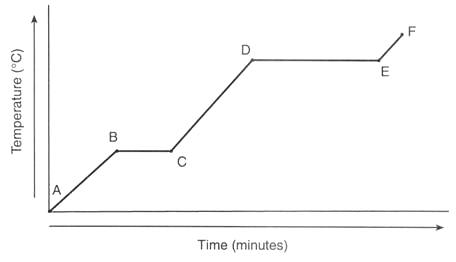

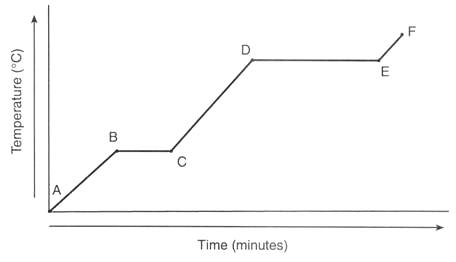

This type of graph is called a:
Phase diagram
Heat curve
State of matter
Temperature chart
Eth stands for
Temperature
Phase Energy
Thermal Energy
The Energy
Phase change going from Liquid to Solid...
Melting
Freezing
Condensation
Sublimation
Phase change going from a Solid to a Liquid...
Freezing
Condensation
Melting
Sublimation
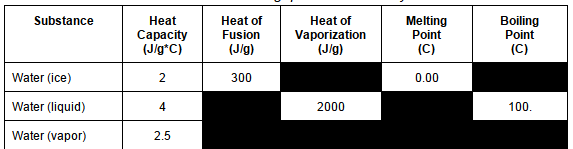


Which one will have the SMALLEST change in temperature?
For a gas, which pair of variables are inversely proportional to each other (if all other conditions remain constant)?
P, T
P, V
V, T
n, P
A sample of oxygen occupies 47.2 liters under a pressure of 1240 Pa at 25oC. What volume would it occupy at 25oC if the pressure were decreased to 730 Pa?
27.8L
29.3L
80.2L
47.8L
A sample of nitrogen occupies 5.50 liters under a pressure of 900 Pa at 25oC. At what temperature will it occupy 10.0 liters at the same pressure?
49 0C
269 0C
-109 0C
54 0C
If the pressure of a gas starts out at 200kPa and increases to 600kPa, what would the initial temperature be if it ended up at 300K?
50K
200K
400K
100K
When a cold tyre is inflated to a certain pressure and then is warmed up due to friction with the road, the pressure increases. This happens because the
air molecules hit the walls of the tire less frequently
rubber in the tires reacts with oxygen in the atmosphere
air molecules speed up and collide with the tire walls more often
air molecules diffuse rapidly through the walls of the tire.
Gas pressure is caused by
Molecules colliding with each other
Molecules condensing to a liquid
Molecules colliding with the walls of containers
Barometers
When you push down on a bike tyre, you feel resistance because
The kinetic energy of the particles increases so the temperature increases
The kinetic energy of the particles increases so the pressure increases
The volume has increased so the pressure increases
The volume has decreased so the pressure increases
At 20oC, the same volume of helium and hydrogen gas will have
the same average kinetic energy
the same kinetic energy for all particles
different kinetic energy as they weigh different amounts
different kinetic energy as the particles are different sizes
According to the kinetic theory of gases, gas particles
Do not always move in straight lines
Have most their volume occupied by empty space
Attract each other
Do not always move randomly
The kinetic energy of a gas is dependent on temperature
True
False
Energy is lost when particles collide with each other or the walls of the container
True
False
When a balloon filled with air is placed in the freezer, the balloon will
Expand
Shrink
Stay the same size but decrease in temperature
Stay the same size and temperature
Phase refers to
The temperature of a substance
amount of energy a substance has
particles that make up a substance
the state of a substance
While the temperature increases
Particles move slower
Particles move faster
The phase changes
None of the above
Water
freezes at 0°C
boils at 99°C
will melt and freeze at different temperatures
can melt and warm up at the same time
The temperature and phase can change at the same time
True
False
If it's 15°C outside, a pile of snow outside will have a temperature of
15°C
0°C
just above 0°C
just below 8°C
This heat curve shows
a sample decreasing in temperature
a sample increasing in temperature
a phase change
more than one of the above
In this heat curve
water would be warming up
water would be losing energy
water is gaining energy
water is changing phase
Which heat curve would be an example of rain falling to the ground and then freezing
Given this heat curve for a sample of water, which of the following is NOT true?
The sample changed phase
This sample had a temperature decrease
This sample condensed (gas turned into liquid)
This sample froze
This type of graph is called a:
Phase diagram
Heat curve
State of matter
Temperature chart
Eth stands for
Temperature
Phase Energy
Thermal Energy
The Energy
Phase change going from Liquid to Solid...
Melting
Freezing
Condensation
Sublimation
Phase change going from a Solid to a Liquid...
Freezing
Condensation
Melting
Sublimation
Which one will have the SMALLEST change in temperature?

Match the boxes to the state of matter.
Box A
Solid
Box B
Liquid
Gas

In a gas the atoms/molecules are (a) and have (b) energy.
Look at the picture. Which beaker represents the molecules of a gas?

Label each jar with the correct statements describing that jar.
This jar has particles vibrating in place
A
This jar has particles that are sliding past each other
B
This jar has particles that are moving quickly
C
This jar shows a state of matter that has a definite shape and volume
A
This jar shows a state of matter that has a definite volume but not a definite shape
B
Match the term to the picture
solid
liquid
gas

