Worksheets
Unit 5 Bonding Review
Total questions: 145
Worksheet time: 4hrs 43mins
What is a positive ion called?
anion
cation
isotope
covalent
What is a negative ion called?
anion
cation
covalent
isotope
How many electrons would a Nitrogen ion gain/lose? If it has 5 valence electrons.
lose 5
gain 5
lose 3
gain 3
What is the ion formed from Sulfur? If it has 6 valence electrons.
S+2
S-2
S+6
S-6
How many electrons would a Calcium ion gain/lose? If it has 2 valence electrons.
lose 1
gain 1
lose 2
gain 2
If an atom loses electrons, the charge will be positive.
true
false
A Bromine ion gains 1 electron, which of the following is the correct symbol for a Bromine ion?
Br-1
Br+1
Br+7
Br-7
An atom with 2 protons, 3 neutrons, and 4 electrons has a charge of ____.
+2
-2
+3
0
Na has 1 valence electron. It will have a charge of _______
+1
+2
-1
-2
Be has 2 valence electron. It will have a charge of _______
+1
+2
-1
-2
Al has 3 valence electron. It will have a charge of _______
+3
-3
+2
-2
P has 5 valence electron. It will have a charge of _______
+3
-3
+2
-2
S has 6 valence electron. It will have a charge of _______
-2
-1
+1
+2
Iodine has 7 valence electron. It will have a charge of _______
-2
-1
+1
+2
Oxygen has 6 valence electron. It will have a charge of _______.
+1
-1
+2
-2
The transfer of electrons from calcium atoms to chlorine atoms results in the formation of
coordinate covalent bonds
polar covalent bonds
nonpolar covalent bonds
ionic bonds
A certain solid, when it is in the liquid state, will conduct electricity. In the solid state it will also conduct electricity. This solid must contain
coordinate covalent bonds
covalent bonds
ionic bonds
metallic bonds
What type of bond exists in a molecule of I2?
coordinate covalent bonds
polar covalent bonds
nonpolar covalent bonds
ionic bonds
The atoms in a molecule of HCl are held together by
dipole-dipole attraction
polar covalent bonds
nonpolar covalent bonds
ionic bonds
Which type of bonding involves positive ions surrounded by a sea of mobile electrons?
metallic bonds
polar covalent bonds
nonpolar covalent bonds
ionic bonds
A solid substance is soft, has a low melting point, and is a poor conductor of electricity. The substance is most likely a(n)
molecular solid
network solid
metallic solid
ionic solid
A compound formed from potassium and bromine will have
a molecular crystal structure
a high melting point
good heat conductivity in the solid state
poor electrical conductivity in solution
Which compound contains ionic bonds?
NaH
CH4
H2O
C6H12O6
Which compound has the lowest melting point?
HCl
LiCL
NaCl
KCl
A certain substance is a poor conductor of heat and electricity and has a high melting point. The substance is most likely
Hg
He
CO2
SiO2
Which atom will form the most polar bond with hydrogen?
F
Cl
Br
I
Which formula represents a molecular solid?
NaCl(s)
C6H12O6(s)
Cu(s)
KF(s)
A solid substance has a melting point of 1074 K, conducts electricity when dissolved in water, but does not conduct electricity in the solid phase. The substance is most likely a(n)
molecular solid
network solid
metallic solid
ionic solid
The relative tendency of an atom to attract electrons to itself when it is bonded to another atom is _____
ionization energy
electronegativity
electron affinity
electromotive force

Which type of bond is created between C-N?
Polar Covalent
Non-polar Covalent
Ionic
Metallic

Based on the electronegativity difference, what type of bond is this?
nonpolar covalent
polar covalent
ionic
none of the above
In a polar covalent bond, which atom will have a partial positive charge? (choose 2 correct answers)
The atom that lower attraction for electrons
The atom with the greater electronegitivity
The atom that has the greater attraction for electrons
The atom with the lower electronegativity
A diatomic molecule like O2 is always _____ because electrons are shared _____
nonpolar; unequally
polar; equally
nonpolar; equally
polar; unequally

Intermolecular forces for: NH3
Dispersion Force
Dipole dipole
Hydrogen bonding
Which substance has the weakest intermolecular forces?
Substance A, boiling point of 75 °C
Substance B, boiling point of 105 °C
Substance C, boiling point of 25 °C
Substance d, boiling point of 45 °C
The weaker the intermolecular forces of a substance the _____________ the boiling point
higher
lower
Water has an unusually high boiling point for a molecular compound because it has
hydrogen bonding
ion-ion attractions
a high density
a large gram formula mass
Which of the following will NOT have hydrogen bonding?


In a polar covalent bond, the electrons gather around...
Mostly the atom with the greatest electronegativity
The atom with the lowest electronegativity
Each atom equally
Only the atom with the greatest electronegativity
In a nonpolar covalent bond, the electrons gather around...
Mostly the atom with the greatest electronegativity
The atom with the lowest electronegativity
Each atom Equally
Only the atom with the greatest electronegativity
The polarity of a bond is determined by...
The sum of the electronegativities of the two atoms
The difference in the electronegativities of the two atoms
The charges of the atoms
The number of electrons shared in the bond
covalent bond
London forces
hydrogen bond
dipole-dipole attraction
When new chemical bonds form, energy ____________.
is taken into the system.
is released from the system.
stays the same in the system.
Does breaking bonds require energy, release energy, or not involve energy at all?
requires energy to break
releases energy when broken
No energy involved
An exothermic reaction...
requires energy
releases energy
is unrelated to energy
An endothermic reaction...
requires energy
releases energy
is unrelated to energy
Forming a chemical bond...
requires energy
releases energy
is unrelated to energy
Breaking a chemical bond...
requires energy
releases energy
is unrelated to energy
Name the following: MgO
Magnesium Oxide
Monomagnesium monoxide
Magnesium monoxide
Magnesium (II) oxide
Name the following: NO2
Nitrogen oxide
Mononitrogen dioxide
Nitrogen dioxide
Nitrogen (II) oxide
Name the following: CF4
Carbon fluoride
Monocarbon tetrafluoride
Carbon tetrafluoride
Carbon fluorate
Name the following: N2O5
Nitrogen oxide
Dinitrogen pentoxide
Nitrous oxide
Nitrogen pentoxide
Name the following: CuO
Copper oxide
Copper (II) oxide
Monocopper monoxide
Copper monoxide
Name the following: C3H8
Tricarbon octahydride
Carbon hydride
Carbon octahydride
Tricarbon hydride
Name the following: NH3
Nitrogen hydrogen
Nitrogen trihydrogen
Mononitrogen trihydride
Nitrogen trihydride
Is the following compound ionic or covalent?
Cl2
Ionic
Covalent
Is the following compound ionic or covalent?
Ag2O
Ionic
Covalent
Is the following compound ionic or covalent?
BaI2
Ionic
Covalent
Is the following compound ionic or covalent?
A material that contains two nonmetals
Ionic
Covalent
Is the following compound ionic or covalent?
A material that LOSES and GAINS electrons
Ionic
Covalent
What is the formulas for sodium nitride?
NaN
Na2N
Na3N
NaN3
Which of the following pair of elements is most likely to form an ionic compound?
Magnesium and fluorine
Nitrogen and sulfur
Oxygen and chlorine
Sodium and aluminum
Which of these elements does not exist as a diatomic molecule?
Ne
F
H
I
Cr3+ O2-
Al3+ O2-
How many valence electrons does Tin (Sn) have?
8
7
5
4
When atoms share 2 pairs of electrons, a _______ bond is formed.
single
double
triple

According to the diagram below, how many bonds will this atom be able to make?

Ionic bond
How would you draw a Lewis dot diagram for Magnesium?


This atom would be considered stable.
False
True
How many bonds could this atom form?
1
2
3
4

At the beginning of the unit we discussed properties of metals. Why are metals excellent conductors of electricity?
Why do covalent compounds not conduct a current?
A substance that can conduct a current in solution due to moving ions contains what type of bonding?

Hydrogen Bonding occurs when the negative _______ of one H2O molecule attracts the positive ______ of another H2O molecule.
oxygen, hydrogen
hydrogen, oxygen
hydrogen, hydrogen
oxygen, oxygen
Oxygen attracts most of the _____ towards its end and away from the hydrogen.
n0
p+
e−
H2O is a ________ molecule.
polar
nonpolar
ionic
metallic
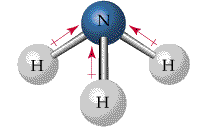
Use your knowledge and electronegativity sheet to predict what the following compound is classified as.
polar covalent
nonpolar covalent
ionic
metallic

Use your knowledge and electronegativity sheet to predict what the following compound is classified as.
nonpolar covalent
polar covalent
ionic
metallic

Use your knowledge and electronegativity sheet to predict what the following compound is classified as.
non-polar covalent
polar covalent
ionic
metallic
Use your knowledge and electronegativity sheet to predict what type of bond would form between calcium and bromine.
non-polar covalent
polar covalent
ionic
metallic
Use your knowledge and electronegativity sheet to predict what type of bond would form between phosphorus and fluorine.
non-polar covalent
polar covalent
ionic
metallic

The electronegativity difference in the bonds of CH4 is:
0.4
5.9
-0.4
1.7
A covalent bond usually forms between:
a metal and a nonmetal
either metals or nonmetals
two metals
two nonmetals
A diatomic molecule like O2 is always_______ because electrons are shared ________.
nonpolar; equally
polar; equally
nonpolar; unequally
nonpolar; unequally
What causes a partial charge on a molecule?
unequal sharing of electrons
an electronegativity difference between 0.4 and 1.8.
the shape of the molecule
all of the above


Polar or nonpolar?
Nonpolar
Polar

Polar or Nonpolar
Polar
Nonpolar

Is this molecule polar or non-polar?
Non-polar
Polar
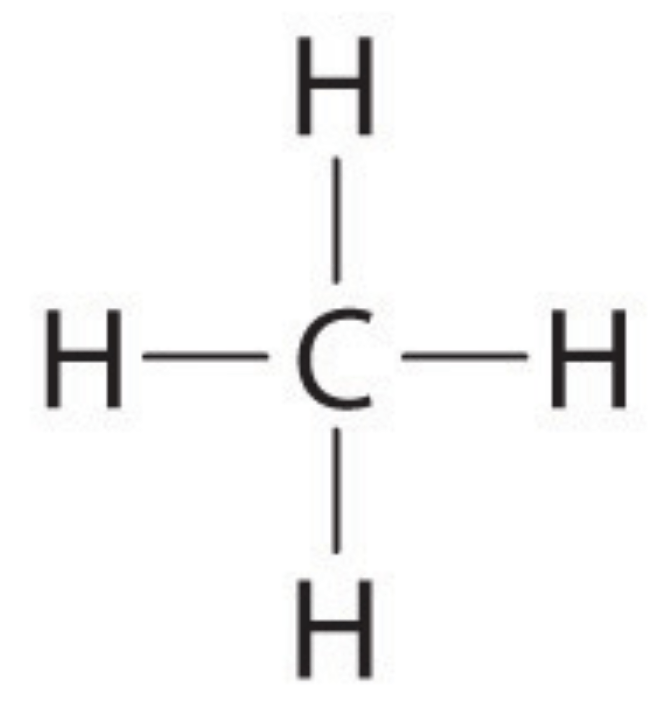
Classify the following molecule.
polar
nonpolar

Classify the following molecule.
polar
nonpolar

Is the following molecule polar or nonpolar?
polar
nonpolar

Is the following molecule polar or nonpolar?
polar
nonpolar
What is the goal of the Lewis Dot Structure?
To determine the electron position.
To show the element's valence electrons & bonding capabilities.
To find the atomic mass of an element.
To search for the number of electrons in an individual atom.

This is a correct dot diagram for nitrogen (N)
true
false

This is a correct dot diagram for neon (Ne)
true
false

Which is the correct Lewis structure for carbon dioxide?


How many valence electrons are in the compound N2O?
(a)


What Element does this Bohr Model show?
Helium
Hydrogen
Argon
Silver

Ionic bonding involves
transfer of electrons
sharing of electrons
holding onto electrons
electrons are not involved

What usually forms a positive ion?
metal
nonmetal
metalloid
there is no way to tell

Covalent compounds
contain a sea of electrons
share electrons
transfer electrons
conduct electricity

Nonmetals tend to
gain electrons
lose electrons

Metals tend to
gain electrons
lose electrons

ionic
covalent
metallic
acid