wayground logo

Free Printable Worksheets

Font size

S
M
L
XL
Worksheets

Unit 3 Review

Total questions: 150

Worksheet time: 2hrs 47mins
Name
Class
Date
1.
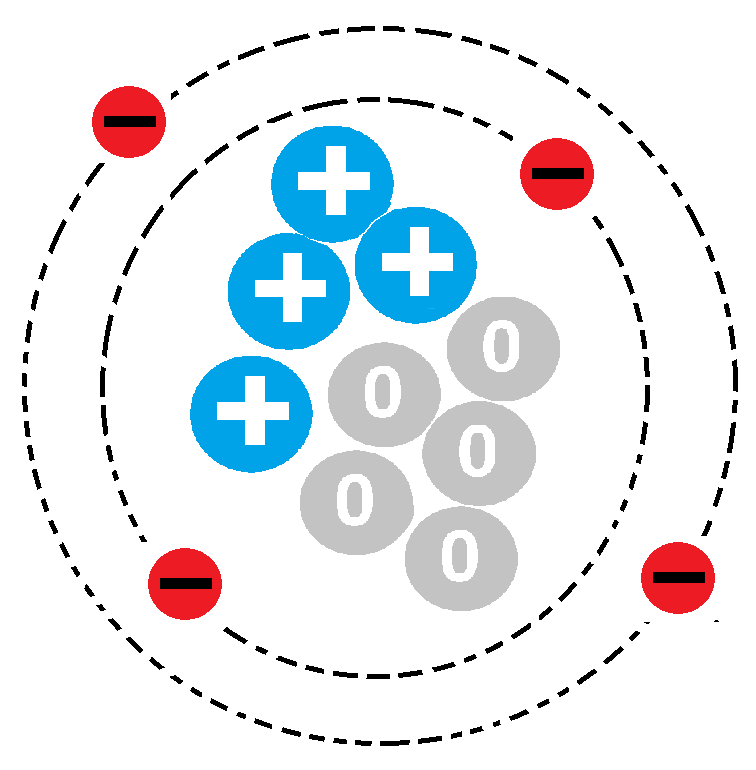
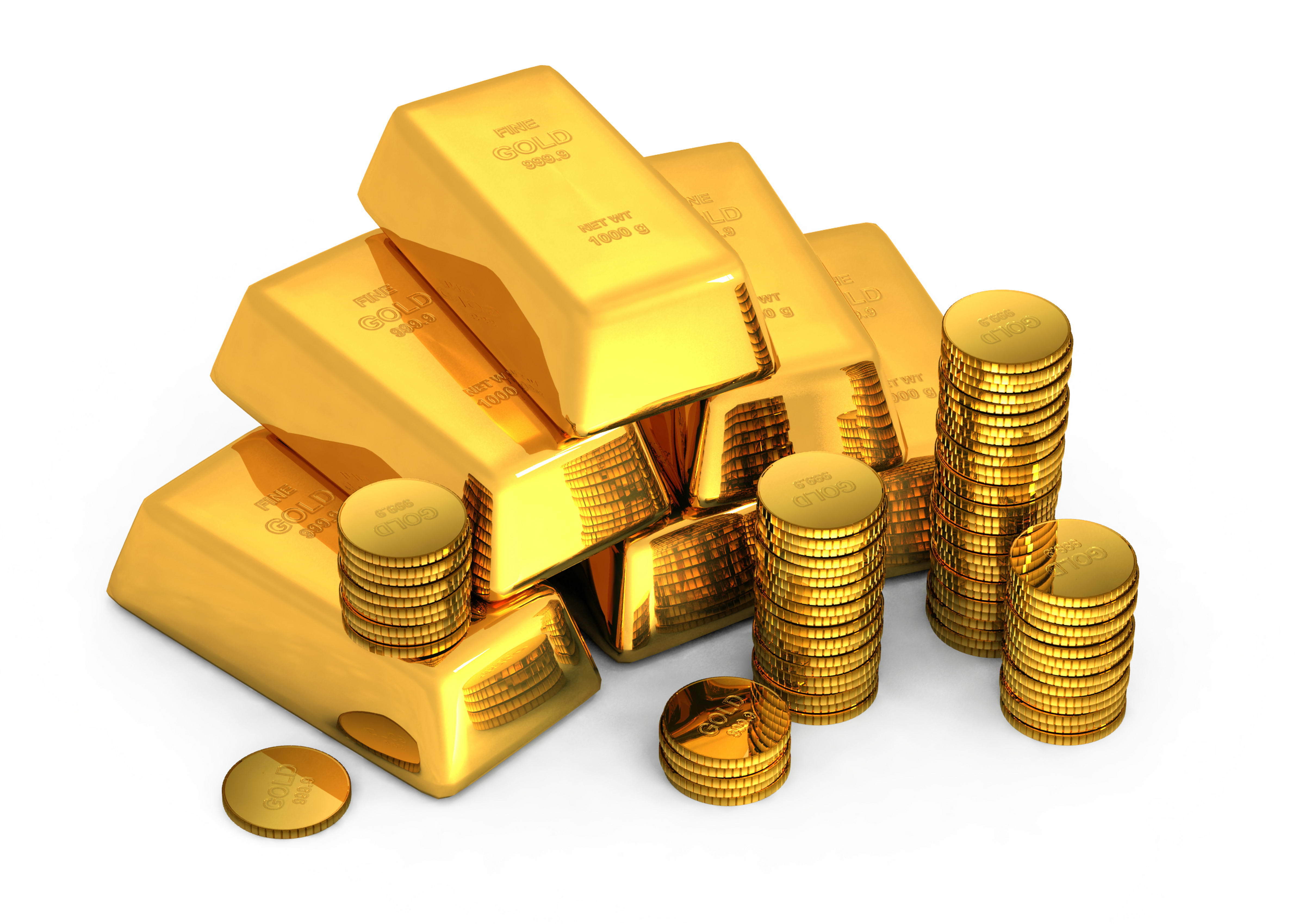
What is the atomic number of this element?
a)
4
b)
80
c)
79
d)
8
2.
What is the atomic number of Rubidium?
a)
37
b)
44
c)
45
d)
86
3.
What is the atomic number of Oxygen?
a)
6
b)
7
c)
8
d)
9
4.

atomic number

a)

gas at room temperature, low boiling point

b)

a subatomic particle that has a negative charge

c)

number or protons and neutrons

d)

the number of protons in the nucleus of an atom

5.
What is the atomic number of this nucleus?
a)
1
b)
3
c)
4
d)
7
6.
What is the atomic number of this atom?
a)
4
b)
5
c)
9
d)
none of the above
7.
What is the atomic number of this atom?
a)
9
b)
10
c)
19
d)
27
8.
What is the atomic number of this atom?
a)
2
b)
4
c)
6
d)
none of the above
9.
An element has two naturally occurring isotopes. One is 10.013 amu and is 19.9% abundant. The other is 11.01 amu and is 80.1% abundant. What is the average atomic mass? What element is it?
a)
9.012, Beryllium
b)
12.011, Carbon
c)
6.941, Lithium
d)
10.812, Boron
10.

Calculate the average atomic mass of silver.

a)

106.38649amu

b)

111.91896amu

c)

107.8677amu

d)

121

11.
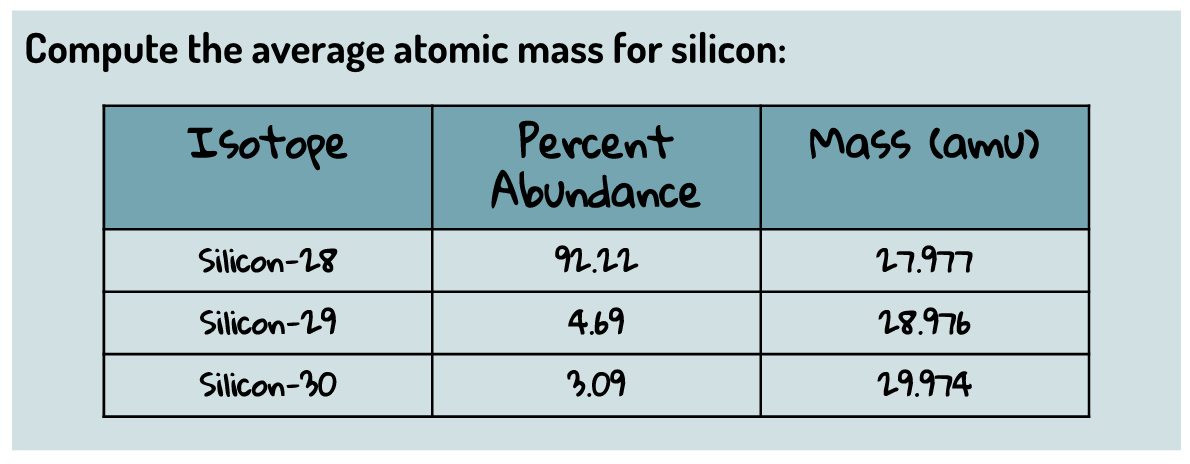
Compute the average atomic mass for silicon:
a)
27.977
b)
28.09
c)
28.976
d)
The average mass cannot be determined from provided information.
12.

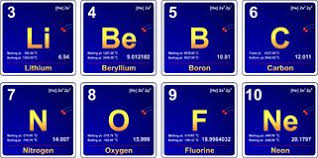
Magnesium exists as the three isotopes shown. What is the average atomic mass of magnesium?

a)

20.74 amu

b)

22.56 amu

c)

18.39 amu

d)

24.31

13.

To calculate average atomic mass, you need

a)

the atomic mass of each isotope

b)

the percent abundance of each isotope

c)

the atomic mass and percent abundance of each isotope

d)

to find the average of the atomic masses of each isotope

14.

Chlorine has two naturally occurring isotopes, Cl-35 and Cl-37, The atomic mass of chlorine is 35.45. Which of these two isotopes of chlorine is more abundant?

a)

Cl-35

b)

Cl-37

c)

Cannot be determined from the information provided.

15.

An element has three isotopes. Given the abundances and relative masses, calculate the average atomic mass and determine (from the periodic table) which element it is.


Abundances | Relative masses

0.005% | 234.04 amu

0.720% | 235.04 amu

99.275% | 238.05 amu

a)

Uranium (#92, Atomic Mass: 238.03 amu)

b)

Fluorine (#9, Atomic Mass: 19.00 amu)

c)

Mercury (#89, Atomic Mass: 200.59 amu)

d)

Polonium (#84 209 amu)

16.
Nitrogen has three occurring isotopes: Nitrogen-13, Nitrogen-14, Nitrogen-15. Which isotope is the most abundant?
a)
Nitrogen-13
b)
Nitrogen-14
c)
Nitrogen-15
d)
Based on the information given, it cannot be determined
17.
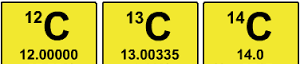
What do these isotopes of carbon all have in common?
a)
neutrons & mass number
b)
atomic number and neutrons
c)
atomic number and electrons
d)
protons, atomic number, and mass number
18.
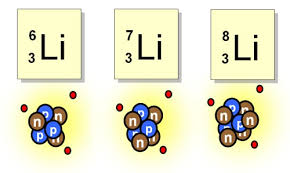
How many neutrons does the isotope of lithium have?
a)
8
b)
3
c)
4
d)
5
19.
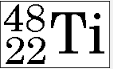
How many protons does this isotope of titanium have?
a)
48
b)
22
c)
26
d)
70
20.
In a correctly written symbol what would be located in the "A" position?
a)
number of neutrons
b)
atomic number
c)
number of electrons 
d)
mass number
21.
What quantities vary between isotopes of an element?
a)
protons, electrons, and atomic mass
b)
protons, electrons, and atomic number
c)
neutrons and electrons
d)
neutrons and atomic mass
22.
which atom has  4 neutrons?
a)
Li-6
b)
Li-7
c)
Li-8
d)
they have the same # of neutrons
23.
How many neutrons in C-14?
a)
6
b)
7
c)
14
d)
8
24.
How many neutrons does the isotope below have?     89 36Kr
a)
53
b)
36
c)
89
d)
125
25.
Isotopes are atoms of the same element with different #’s of __________ & therefore different __________.
a)
n0 ;  atomic #’s
b)
p+ ; atomic #’s
c)
e- ; atomic masses
d)
n0 ; atomic masses
26.
If X is the symbol for an element, which of the following two symbols represent    isotopes of the same element?     I. 7735X  II. 7733X  III. 8137X  IV. 8135 X
a)
I and II
b)
III and IV
c)
I and IV
d)
I and III
27.

What is the smallest unit of matter? It is composed of protons and neutrons, held together in the nucleus, and electrons around the nucleus in different electron orbitals, which form an electron cloud.

a)

cell

b)

nucleus

c)

atom

d)

electron

28.

What is a subatomic particle with a positive charge that is in the nucleus of an atom?

a)

neutron

b)

proton

c)

electron

d)

valence electron

29.

What is a subatomic particle without an electric charge, located in the nucleus of an atom?

a)

neutron

b)

proton

c)

electron

d)

valence electron

30.

What is a subatomic particle with a negative charge? It is found in the electron cloud surrounding the nucleus.

a)

neutron

b)

proton

c)

electron

d)

electron cloud

31.

What is the center of an atom containing protons and neutrons?

a)

nucleus

b)

neutron

c)

proton

d)

electron cloud

32.
Which subatomic particles are found in the nucleus of an atom?
a)
Protons and Electrons
b)
Protons and Neutrons
c)
Neutrons and Electrons
d)
Protons, Neutrons and Electrons
33.
What electrical charge does a proton have?
a)
+1
b)
0
c)
-1
d)
+2
34.

What mass does a neutron have?

a)

1 amu

b)

0 amu

c)

-1 amu

d)

+2 amu

35.
In order for an atom to be neutral what has to be true?
a)
The atom has more protons than neutrons
b)
The atom has more neutrons than protons
c)
The atom has the same number of protons and neutrons
d)
The atom has the same number of protons and electrons
36.

How many electrons does this atom have?

a)

2

b)

4

c)

6

d)

10

37.

The Atomic mass of Fe

a)

55.845

b)

56

c)

55

d)

56.845

38.

The Atomic mass of Cl

a)

34.45

b)

35.45

c)

36.45

d)

35.46

39.

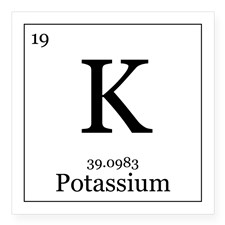
The atomic mass of K

a)

38

b)

39

c)

38.098

d)

39.098

40.

The mass number of Zn

a)

56

b)

57

c)

65

d)

75

41.

The symbol for cobalt

a)

CO

b)

Cb

c)

Co

d)

cO

42.

The mass number of B

a)

9

b)

10

c)

11

d)

12

43.

The Atomic mass of Cu

a)

36.546

b)

53.546

c)

63.546

d)

56.546

44.
How many protons are in Zirconium (Zr) ?
a)
40
b)
91
c)
30
d)
65
45.
An element's identity is determined by the number of
a)
electrons.
b)
protons.
c)
neutrons.
d)
valence.
46.
Elements can have the same number of protons?
a)
True
b)
False
47.
How many valence electrons in this structure?
a)
6
b)
5
c)
4
d)
7
48.
The first energy level can hold up to how many electrons?
a)
8
b)
4
c)
2
d)
5
49.

How many neutron are in the atom "K"?

a)

29

b)

19

c)

58

d)

20

50.
Sodium has an atomic number of 11, how many protons does this atom have?
a)
22
b)
11
c)
12
d)
2
51.
The following element key shows how many protons?
a)
16
b)
15.999
c)
Oxygen
d)
8
52.
A stable element with 27 electrons will contain how many protons?
a)
27 protons in the electron cloude
b)
59 protons in the extremely dense nucleus
c)
27 protons in the extremely dense nucleus
d)
59 protons in the electron cloud
53.

How many neutrons are in Magnesium?

a)

36

b)

12

c)

24

d)

6

54.

How many electrons are in Aluminium?

a)

40

b)

27

c)

13

d)

14

55.

How many protons are in Silicon?

a)

7

b)

42

c)

28

d)

14

56.

How many neutrons are in Phosphorus?

a)

16

b)

15

c)

31

d)

46

57.

How many electrons are in Sulfur?

a)

32

b)

16

c)

48

d)

8

58.

How many protons are in Chlorine?

a)

35

b)

18

c)

17

d)

52

59.

How many neutrons are in Argon?

a)

18

b)

40

c)

58

d)

22

60.

How many electrons are in Potassium?

a)

19

b)

20

c)

58

d)

39

61.

How many protons, neutrons, and electrons are in Oxygen?

a)

Protons = 8; Neutrons = 16; Electrons = 8

b)

Protons = 8; Neutrons = 8; Electrons = 8

c)

Protons = 16; Neutrons = 8; Electrons = 16

d)

Protons = 16; Neutrons = 24; Electrons = 16

62.

Which scientist described a positively charged core (“nucleus”) in the middle of a lot of empty space?

a)

Chadwick

b)

Thomson

c)

Rutherford

d)

Bohr

63.
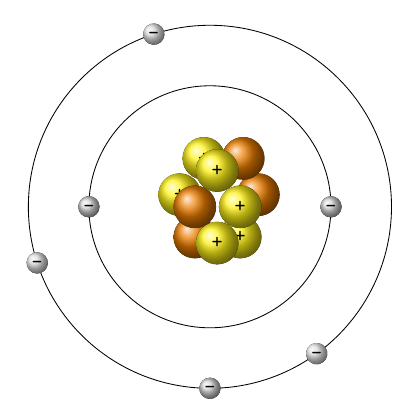
What element is represented in this Bohr Model? 
a)
Carbon
b)
Hydrogen
c)
Aluminum
d)
Lithium
64.
What's a valence electron?
a)
electrons in the second energy level
b)
electrons in the outermost energy level
c)
the atomic number
d)
electrons in the first level
65.
How many valence electrons?
a)
2
b)
3
c)
5
d)
10
66.

Does this lewis dot structure show the octet rule?

a)

Yes

b)

No

67.

Is this the correct Lewis Dot Structure for Boron?

a)

Yes

b)

No, missing electrons

c)

No, too many electrons

d)

No, dots are in wrong place.

68.

Is this correct way to draw the Lewis Dot Structure for Carbon?

a)

Yes

b)

No, too many electrons

c)

No, not enough electrons

d)

No, dots are in wrong places

69.

This could be the dot diagram of

a)

Mg

b)

Cl

c)

C

d)

O

70.

What is the goal of the Lewis Dot Structure?

a)

To determine the electron position.

b)

To show the element's valence electrons & bonding capabilities.

c)

To find the atomic mass of an element.

d)

To search for the number of electrons in an individual atom.

71.

How many valence electrons should Magnesium have in its Lewis dot model?

a)

1

b)

2

c)

3

d)

4

72.

This is a correct dot diagram for carbon (C)

a)

true

b)

false

73.

This is a correct dot diagram for nitrogen (N)

a)

true

b)

false

74.

USE THE PERIODIC TABLE

How many valence electrons does Phosphorus have?

a)

31

b)

5

c)

15

d)

4

75.
An electron occupies the lowest energy orbital that can receive it.
a)
Hund’s rule
b)
Pauli exclusion principle
c)
Bohr model of the atom
d)
Aufbau principle
76.
All orbitals of equal energy are occupied by one electron before any single orbital is occupied by a second electron.
a)
Aufbau principle
b)
Pauli exclusion principle
c)
Hund’s rule
d)
Core Notation
77.
Which guideline, Hund’s rule or the Pauli exclusion principle, is violated in the following orbital diagrams?
a)
Hund's
b)
Aufbau's
c)
Pauli's Exclusive
78.
Which guideline, Hund’s rule or the Pauli exclusion principle, is violated in the following orbital diagrams?
a)
Hund's
b)
Aufbau's
c)
Pauli's Exclusive
79.
Which guideline, Hund’s rule or the Pauli exclusion principle, is violated in the following orbital diagrams?
a)
Aufbau's
b)
Hund's
c)
Pauli exclusive
80.
Electrons are paired based on their spin directions, clockwise and counterclockwise, is what electron configuration rule?
a)
Hund’s Rule
b)
Aufbau Principle
c)
Pauli Exclusion Principle
81.
Which element is pictured?
a)
neon
b)
fluorine
c)
magnesium
d)
argon
82.
What is incorrect about this orbital diagram?
a)
Both arrows in the 2p box should be pointing up
b)
There is nothing incorrect with this diagram
c)
In the 2p box there should only be 1 electron in the first 2p box and one in the 2nd 2p box
d)
All the arrows should be pointing up.
83.

What element has this electron configuration?

a)

hydrogen

b)

helium

c)

lithium

d)

beryllium

84.

What element has this orbital notation?

a)

lithium

b)

beryllium

c)

boron

d)

carbon

85.

What element has this electron configuration?

a)

helium

b)

lithium

c)

beryllium

d)

boron

86.

What element has this electron configuration?

a)

boron

b)

carbon

c)

nitrogen

d)

oxygen

87.

Which element is represented by this orbital notation?

a)

carbon

b)

nitrogen

c)

oxygen

d)

fluorine

88.

Which element is represented by this electron configuration?

a)

neon

b)

sodium

c)

magnesium

d)

aluminum

89.

Which element is represented by this orbital notation?

a)

neon

b)

sodium

c)

magnesium

d)

aluminum

90.

Which of the following is the electron configuration for Fluorine

a)
b)
c)
d)
91.

Which of the following is the electron configuration for neon?

a)
b)
c)
d)
92.

Which of the following is the electron configuration for silicon?

a)
b)
c)
d)
93.

Which of the following is the orbital notation for oxygen?

a)
b)
c)
d)
94.

How many valence electrons does Hydrogen Have?

a)

1 Valence electron

b)

2 Valence electron

c)

3 Valence electron

d)

4 Valence electron

e)

5 Valence electron

95.

How many valence electrons does Helium Have?

a)

1 Valence electron

b)

2 Valence electron

c)

3 Valence electron

d)

4 Valence electron

e)

5 Valence electron

96.

How many valence electrons does Nitrogen Have?

a)

1 Valence electron

b)

2 Valence electron

c)

3 Valence electron

d)

4 Valence electron

e)

5 Valence electron

97.

How many valence electrons does Magnesium Have?

a)

1 Valence electron

b)

2 Valence electron

c)

3 Valence electron

d)

4 Valence electron

e)

5 Valence electron

98.

How many valence electrons does Aluminum Have?

a)

1 Valence electron

b)

2 Valence electron

c)

3 Valence electron

d)

4 Valence electron

e)

5 Valence electron

99.

How many valence electrons does Phosphorus Have?

a)

1 Valence electron

b)

2 Valence electron

c)

3 Valence electron

d)

4 Valence electron

e)

5 Valence electron

100.

How many valence electrons does Silicon Have?

a)

1 Valence electron

b)

2 Valence electron

c)

3 Valence electron

d)

4 Valence electron

e)

5 Valence electron

101.
What Periodic Table family is represented by the Lewis dot diagram?
a)
Halogens
b)
Alkali Metals
c)
Transition Metals
d)
Noble Gases
102.
Which of the following is the atomic number of an alkali metal?
a)
31
b)
20
c)
18
d)
19
103.
Which properties are characteristic of the Group 1 metals?
a)
high reactivity and the formation of unstable compounds
b)
low reactivity and the formation of unstable compounds
c)
high reactivity and the formation of stable compounds
d)
low reactivity and the formation of stable compounds
104.
What group on the Periodic Table contains the elements of the alkaline earth family?
a)
1
b)
2
c)
17
d)
18
105.

The elements in this family are soft, silvery, and very reactive with water.

a)

Alkaline Earth Metals

b)

Alkali Metals

c)

Transition Metals

d)

Lanthanides

106.

What group is the family found? These halides are very reactive and almost have full outer energy level/shell.

a)

1

b)

2

c)

16

d)

17

107.
Gold (Au)
a)
Transition Metal
b)
Alkali Metal
c)
Alkaline Earth Metal
d)
Heavy Metal
108.
Which element is not in the Alkali metal family?
a)
Li
b)
H
c)
Fr
d)
Cs 
109.
Argon (Ar)
a)
alkali metal
b)
alkaline earth metal
c)
halogen
d)
noble gas
110.
Which of the following is the most reactive group of non-metals? 
a)
Alkali
b)
Alkali Earth
c)
Halogen
d)
Noble Gas
111.
Which of the following in not a diatomic element?
a)
hydrogen
b)
carbon
c)
nitrogen
d)
oxygen
112.

The is family has properties of both metals and nonmetals.

a)

Alkali

b)

Halogens

c)

Nonmetals

d)

Metalloids

113.

The horizontal row on the periodic table is called a

a)

group

b)

family

c)

period

114.

A vertical column is called...

a)

group

b)

tower

c)

period

115.

Which of the following is an Alkali Metal?

a)

Magnesium

b)

Chromium

c)

Sodium

116.
Which of the following is an Alkaline Earth Metal? 
a)
Calcium
b)
Lithium
c)
Phosphorus
d)
Copper 
117.
Which of the following is a transition metal? 
a)
Iron
b)
Oxygen
c)
Neon
d)
Barium
118.

Which of the following is the most reactive group of metals?

a)

Alkali

b)

Alkaline Earth

c)

Halogen

119.
Which of the following is the most reactive group of non-metals? 
a)
Alkali
b)
Alkali Earth
c)
Halogen
d)
Noble Gas
120.

Which of the following groups is inert?

a)

Alkali

b)

Transition Metals

c)

Noble Gas

121.

What is the chemical symbol for Hydrogen

a)

H

b)

He

c)

Hy

d)

Hg

122.

What element has the symbol Al

a)

Argon

b)

Aluminium

c)

Silver

d)

Gold

123.

What is the symbol for Carbon

a)

Ca

b)

C

c)

Co

d)

Cr

124.

What is the symbol for Neon

a)

No

b)

Nn

c)

Ne

d)

N

125.

Which element has the symbol Li

a)

Aluminum

b)

Lithium

c)

Palladium

d)

Gallium

126.

What is the symbol for Potassium

a)

P

b)

Po

c)

K

d)

Pt

127.

Which element has the symbol O

a)

Osmium

b)

Oxygen

c)

Oganesson

d)

Neon

128.

Which element has the symbol Be

a)

Boron

b)

Berillium

c)

Bromine

d)

Beryllium

129.

Which element has the symbol Si

a)

Silicon

b)

Sulfur

c)

Scandium

d)

Strontium

130.

Which element has the symbol N

a)

Nitrogen

b)

Neon

c)

Sodium

d)

Nickel

131.

Which element has the symbol Cl

a)

Carbon

b)

Chlorine

c)

Cadium

d)

Copper

132.

What is the symbol for Sodium

a)

S

b)

Au

c)

So

d)

Na

133.

What is the symbol for Magnesium

a)

Mn

b)

Mc

c)

Mg

d)

Md

134.

Which element has the symbol He

a)

Hydrogen

b)

Hafnium

c)

Helium

d)

Mercury

135.

What is the symbol for Calcium

a)

Ca

b)

C

c)

Cl

d)

Cm

136.

What is the symbol for Zinc?

a)

Z

b)

Zi

c)

ZN

d)

Zn

137.

What is the symbol for Copper?

a)

CU

b)

Cp

c)

Cu

d)

Cr

138.

What is the symbol for Nickel?

a)

Ni

b)

N

c)

Nl

d)

Nc

139.

What is the symbol for Iron?

a)

Ir

b)

In

c)

Fe

d)

FE

140.

What is the symbol for Titanium?

a)

T

b)

Tn

c)

Ti

d)

Tl

141.

Sn

a)

tin

b)

sulfur

c)

iron

d)

sodium

142.

Gold

a)

Go

b)

Gl

c)

AU

d)

Au

143.

Pb

a)

Gold

b)

Lead

c)

peanut butter

d)

Paribium

144.

Nickel

a)

Ni

b)

N

c)

Nl

d)

Nc

145.

Mercury

a)

Me

b)

Hg

c)

HG

d)

ME

146.

Iodine

a)

Ie

b)

I

c)

Id

d)

Io

147.
silver
a)
Au
b)
Ag
c)
Si
d)
Ve
148.
What is the symbol for Platinum?
a)
P
b)
Pt
c)
Pu
d)
Pa
149.
What element is Cs the symbol for?
a)
Calcium
b)
Copper
c)
Selenium
d)
Cesium
150.

What is the symbol for Arsenic?

a)

As

b)

Ac

c)

Au

d)

Ar