wayground logo

Free Printable Worksheets

Font size

S
M
L
XL
Worksheets

Properties of Matter

Total questions: 81

Worksheet time: 46mins
Name
Class
Date
1.

Color is what type of property?

a)

Physical

b)

Chemical

2.

Reactivity is what type of property?

a)

Physical

b)

Chemical

3.

What is a sign of a physical change?

a)

Bubbles forming

b)

Color changing

c)

Stretching

d)

Producing heat

4.

What is a sign of a chemical change?

a)

Stretching

b)

Tearing

c)

Compressing

d)

Bubbles

5.

What happens to the atoms of a substance in a physical change?

a)

Atoms get bigger

b)

Atoms change their arrangement and motion

c)

Atoms get smaller

d)

Atoms bond together differently

6.

What happens to the atoms of a substance in a chemical change?

a)

Atoms get bigger

b)

Atoms change their arrangement and motion

c)

Atoms get smaller

d)

Atoms bond together differently

7.

Which of the following changes is a physical change of matter?

a)

water evaporating

b)

paper burning

c)

a nail rusting

d)

a silver spoon tarnishing

8.

Which of these observations would likely be an indication of a chemical change?

a)

A change in odor when two substances are mixed

b)

A change in temperature when a hot substance is left standing in air

c)

A change in volume as a substance is heated

d)

The disappearance of a liquid as it boils

9.

You mixed two liquids and a precipitate formed, what kind of change occured?

a)

Physical

b)

Chemical

10.

What happens when sugar dissolves in water?

a)

Physical change because a new substance is formed

b)

Chemical change because a new substance is formed

c)

Physical change because the sugar is just getting smaller

d)

Chemical change because the sugar is just getting smaller

11.

Signs of a physical change:

a)

Compress

b)

Shatter

c)

Tear

d)

Precipitate

12.

Signs of a chemical change:

a)

Precipitate

b)

Light

c)

Heat

d)

Shatter

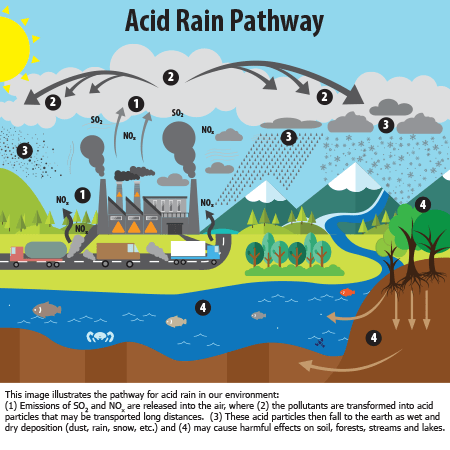
13.

Acid Rain

a)

Physical Change

b)

Chemical Change

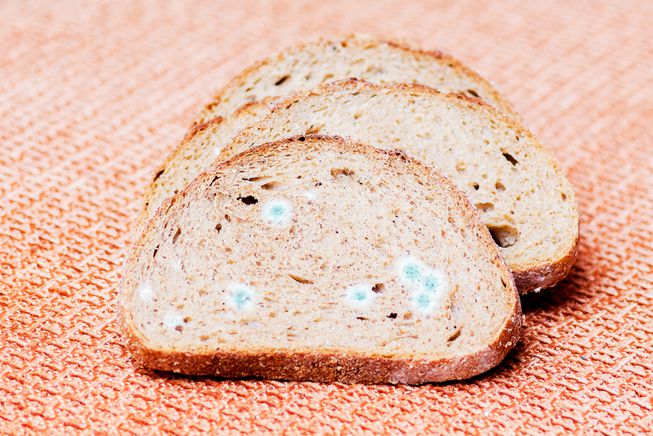
14.

Moldy Bread

a)

Physical Change

b)

Chemical Change

15.
The amount of matter in an object is a measure of the object's ________________.
a)
volume
b)
density
c)
mass
d)
solubility
16.
Which of the following is not a characteristic property of matter?
a)
Density
b)
Mass
c)
Phase/State
d)
Solubility
17.
If you had a sealed bottle of water, how would the mass of the water bottle change after a 5 day period?
a)
Mass would increase. 
b)
Mass would stay the same. 
c)
Mass would decrease. 
d)
None of the above.
18.
In which state does matter completely fill its closed container?
a)
Gas
b)
Liquid
c)
Solid
d)
Ice
19.
Which state of matter has a fixed shape and volume and it's molecules move very slowly?
a)
Liquid
b)
Gas
c)
Solid
d)
Plasma
20.
When a gas turns into a liquid, it is called ___________________.
a)
Condensation
b)
Evaporation
c)
Melting
d)
Freezing
21.

True or false? Taste is not a physical property of matter.

a)

true

b)

false

22.

Which of the following can be classified as matter?

a)

an idea

b)

the letter A

c)

a lake

d)

the month August

23.

What can be claimed about the tomato?

a)

It has less mass than the orange.

b)

It has more mass than the orange.

c)

It has the same mass as the orange.

24.

True or false? The amount of matter increases when ice melts into a liquid.

a)

True

b)

False

25.

When heating water on a stove, energy is _______________.

a)

removed

b)

added

c)

neither added or removed.

d)

both added and removed.

26.

Which of the following statements is true about the arrangement of particles in matter?

a)

The particles in a gas are closer together than the particles in a liquid.

b)

The particles in a liquid are spread farther apart than the particles in a gas.

c)

The particles in a gas are spread farther apart than the particles in a solid.

d)

The particles in a solid are spread farther apart than the particles in a liquid.

27.
Ability to rust is this type of property:
a)
Physical property
b)
Chemical property
28.
Which is an example of a physical property?
a)
ability to react with acid
b)
 color
c)
flammability
d)
ability to react with oxygen
29.
Flammability is an example of what property?
a)
Chemical property
b)
Physical property
30.
Which is NOT a physical property?
a)
odor
b)
reacts with bleach
c)
sinks in water
d)
density
31.
Physical properties are
a)
properties that can be observed without changing the identity of the substance
b)
properties that describe how a substance changes into a completely different substance
c)
properties that we can only observe with our eyes
d)
properties that we need special tools to observe
32.
Alka-Seltzer gives off carbon dioxide when added to water
a)
physical change
b)
chemical change
33.
Which of the following is a sign that a chemical reaction has occurred?
a)
change in shape
b)
melting
c)
formation of a gas
d)
dissolving
34.
What is burning an example of?
a)
physical change
b)
physical property
c)
chemical change
d)
chemical property
35.
What kind of properties can only be observed when a substance changes into a different substance?
a)
physical properties
b)
chemical properties
c)
liquid properties
d)
real properties
36.
When you break a cracker into pieces it is a 
a)
Chemical change
b)
Physical change
c)
Chemical Weathering
d)
Physical Weathering
37.
Milk sours (goes bad)
a)
physical change
b)
chemical change
c)
physical property
d)
chemical property
38.
Salt dissolving in water is an example of what?
a)
A physical change
b)
A chemical change
c)
A physical property
d)
A chemical property
39.
Which is an example of a physical property?
a)
rusting
b)
boiling point
c)
combustion
d)
reactivity with water
40.
a)
element
b)
compound
c)
mixture of elements
d)
mixture of compounds
41.
a)
element
b)
compound
c)
mixture of elements
d)
mixture of compounds
42.
a)
element
b)
compound
c)
mixture of elements and compounds
d)
mixture of compounds
43.
a)
element
b)
compound
c)
mixture of elements
d)
mixture of compounds and elements
44.
a)
element
b)
compound
c)
mixture of elements
d)
mixture of compounds
45.
a)
element
b)
compound
c)
mixture of elements and compounds
d)
mixture of compounds
46.
a)
element
b)
compound
c)
mixture of elements and compounds
d)
mixture of compounds
47.
a)
element
b)
compound
c)
mixture of elements and compounds
d)
mixture of compounds
48.
a)
element
b)
compound
c)
mixture of elements and compounds
d)
mixture of compounds
49.
a)
element
b)
compound
c)
mixture of elements
d)
mixture of compounds
50.
a)

Element

b)

Compound

c)

Homogeneous Mixture

d)

Heterogeneous Mixture

51.

Sweet Tea, everything is mixed evenly and looks the same.

a)

Heterogeneous Mixture

b)

Homogeneous Mixture

52.

H2 is an example of a(n)...

a)

Element

b)

Compound

c)

Molecule

d)

Heterogeneous Mixture

53.
a)

Element

b)

Compound

c)

Homogeneous Mixture

d)

Heterogeneous Mixture

54.
a)

Element

b)

Compound

c)

Homogeneous Mixture

d)

Heterogeneous Mixture

55.

A molecule is created when the same _________ is bonded together. For example: C10

a)

Element

b)

Compound

c)

Homogeneous Mixture

d)

Heterogeneous Mixture

56.
a)

Element

b)

Compound

c)

Homogeneous Mixture

d)

Heterogeneous Mixture

57.
a)

Element

b)

Compound

c)

Homogeneous Mixture

d)

Heterogeneous Mixture

58.
a)

Homogeneous Mixture

b)

Heterogeneous Mixture

59.
a)

Element

b)

Compound

c)

Homogeneous Mixture

d)

Heterogeneous Mixture

60.

2 or more different elements that are bonded together is called...

a)

A. element

b)

B. compound

c)

C. mixture

d)

D. solution

61.
Is salt (NaCI) a compound or a element
a)
Compound
b)
element
62.
A substance that contains only one type of atom is a(n)
a)
compound
b)
element
c)
heterogeneous mixture
d)
homogeneous mixture
63.

Jay combines water, sugar, and lemon juice to form lemonade. What type of substance was made?

a)

Element

b)

Molecule

c)

Mixture

64.
Which of the following lists only elements?
a)
H2O + OH, MgCl2
b)
H2O, KF, Ne
c)
KCl, Ag, Au
d)
K, Cl, N
65.
Which of the following is an example of a heterogenous mixture?
a)
soap
b)
a salad with lettuce, olives, and tomatoes
c)
cup of coffee
d)
water
66.
Which of the following selections are the different types of mixtures?
a)
heterogenous, homogenous
b)
acid, base
c)
metal, nonmetal
d)
element, compound
67.
This type of mixture looks the same throughout. 
a)
Homogenous
b)
Heterogeneous
68.

The chemical formula: N2 would represent what type of substance?

a)

Element

b)

Compound

c)

Mixture

d)

Molecule

69.
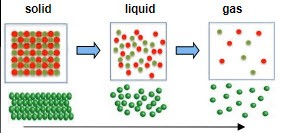
Entropy increases from solid, liquid to gas. Why?
a)
Molecular disorder increases
b)
Molecular randomness decreases
c)
Molecules are more energetic
d)
Molecules are more reactive
70.

Which represents a decrease in entropy?

a)

sublimation of CO2

b)

boiling water

c)

condensation of steam on cold glass

d)

NaCl dissolving in water

71.

The entropy will usually increase when

a)

a molecule is broken into two or more smaller molecules

b)

a reaction occurs that results in an increase in the number of moles of gas

c)

a solid changes to a liquid

d)

all of these

72.
Which phase of matter has the greatest motion and least orderly arrangement?
a)
solid
b)
liquid
c)
gas
73.

Which sample has the lowest entropy?

HINT - Look at the phase of each chemical....

a)

1 mole of KNO3(l)

b)

1 mole of KNO3(s)

c)

1 mole of H2O(l)

d)

1 mole of H2O(g)

74.

Systems in nature tend to undergo changes toward

a)

lower energy and less disorder

b)

lower energy and more disorder

c)

higher energy and less disorder

d)

higher energy and more disorder

75.

Which phase change represents a decrease in entropy?

a)

solid to liquid

b)

gas to liquid

c)

liquid to gas

d)

solid to gas

76.
Entropy always increases when
a)
enthalpy decreases.
b)
temperature decreases.
c)
temperature increases.
d)
volume increases.
77.

Entropy is a measure of

a)

accuracy

b)

precision

c)

the disorder of a system

d)

the attraction of a nucleus for an electron

78.

What phase of matter has the most entropy?

a)

solid

b)

liquid

c)

gas

79.

Given the change of phase:

CO2(g) —> CO2(s)

As CO2(g) changes to CO2(s), the entropy of the system

a)

decreases

b)

increases

c)

remains the same

80.

Which represents a decrease in entropy?

a)

sublimation of CO2

b)

boiling water

c)

condensation of steam on cold glass

d)

NaCl dissolving in water

81.
Entropy is a measure of:
a)
order
b)
disorder