
 Worksheets
Final Exam Practice Test
Total questions: 81
Worksheet time: 2hrs 20mins

Which is a quantitative observation?
There is an Oberweis cup
The shake is gone
There are red stripes
There are 3 cows on the cup

Which is an inference you can make?
There are 6 beautiful people
They planned to match their outfits
They are going to go to take a nap
They are wearing red eye masks.

What is a Qualitative observation?
There is a sparkly inner tube
There is one water bottle
There are zero people in the lake
Ms. Hawkins and Snyders want to be at the beach
Ms. Snyders loves science... is a(n)
Inference
QuaLITative Observation
QuaNtitative observation
Prediction
The liquid in the graduated cylinder is blue.
quantitative observation
qualitative observation
inference
prediction
The plant is tall and green, it must be healthy.
qualitative observation
inference
quantitative observation

Which is a prediction?
There is a dog
The dog made the mess
There are feathers all over the floor
The dog is going to get in trouble
Convert this number into scientific notation: 0.068
6.9 x 10⁶
6.8 x 10⁻⁹
6.8 x 10⁻²
None of the above
Convert this number into scientific notation: 950,000
9.5 x 10⁵
9.5 x 10⁻⁹
9.5 x 10²
None of the above
How would you write 0.0005 in scientific notation?
50 x 10-5
5 x 10⁻⁴
5 x 10³
.5 x 103
Mrs. Gilbert used a microscope to measure the diameter of her pet's hair. She found that the diameter of the hair was 0.000054 meter. How is this number written in scientific notation?
5.4 × 10⁻⁵
5.4 × 10⁶
5.4 × 10⁵
5.4 × 10⁻⁶
Two identical strips of positively charged nylon are hung next to each other. What do you observe?
The strips of nylon stick together.
A static charge jumps from one to the other.
The strips of nylon repel each other.
One strip will move while the other stays put.
Which of the following is a good conductor?
Copper
Glass
rubber
wool
During a physics lab, a plastic strip was rubbed with cotton and became positively charged. The correct explanation for why the plastic strip becomes positively charged is that ...
the plastic strip acquired extra protons from the cotton.
the plastic strip acquired extra protons from the charging process
protons were created as the result of the charging process
the plastic strip lost electrons to the cotton during the charging process
When an object gains electrons it becomes __________
Neutral
Positively charged
Negatively charged
An atom of oxygen has 8 protons and 10 electrons, this means the atom is ____________
positively charged because it has excess electrons
negatively charged because it has excess electrons
positively charged because it has a deficiency of electrons
negatively charged because it has a deficiency of electrons
After a balloon is rubbed against wool, the two objects will ________ each other because they have ___________ charges
attract; like
attract, opposite
repel; like
repel; opposite
What is the name of the particle that is being transferred from one atom to another?
Proton
Neutron
Electron
Positron
Which of the following is an insulator of electricity?
copper
silver
Glass
aluminum

What is the mass number?
the number of protons in the nucleus
the number of protons and neutrons in the nucleus
the number of neutrons in the nucleus
the number of protons and electrons in the atom
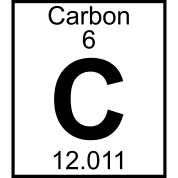

What does the 6 represent?
Atomic mass
atomic number
chemical symbol
element name
An atom has 10 protons, 15 neutrons and 10 electrons what is its mass number.
20
10
35
25
An element with a mass number of 11 and an atomic number of 5 has how many neutrons?
11
5
6
16
An atom has an atomic number of 15 and a mass number of 31. How many protons are there in the atom?
15
31
16
47
Which of the following determines the identity of an element?
number of protons
atomic mass
number of neutrons
number of shells

Which statement correctly and completely identifies a trend?
Atomic radius decreases across a period and increases down a group.
Electronegativity decreases across a period and increases down a group.
Atomic radius increases across a period and decreases down a group.
Ra, Be, Ca, Rb, H
Which of the following will have a higher electronegativity than arsenic (As)?
Carbon (C)
Neon (Ne)
Antimony (Sb)
Germanium (Ge)

Which of the following halogens has the greatest electronegativity?
Chlorine (Cl)
Bromine (Br)
Iodine (I)
Astatine (At)
Na
Cl
Al
Mg

Chlorine has 7 electrons in its outer shell. How many covalent bonds does it form?
1
2
3
4
Oxygen has 6 electrons in its outer shell. How many covalent bonds does it form ?
1
2
3
4
How many ATOMS are in one molecule of CH4?
2
4
5
3

What is the correct formula for this molecule?
CH
C1H4
CH4
C4H

What is the group number of oxygen?
2A
3A
6A
6B




Which is the correct structure for NH3?
Pictures correspond with a-d.
Option A.
Option B.
Option C.
Option D.
Which is the correct molecular structure for carbon dioxide CO2?


Same charges repel, opposites------
avoid
attract
push
pull
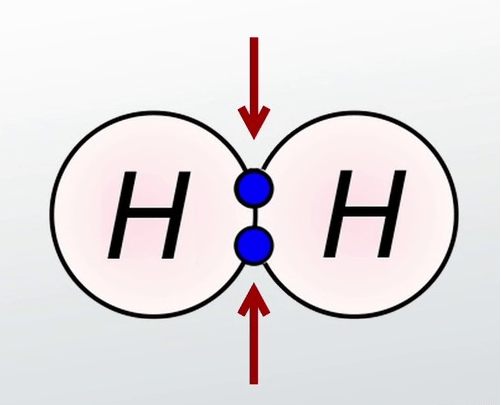
A molecule that has a partial positive end and a partial negative end because of unequal sharing of electrons is a _______________.
nonpolar molecule
polar molecule
ionic compound
metalic compound
Atoms of a non polar molecule share their atoms ___________.
Equally
Unequally

This could be the dot diagram of
Mg
Cl
C
O
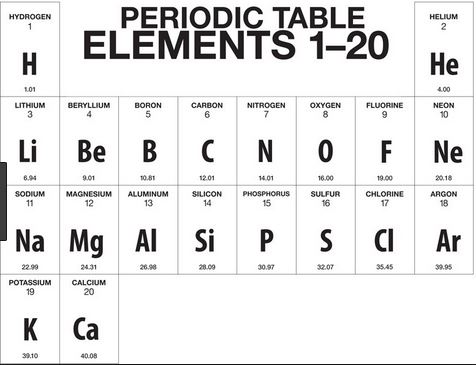
How many valence electrons does Aluminum Have?
1 Valence electron
2 Valence electron
3 Valence electron
4 Valence electron
5 Valence electron
How would you draw a Lewis dot diagram for Magnesium?


An object carrying 1.2x10¹¹ e charge is placed near an object B carrying a charge of 3.48x10¹⁰. If the two objects are 10 cm apart, find the force of interaction between the two objects. Given K=2.3x10⁻²¹. F=K.(r2qA. qB)
0.9604 mN
0.09604 mN
9.604mN
9.604x10²¹
When distance increases, electrostatic force ____________
stays the same
decreases
increases
When distance decreases, electrostatic force ____________
decreases
stays the same
increases

The Electric Force is stronger when charges are...
more
less
equal to each other

