wayground logo

Free Printable Worksheets

Font size

S
M
L
XL
Worksheets

22-23 Chemistry 2nd semester final review

Total questions: 76

Worksheet time: 4hrs 41mins

Name
Class
Date
1.

A substance that takes part in and undergoes change during a reaction.

a)

products

b)

reactants

c)

catalyst

d)

collision

2.

A substance that is formed as the result of a chemical reaction.

a)

products

b)

reactants

c)

catalyst

d)

collision

3.

A process that involves rearrangement of the molecular or ionic structure of a substance, as opposed to a change in physical form or a nuclear reaction.

a)

collision theory

b)

reaction rate

c)

chemical reaction

d)

activation energy

4.

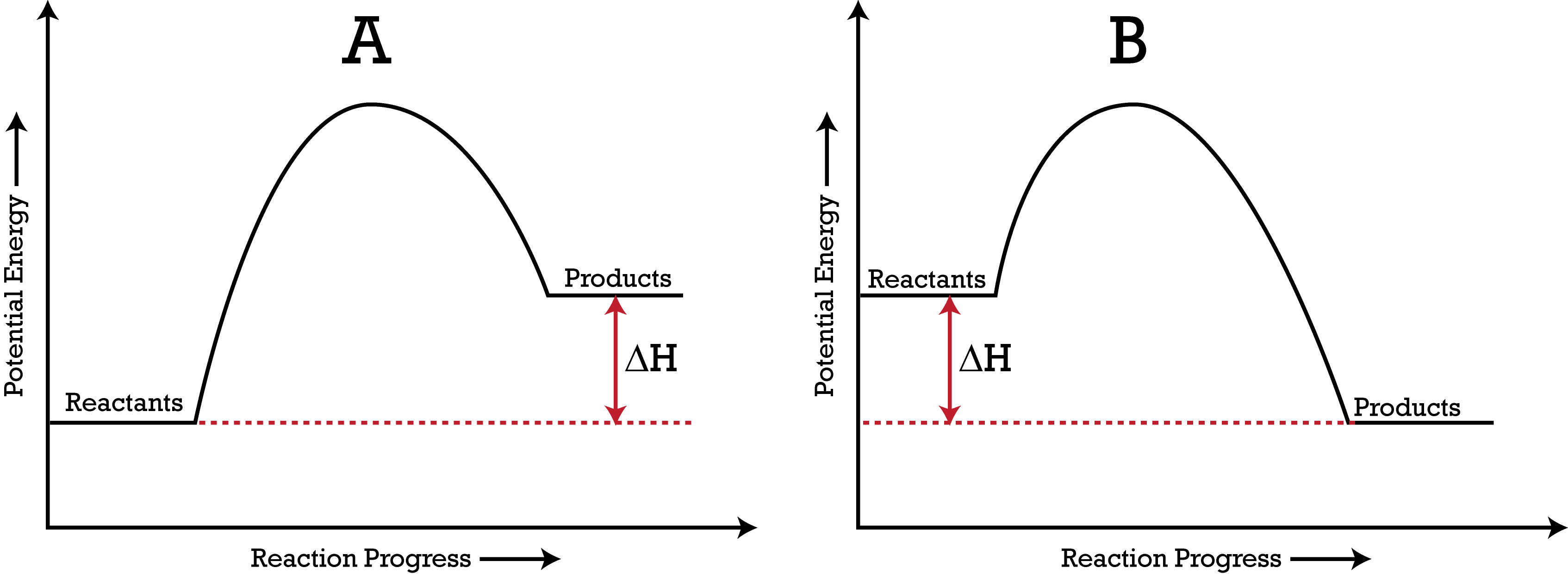
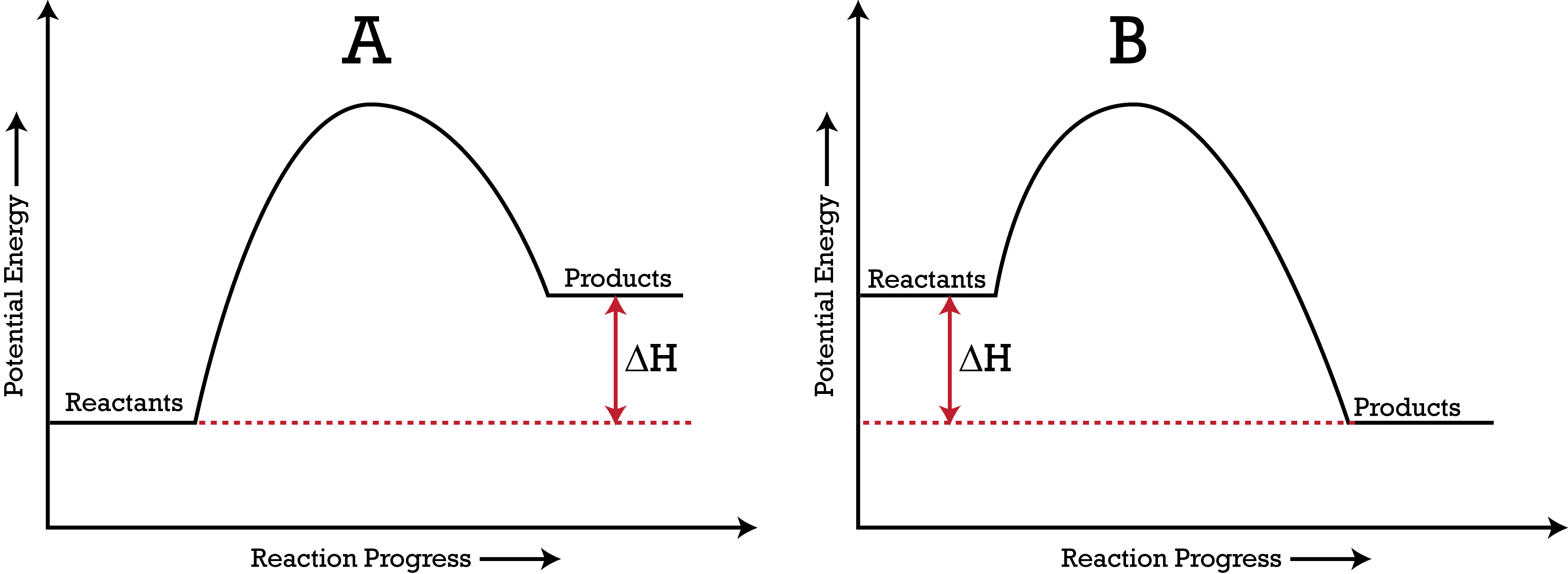
Which PE Diagram represents an endothermic reaction?

a)

A

b)

B

5.

Which PE Diagram represents an exothermic reaction?

a)

A

b)

B

6.
The collisions which bring about a chemical reaction are called: 
a)
Consistent collisions
b)
 Normal collisions 
c)
Effective collisions 
d)
None of the above
7.
A chemical reaction that absorbs heat from the surroundings is said to be __________ and has a __________ ΔH at constant pressure.
a)
endothermic; positive
b)
endothermic; negative
c)
exothermic; negative
d)
exothermic; positive
8.

N2 + 3H2 → 2NH3

What is the mole ratio between N2 and NH3 in the above reaction?

a)

1 moles NH3 / 2 moles N2

b)

2 moles NH3 / 1 moles N2

c)

2 moles N2 / 3 moles NH3

d)

1 moles N2 / 3 moles NH3

9.
Using the following equation:
Fe2O3(s) + 3H2(g) → 2Fe(s) + 3H2O(l)
How many moles of iron can be made from  6 moles H2
a)
4 moles Fe
b)
6 moles Fe
c)
9 moles Fe
d)
2 moles Fe
10.

Given the reaction: 4Al + 3O2 --> 2Al2O3

How many moles of Aluminum oxide, Al2O3, can you produce if you have 2 moles of Al?

a)

3 mole

b)

2 mole

c)

1 mole

d)

0.5 mole

11.
What is the molar mass of (NH4)2CO3 ?
a)
144 g
b)
138 g
c)
96 g
d)
78 g
12.
What is the mole ratio of H2O to H3PO4 in the following chemical equation?   P4O10 + 6 H2O --> 4 H3PO
a)
6:4
b)
4:6
c)
1:3
d)
3:1
13.
4NH+ 5O2-->4NO + 6H2O
What is the total number of moles of H2O produced when 12 mole of NH3 is completely consumed?
a)
15
b)
18
c)
20
d)
24
14.
Which of the following would have more mass?
a)
1 mole of Li
b)
1 mole of Au
c)
1 mole of Si
d)
None, all are equal
15.

What is the molar mass of calcium hydroxide, Ca(OH)2?

a)

74.1 g/mole

b)

57.1 g/mole

c)

58.1 g/mole

d)

57.1 u

16.

Determine the mass of 2.40 moles of C6H12

a)

201 g

b)

115 g

c)

230. g

d)

353 g

17.
2NaClO3 (s)  2NaCl (s) + 3O2 (g)  
12.00 moles of NaClO3 will produce how many grams of O2?
a)
256 g of O2
b)
576 g of O2
c)
288 g O2
18.
Cl2 + 2KBr → Br2 + 2KCl
How many grams of potassium chloride (KCl) can be produced from 356 g of potassium bromide (KBr)?
a)
749 g
b)
223 g
c)
479 g
d)
814 g
19.
Fe2O3 + 3H2 → 2Fe + 3H2O
About how many grams of H2O will be produced from 150 grams of Fe2O3
a)
50 grams H2O
b)
60 grams H2O
c)
5000 grams H2O
d)
6000 grams H2O
20.
Given the following reaction, 2 NaClO3 (s) --> 2NaCl (s) +3 O2 (g)  12.00 moles of NaClO3 will produce how many grams of O2?
a)
256 g of O2
b)
576 g of O2
c)
288 g O2
21.
N2 +  3H2 −->  2NH3 
How many moles of hydrogen are needed to react with 2 moles of nitrogen?
a)
6
b)
2
c)
3
d)
1
22.
2 KClO3 → 2 KCl + 3 O2
How many moles of oxygen are produced when 6.7 moles of KClO3 decompose completely?
a)
6.7 mol
b)
1.0 mol
c)
10.1 mol
d)
4.5 mol
23.
 SiO2 + 3C → SiC + 2CO
I need to add 8 moles of Carbon to the reaction. How many grams of Carbon should I weigh?
a)
96 g
b)
0.67 g
c)
2.67 g
d)
48 g
24.
What is the molar mass of Fe3(PO4)2
a)
823.8g/mol
b)
357.5 g/mol
c)
455.6g/mol
d)
86.3g/mol
25.
6CO2 + 6H2O --> C6H12O6 + 6O2 
What is the total number of moles of water needed to make 2.5 moles of C6H12O6?
a)
2.5
b)
6
c)
12
d)
15
26.

Use the following equation:


2Al + 3Cl2 → 2AlCl3


If 140 grams of aluminum chloride react, how many moles of aluminum will be produced?

a)

5.10 moles of Al

b)

1.05 moles of Al

c)

2.25 moles of Al

d)

3.42 moles of Al

27.
What is the mass of 0.75 moles of (NH4)3PO4?
a)
101.75 g
b)
121.75 g
c)
111.75 g
d)
131.75 g
28.

How many formula units are in 2.5 moles of NaCl?

a)

1.5 x1024 formula units

b)

1.5 formula units

c)

4.2 formula units

d)

4.2 x10⁻²⁴ molecules

29.

Shivani measures out 6.0 moles of epsom salt (MgSO4) to put in her bath. How many grams of MgSO4 went in the bath?

a)

3.6 x 1024 g

b)

720 g

c)

0.050 g

d)

340 g

30.
How many molecules are there in 31.8 moles of water?
a)
5.28 x 10⁻²³ molecules
b)
1.91 x 1025 molecules
c)
5.28x 10⁻²⁵
d)
1.91 x 10²²
31.

Determine the mass of 4.20 moles of C6H12

a)

353 g

b)

0.0499 g

c)

337 g

d)

2.53 x 1024 g

32.

Calculate the number of atoms in 0.0340 g Zn.

a)

5.20 x 10⁻⁴ atoms Zn

b)

3.13 x 10²³ atoms Zn

c)

3.13 x 10²⁰ atoms Zn

d)

2.05 x 10²² atoms Zn

33.

How many grams are in 1.2 moles of neon?

a)

0.059 grams

b)

7.2 x 10²³ grams

c)

2.0 x 10⁻²⁴ grams

d)

24 grams

34.

How many moles are in 98.3 grams of aluminum hydroxide, Al(OH)3?

a)

1.26 moles

b)

0.8 moles

c)

7,670 moles

d)

1.63 x 10⁻²² moles

35.
How many formula units are there in 2.45 moles potassium chloride?
a)
4.07 x 10⁻²⁴ 
b)
1.47 x 1024 
c)
1.47
d)
4.07
36.

To melt the ice, Juan throws 455 g of calcium chloride, CaCl2 on his sidewalk. How many moles of CaCl2 did he throw?

a)

50,500 moles

b)

4.10 moles

c)

7.56 x 10⁻²² moles

d)

111 moles

37.
Balance the following reaction:
Mg(s)   +   HCl(aq)  -->   MgCl₂(aq)   +   H₂(g)
a)
1,2,1,2
b)
2,1,1,2
c)
1,2,1,1
d)
1,2,2,2
38.
Balance the following reaction :
 CaC₂(s)   +   H₂O(l)   -->   C₂H₂(g)   +   Ca(OH)₂(aq)
a)
1,2,2,2
b)
1,2,1,1
c)
2,1,1,1
d)
2,1,2,1
39.
Balance the following reaction:  
C₂H₂(g) + O₂(g) --> CO₂(g) + H₂O(g)
a)
4,10,2,1
b)
2,5,4,2
c)
1,2,2,1
d)
4,10,2,2
40.
Molar masses are determined from
a)
the mole ratio of a given amount of reactant to an unknown amount of product
b)
the periodic table
c)
any mole ratio in the equation
d)
a conversion factor
41.
Which compound has the smallest molar mass?
a)
CO
b)
CO2
c)
H2O
d)
H2O2
42.
N2 +  3H2 −->  2NH3 
How many moles of ammonium are produced when 3 moles of nitrogen react with hydrogen?
a)
6 moles Ammonium
b)
1.5 moles ammonium
c)
9 moles ammonium
d)
9 moles hydrogen
43.

In a model of the water molecule - what do the ears of the shape Mickey Mouse represent? What is the charge of this particle of the water molecule? Choose two.

a)

Hydrogen atoms

b)

Oxygen atoms

c)

negative charge

d)

positive charge

44.

In a model of a water molecule - what does the face of the Mickey Mouse head represent? What is the charge of this particle of the water molecule? Choose two.

a)

Hydrogen atom

b)

Oxygen atom

c)

negative charge

d)

positive charge

45.

A(n) _________________ is a liquid that dissolves substances or the substance in which the solute dissolves.

a)

solvent

b)

solute

c)

mixture

d)

molecule

46.

The __________________ is a property of a system in which two points have opposite characteristics, such as charges (positive/negative) or magnetic poles.

a)

polarity

b)

opposites

c)

cohesion

d)

adhesion

47.

Which of the following statements about water correctly explains why most of Earth's surface is covered by oceans?

a)

Life on Earth depends on water.

b)

Water remains liquid at most temperatures on Earth.

c)

Liquid water takes the shape of its container.

d)

Water can exist on Earth's surface as a solid, liquid, or gas.

48.

Water molecules are polar molecules. What is meant by the term polar molecule?

a)

a molecule that has no charge on one end and either an overall negative or positive charge on the other end

b)

a molecule that has an overall positive charge on one end, as well as an overall positive charge on the other end

c)

a molecule that has an overall negative charge on one end, as well as an overall negative charge on the other end

d)

a molecule that has an overall positive charge on one end and an overall negative charge on the other end

49.

A water molecule contains two hydrogen atoms and one oxygen atom. Which of the following statements about water molecules is true?

a)

The oxygen atom is negatively charged and the hydrogen atoms are positively charged.

b)

The oxygen atom is positively charged and the hydrogen atoms are negatively charged.

c)

All of the atoms have a negative charge.

d)

All of the atoms have a positive charge.

50.
The ___ is the thing being dissolved
a)
solute
b)
solvent
51.
What is the molarity of 4 grams of sodium chloride (NaCl) in 3,800 mL of solution?
a)
0.018 M
b)
0.018 m
c)
1.052 M
d)
1.052 m
52.
How many moles of NaCl are present in a solution with a molarity of 8.59M and 125 mL of solution?
a)
1.074 mol
b)
62.7 mol
c)
1.07 mol
d)
62.7 grams
53.
What is the molarity of a solution which contains 22.41 grams of NaCl in 50.0 mL of solution?
a)
0.488 M
b)
7.66 M
c)
7.67 M
d)
0.00767 M
54.
Solvent is best defined as-
a)
a mixture in which the substances are spread out evenly between one another and cannot be told apart
b)
the ability of a substance to dissolve in another substance
c)
a substance that dissolves in another substance
d)
a substance into which another substance dissolves
55.
Which answer best defines solute?
a)
a substance into which another substance dissolves
b)
a substance that dissolves in another substance
c)
to form a solution with another substance
d)
the ability of a substance to dissolve in another substance
56.
How many moles of solute are contained in 3.0 L of a 1.5 M solution?
a)
4.5 moles
b)
1.5 moles
c)
2.0 moles
d)
0.5 moles
57.
What is the percent composition of a sugar solution where 10 grams of sugar is added to 100 grams of water?
a)
.10%
b)
0.091%
c)
9.090909%
d)
9.1%
58.
What mass of solute is needed to make 75.0 g of a 3.4% solution?
a)
2.55 g
b)
22 g
c)
0.05 g
59.
Solubility refers to the ____ of solute that can dissolve in a certain volume or mass of solvent, at a certain temperature.
a)
Volume
b)
Proportion
c)
Mass
d)
Particles
60.
The amount of solute actually dissolved in a given amount of solvent.
a)
dilution
b)
concentration
c)
saturated solution
d)
supersaturated mixture
61.
Which is an example of a solute?
a)
Egg whites
b)
Sugar
c)
Water
d)
Acetone
62.
Which is an example of a solvent?
a)
Salt
b)
Egg whites
c)
Water
d)
Sugar
63.
What is a solvent
a)
the liquid in which a solute is dissolved to form a solution.
b)
Another word for solution
c)
A thing that make drinks turn colors
d)
Its a metal molecole
64.
What does it mean to dilute a solution?
a)
lower the concentration of solute per solvent
b)
increase the concentration of solute per solvent
65.
__________ are made up of solutes and solvents.
a)
Solutions
b)
Suspension
c)
Colloid
66.
You can make a solution more concentrated by adding __________.
a)
solute
b)
solvent
c)
water
67.
The ___ is the thing being dissolved.
a)
solute
b)
solvent
c)
mixture
d)
suspension
68.
Describe a solute.
a)
part of solution present in largest amount
b)
gets dissolved
c)
water
d)
surrounds and breaks apart
69.
The maximum amount of a solute that can be dissolved in a given amount of solvent at a given temperature.
a)
solubility
b)
concentrated
c)
diluted
d)
surface area
70.
mixture of two or more substances; dissolved particles are spread evenly throughout the mixture
a)
solvent
b)
solute
c)
mixture
d)
solution
71.

Which solution is more concentrated?

Solution 1:

500 mL of water

100 g of salt


Solution 2:

500 mL of water

90 g of salt

a)

Solution 1

b)

Solution 2

c)

They have the same concentration

d)

I have no idea

72.

In order to dilute a solution, you need to

a)

add more of the solid

b)

add more water

c)

find the mass

d)

find the volume

73.

Which solution is more diluted?

Solution 1:

1000 mL of water

60g of salt


Solution 2:

500 mL of water

60 g of salt

a)

Not enough information to tell

b)

Solution 1

c)

Solution 2

d)

They are equally diluted

74.

Calculate the mass percent of solution, if there is 100 g of sugar and 400 g of water

a)

30

b)

25

c)

20

d)

15

75.
How many liters would you need to make a 1 M solution if you have 6 mol of Sodium Hydroxide? 
a)
2
b)
3
c)
4
d)
76.
What is the molarity of 4 g of NaCl (MM=58.45) in 3,800 mL of solution?
a)
0.018 M
b)
0.0011 M
c)
1.052 M
d)
0.062 M