
Font size
 Worksheets
MOC-exam-9ASP
Total questions: 62
Worksheet time: 1hrs 24mins
How close a measurement is to the accepted value is called..
Accuracy
Precision
Significant
Estimate

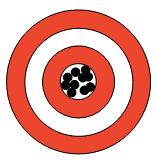

Which Student is the most Precise?
Alex
Shandra
Luis
(a) is a measure of how close measurements come to each other when they are made in the same way.
A student's measured length during a science experiment was 12.00 cm. The actual size was 14.25 cm.
What was the percent error?
*Hint: You now know how to calculate error, and you should know how to calculate a percent, so put the two together to find this answer.
15.79%
18.75%
2.25%
Jessie estimates the weight of her cat to be 8 pounds. The actual weight of the cat was 10 pounds.
What was the percent error?
*Hint: You now know how to calculate error, and you should know how to calculate a percent, so put the two together to find this answer.
15%
20%
25%
30%
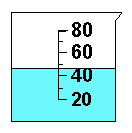
Based on the markings of this beaker, what is the estimated volume?
48 mL
48.2 mL
48.25 mL
0.04 L
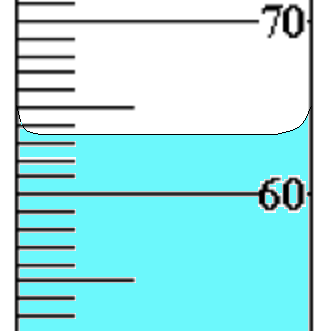
Based on the markings of this graduated cylinder, what is the estimated volume?
63.5 mL
63 mL
63.55 mL
0.063 L
Which Student is the most Precise?
Alex
Shandra
Luis
Every measurement is only a(n) (a) of the true value of the quantity.
In this problem 2(9.8 in. +12.53 in.) = the answer should be.
44.0
44.7
44.6
44.66
45.00


Based on the data chart, which student has the most PRECISE data?
Student A
Student B
Student C

Based on the data chart, which student has the most ACCURATE data?
Student A
Student B
Student C

The percentage of copper and oxygen in samples of “CuO” obtained by different methods were found to be the same. This illustrates the law of:
Constant proportions
Conservation of mass
Multiple proportions
Reciprocal proportions

A balanced chemical equation is in accordance with:
Avogadro's law
Law of conservation of mass
Law of multiple proportions
Law of reciprocal proportions
Law of constant proportion is also referred to as law of definite proportion
True
False
What is the ratio of C:O in CO2?
4:8
3:7
8:4
2:4
Dalton believed that atoms could be
broken into parts
rearranged to create other atoms
combined to form compounds
used to form elements
Chemical reactions change the ______ of atoms
composition
arrangement
size
shape
Methane (one C, 4 H) and ethane (2 C, 6H) illustrate the law of
definite proportions
multiple proportions
additive proportions
conservation of mass
The law of conservation of mass says that the mass of products in a reaction
is greater than the mass of the reactants
is less than the mass of the reactants
is equal to the mass of the reactants
none of the above
Atoms combine in simple ___________ to form compounds.
proportions
fractional ratios
simple whole number ratios
variable ratios


Which one of the following pair of substances illustrates law of multiple proportions?
Calcium oxide and calcium hydroxide
Sodium chloride and sodium bromide
Carbon monoxide and carbon dioxide
None of the above



If two or more compounds are composed of the same two elements, then the ratio of the masses of the second element that is combined with a certain mass of the first element is always a ratio of small whole numbers. This statement is called the law of
definite proportions.
conservation of mass.
atomic theory.
multiple proportions.
Which scientist discovered the electrons?
Dalton
Thomson
Atristotle
Bohr
What is the center of an atom called?
nucleus
electron cloud
proton center
photon center
Which of the following is/are conclusions based on Rutherford’s gold foil experiment?
Atom is mostly empty space
The nucleus is positively charged
The atom has a small dense nucleus
All answers are correct


This picture best represents ___________________ atomic model.
Thomson's
Dalton's
Bohr's
Chadwick's
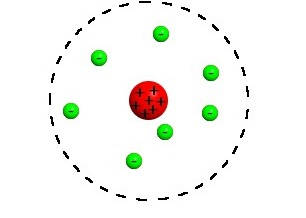
This model this model was the first to show a nucleus, consisting of protons and neutron. Electrons surround the nucleus but are not shown in distinct energy levels.
The "Rutherford Model" of the atom
The "Plum Pudding Model" of the atom
The "Quantum Mechanical Model" of the atom
This model was developed after J.J. Thompson discovered electrons, a particle smaller than an atom. It shows electrons floating freely in a positive region.
The "Plum Pudding Model" of the atom
The "Rutherford Model" of the atom
Democritus's model of the atom
The "Quantum Mechanical Model" of the atom

The cathode-ray tube was used to discover the ____ by ____.
electron by Thomson
electron by Dalton
proton by Thomson
proton by Dalton
electron by Rutherford
What are electrons?
an atom’s central regions, which is made up of protons and neutrons
subatomic particles that have negative charges
subatomic particles that have neutral charges
subatomic particles that have positive charges

In Rutherford's famous "Gold Foil" experiment, some particles passed through the foil, some were deflected, and some were bounced straight back. This observation made Rutherford conclude
gold atoms have a solid nucleus
gold atoms can conduct electricity
gold atoms are denser than other metals
gold's elections orbit the nucleus at definite distances from the center
What were the main flaws in Dalton’s atomic theory? (choose all that apply)
All elements are composed of tiny indivisible particles called atoms that cannot be broken down further.
Atoms of different elements differ in their physical and chemical properties.
All atoms of a given element are identical.
In chemical reactions, atoms are combined, separated or rearranged, but not created nor destroyed.
Atoms of different elements combine in simple, whole number ratios to form compounds.
The main ideas of Dalton's theory were:
1. All matter is composed of ------------ atoms.
2. All the atoms of a given element are ---------.
(a)

Who carried out a cathode ray experimentand discovered Electrons in 1897?
J. J. Thomson
Ernest Rutherford
John Dalton
Chadwick

Who discovered Protons when he carried out a gold foil experiment in 1911?
Ernest Rutherford
James Chadwick
Neil Bohr
Erwin Schrudinger

Name the person who discovered the nucleus.
Ernest Rutherford
James Chadwick
John Dalton
Issac Newton

Rutherford carried out an experiment where he fired a stream of alpha particles at a very thin sheet of gold foil. He found that most of the alpha particles passed straight through the foil, while some were deflected at a small angle and some were deflected directly back.
Rutherford carried out an experiment where he fired a stream of alpha particles at a very thin sheet of gold foil. He found that most of the alpha particles passed straight through the foil, while some were deflected at a small angle and some were deflected directly back.
Specify what this experiment told Rutherford about the structure of the atom.
Atoms are indivisible solid spheres
All atter is made up of atoms
Electrons are scattered through a positive shpere
Atoms have a small, dense and posititvely charged nucleus at the centre.

Which of the following statements is a part of Rutherford's model of the atom.
Atoms are mostly empty space.
Electrons are scattered throughout atoms.
There is a positive cloud of electorns scattered through it.

Which of the following statements is a part of Rutherford's model of the atom?
Electrons are scattered evenly throughout atoms.
Atoms cannot be divided into smaller particles
Atoms are composed of subatomic particles

2
3
4
6

a
b
c
d

a
b
c
d
e

o. 5 g/cm3
o. 50 g/cm3
2.0 g/cm3
2.00 g/cm3

1, 2, 3 and 6 only
1, 4, 5 and 6 only
2, 3, 4 and 5 only
1, 2, 3, 4, 5 and 6

