
 Worksheets
Chapter 12
Total questions: 58
Worksheet time: 1hrs 9mins
Which scientist described a positively charged core (“nucleus”) in the middle of a lot of empty space?
Chadwick
Thomson
Rutherford
Bohr
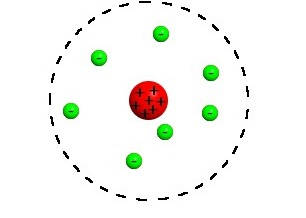


How many neutrons would you expect the average gold atom to have given the information shown?
79
118
197
276

Who established that "electrons move around the nucleus at fixed distances called orbitals"?
Dalton
Thomson
Rutherford
Bohr
Who was Ernset Rutherford?
English Science teacher who developed the first Atomic Theory
English physicist who discovered an electron
German physicist who discovered a proton
New Zealand born physicist who established existence of a positively charged nucleus in an atom
What is an alpha particle?
It is a dominant particle in a subatomic world
It is a particle that has 2+ charge
It is a particle that has 2- charge
It is a helium atom without a charge
What results did Rutherford observe in his Gold-Foil experiment?
He observed that all alpha particles did go through a gold-foil in straight lines
He observed that most alpha particles did not go through a gold-foil and stopped on one side of the gold foil.
He observed that a small number of alpha particles bounced off the gold-foil at very large angles
He observed that all alpha particles slightly deflected from the straight line when going through a gold-foil
What subatomic particles are in the nucleus of an atom?
Only protons
Protons and neutrons
Only neutrons
Only electrons
Protons and electrons

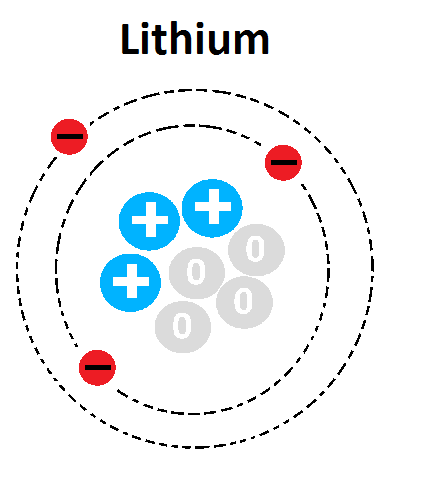


If an element has an atomic number of 23 and an atomic mass of 50.89, how many neutrons must it have in it's nucleus?
38
28
17
29

On the periodic table, Groups are
Horizontal rows
Vertical columns

On the periodic table, Periods are
Horizontal rows
Vertical columns
The innermost energy level has a maximum of how many electrons?
1
2
6
8

What does the Bohr Model represent?
The structure of molecules
The structure of the Solar System
The structure of an atom
The structure of East Hills

Elements in Group number 17 are known as
Alkai Metals
Alkaline Metals
Halogens
Noble Gases
Which group includes non-reactive gasses that have a full outer electron shell?
Alkai Metals
Alkaline Metals
Halogens
Noble Gases

Which group includes soft, highly reactive metals with one electron in their outer shell?
Alkai metals (group 1)
Alkaline metals (group 2)
Halogens (group 17)
Noble gasses (group 18)

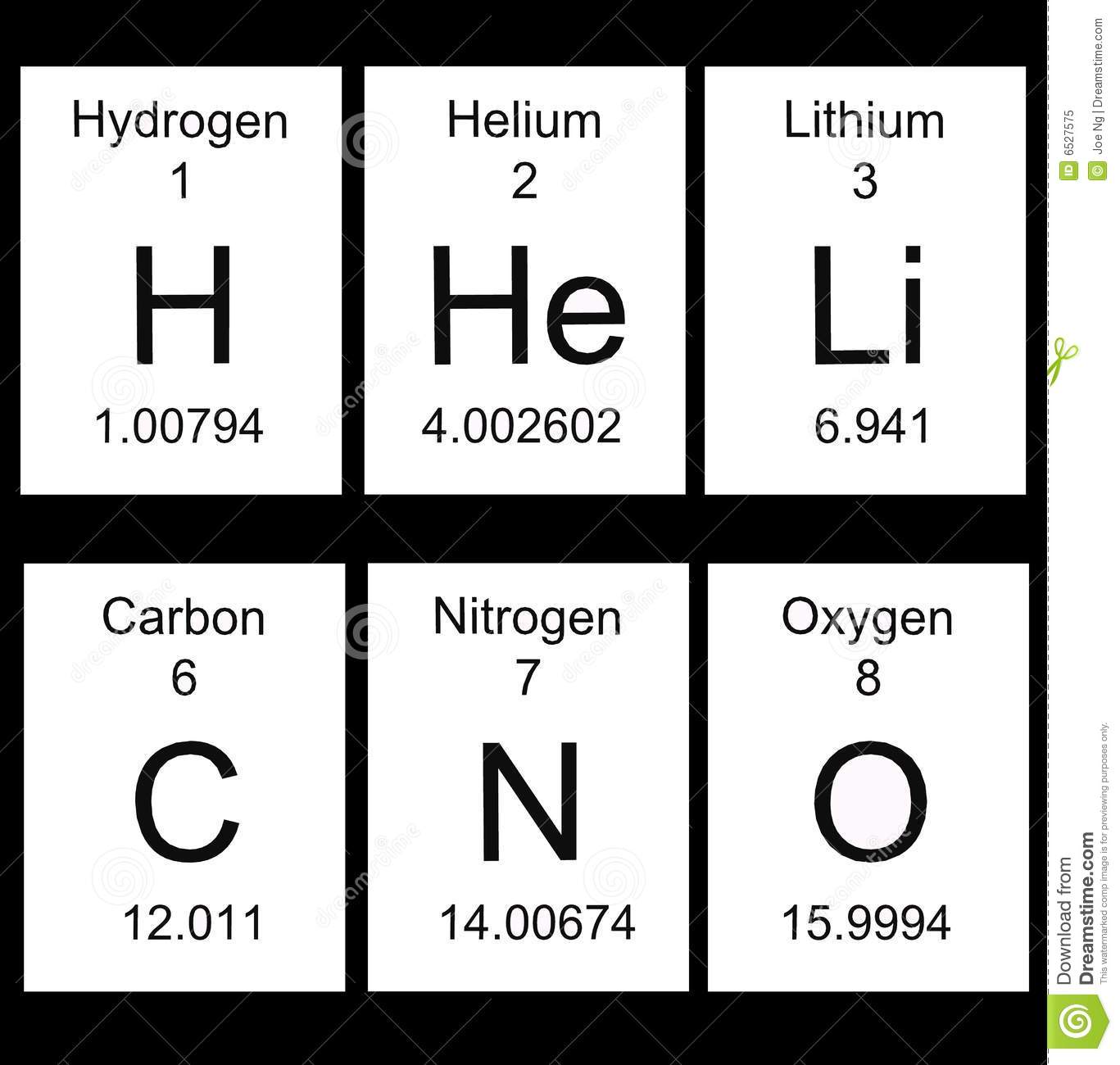


a unique number for each element that equals the number of protons in an atom of that element
element name
element symbol
atomic number
atomic mass

a collection of atoms of one type that cannot be broken down into simpler substances by ordinary chemical or physical means
element
subatomic particle
electron
matter
one of several forms of a single element, which contains the same number of protons, but different numbers of neutrons
isotope
ion
orbital
nucleus
an atom or group of atoms that has gained or lost one or more electrons and is now either positively or negatively charged
isotope
ion
orbital
nucleus
Which are the Alkaline earth metals?
calcium, magnesium, Beryrillium, Strontium, Barium, Radium
Lithium, Sodium Potassium, Ribidium, Cesium, Francium
Nitrogen, Phosphorous, Arsenic, Bismuth
Helium, Neon, Argon, Krypton, Rado, Xenon
Transition metals generally have higher densities and strength than alkali metals
True
False
Who knows that?
Which of the following are properties of transition metals?
They are excellent conductors of electricity and heat
They are malleable and ductile.
They have high boiling points.
All of the above.
Copper can be shaped into wires because it is _______
ductile
playable
soluble
corrosive
Transition metals include the only elements that can produce a
transition
compound
ion
magnetic field
What is the mean of the "halogens"?
acid former
salt former
alkali former
non metal former
Where are the"Halogens" located in periodic table?
In 1A group
In 2A group
In 7A group
In 8A group
Gases that exhibit stability and low reaction rates are called ______________
Halogen gases
Noble gases
Boron gases
Carbon gaese
A neutron changes into a proton and an electron releasing this type of particle.
alpha decay
beta decay
gamma decay
all of the above
alpha & beta decay
This particle has 2 protons and 2 neutrons like a helium nucleus.
alpha particle
beta particle
gamma photon
alpha and gamma particles
none of the above
This type of decay creates a new element
alpha
beta
gamma
alpha and beta
none of the above


What were John Dalton three contributions to atomic history?
Created the atomic theory
Discovered that the atom is mostly empty space
Believed that atoms of a given element are identical
Hypothesized that the atom is a tiny, hard sphere
Believed that the universe was made of tiny "uncuttable" particles

What were J. J. Thomson's three contributions to the atomic theory?
Discovered the electron
Discovered the nucleus -did the gold foil experiment
Used the cathode ray tube in his discovery
Created a model of the atom with electrons moving around the nucleus in fixed orbits
Created the "plum pudding" model of the atom

