wayground logo

Free Printable Worksheets

Font size

S
M
L
XL
Worksheets

Photosynthesis & Transpiration

Total questions: 35

Worksheet time: 1hrs 10mins

Name
Class
Date
1.
What is being produced during photosynthesis?
a)
sugar and oxygen
b)
sugar and carbon dioxide
c)
glucose
d)
gases
2.
What gas is TAKEN IN during photosynthesis?
a)
argon
b)
nitrogen
c)
oxygen
d)
carbon dioxide
3.

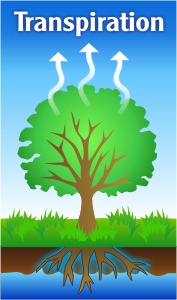
What is transpiration?

a)

Excess water being released from the leaves

b)

Excess sugar being released from the leaves

c)

The way a plant makes its food

d)

When the plant uses sugar for energy

4.
What gas is released from the plant during RESPIRATION?
a)
carbon dioxide
b)
oxygen
c)
nitrogen
d)
argon
5.
Which tubes transport the sugar from the leaves throughout the plant?
a)
phloem
b)
xylem
c)
stem
d)
roots
6.

What is respiration?

a)

The way a plant grows

b)

The way a plant releases excess waste

c)

The way a plant makes its food

d)

The way a plant uses sugar for energy

7.
What is photosynthesis?
a)
The process of a plant using food for energy
b)
The process of a plant making its own food
c)
The process of a plant getting rid of waste materials
d)
The process of a plant growing
8.
How is water transported from stems to leaves?
a)
xylem
b)
phloem
c)
stems
d)
roots
9.
How is the water exiting this leaf?
a)
xylem tubes
b)
phloem tubes
c)
stomata
10.
What can be inferred as a result of this experiment?
a)
Plants need sunlight to grow.
b)
Plants need sunlight to obtain chlorophyll.
c)
Plants need water for photosynthesis.
d)
This plant is really a fungus
11.
Plants transform energy when they make their own food. Which type of energy is used by plants for making food?
a)
electrical
b)
heat
c)
light
d)
mechanical
12.
Certain flowers will open for twelve hours and then close. Which stimulus do the flowers respond to when they open and then when they close for that time period?
a)
light levels
b)
moon phases
c)
seasonal temperatures
d)
carbon dioxide levels
13.
In which direction do the roots of plants grow?
a)
In the direction of moisture only
b)
in the direction of the pull of gravity only
c)
in the direction of water and the pull of gravity
d)
in the direction of water and away from the pull of gravity
14.
How are plant cells different from animal cells?
a)
Only plant cells can grow
b)
Only animal cells can reproduce
c)
Only animal cells can store energy
d)
Only plant cells can perform photosynthesis
15.
In which part of a tree does photosynthesis most likely take place?
a)
root
b)
bark
c)
trunk
d)
leaves
16.

What is transpiration?

a)

Excess water being released from plants in the form of water vapour

b)

Excess sugar being released from the leaves

c)

The way a plant makes its food

d)

When the plant uses sugar for energy

17.

Water transported from stems to leaves through what?

a)

xylem

b)

phloem

c)

stems

d)

roots

18.

Which of the following indicates the pathway of water through a plant?

a)

root hair cell --> xylem --> Mesophyll --> substomatal space --> stomata

b)

substomatal space -- > stomata --> root hair cell --> xylem --> Mesophyll

c)

xylem --> stomata --> root hair cell --> Mesophyll --> Substomatal space

19.

Select all of the environmental factors that would increase transpiration.

a)

Increased humidity

b)

Increased wind speed

c)

Increased temperature

d)

Decreased surface area

20.

Which statement correctly identifies the substance and direction it is transported in the xylem?

a)

Water, only upwards

b)

Glucose, only upwards

c)

Water, up and down the plant

d)

Glucose, up and down the plant

21.
Transpiration is
a)
the movement of water through a plant from the roots up the stem
b)
the loss of water from the leaves of a plant by the process of evaporation
c)
the flow of water into plant roots by osmosis from the soil
d)
the process of minerals and sugars moving through plant veins
22.
Which feature would be most helpful to a plant in a desert?
a)
small leaves
b)
large seeds
c)
small roots
d)
smelly flowers
23.
Cells that control the opening and closing of stomata
a)
Cuticle
b)
Guard cell
c)
Vascular tissue
d)
Stomata
24.

Stomata opens during night and closes during day

a)

True

b)

False

25.

Factors which affect transpiration are (external)

a)

Sunlight

b)

Wind speed

c)

Humidity

d)

Rain

26.

Adaptations in plant to reduce transpiration are -

a)

Number of stomata

b)

Thickness of cuticle

c)

Loss of leaves

d)

All of the above

27.

What is significance of transpiration

a)

Creates suction force

b)

Helps in distribution of water and nutrients

c)

Cooling effect for plants

d)

All of the above

28.

More root hairs will lead to

a)

Less transpiration

b)

More transpiration

c)

Closure of stomata

29.

Which equation is the photosynthesis equation?

a)

C6H12O6 + O2 -----> CO2 + H20

b)

C6H12O6 + O2 + CO2 -----> H20 + ATP

c)

CO2 + H20 -----> C6H12O6 + O2

d)

O2 + CO2 -----> H20 + C6H12O6

30.

In what plant cell organelle does photosynthesis occur?

a)

Chloroplasts

b)

Mitochondria

c)

Nucleus

d)

Cell Wall

31.

What is the catalyst (makes the reation happen) for the photosynthesis equation? It is also the limiting factor.

a)

Sunlight

b)

Temperature

c)

CO2 concentration

d)

Oxygen concentration

32.

How do short days in winter affect the rate of photosynthesis?

a)

short days increase the rate of photosynthesis

b)

short days decrease the rate of photosynthesis

c)

short days have to impact on the rate of photosynthesis

d)

winter kills plants.

33.

If plants are in need of water and stressed, will they continue to go through phtotsynthesis?

a)

Yes

b)

No

c)

Maybe so?

34.

What does transpiration do? (Check all that apply)

a)

Cools the plant

b)

Warms the plant

c)

Releases gases

d)

Releases water

35.

What is turgor?

a)

Water moving through the plant and stiffening the cells to provide support

b)

Water in the plant

c)

Movement of nutrients within the plant

d)

Movement of sugars within the plant