wayground logo

Free Printable Worksheets

Font size

S
M
L
XL
Worksheets

IIT-JEE & NEET LEVEL-6 (7-T)

Total questions: 100

Worksheet time: 2hrs 40mins

Name
Class
Date
1.

COMPUTER

a)

Essential

b)

Desirable

2.

WATER

a)

Essential

b)

Desirable

3.

MOBILE PHONE

a)

Essential

b)

Desirable

4.

FRIENDS

a)

Essential

b)

Desirable

5.

OXYGEN

a)

Essential

b)

Desirable

6.

EDUCATION

a)

Essential

b)

Desirable

7.

What kind of change occurs if matter changes in amount, size, or shape?

a)

substance change

b)

chemical change

c)

physical change

d)

elemental change

8.
Ice melting
a)
Chemical Change
b)
Physical Change
9.
Water freezing
a)
Chemical Change
b)
Physical Change
10.
Blue liquid and yellow liquid mixed to make a green liquid
a)
Chemical Change
b)
Physical Change
11.
Glass bottle that is shattered
a)
Chemical Change
b)
Physical Change
12.
Shredding a piece of paper
a)
Chemical Change
b)
Physical Change
13.
Is glass breaking a chemical or phyiscal change?
a)
chemical
b)
physical
14.

A green powder is heated & a gas is given off while it turns to a black solid. This describes

a)

Physical Change

b)

Chemical Change

c)

Change in State

d)

Change in Temperature

15.

Which type of change is most often easily reversed?

a)

Chemical

b)

Physical

c)

Both a physical and chemical change.

d)

Neither a physical or chemical change.

16.

A ______ change can be undone and generally refers to a change of state.

a)

Reversible

b)

Irreversible

17.

An _______ change cannot be undone because the change is permanent and generally creates a new substance.

a)

Reversible

b)

Irreversible

18.

Reversible changes are also called

a)

Physical changes

b)

Chemical changes

19.

Which type of change is this?

a)

Reversible

b)

Irreversible

20.

The organ that removes metabolic wastes including urea, excess water, and salts from the blood.

a)

lung

b)

liver

c)

kidney

d)

colon

21.

The organ that removes metabolic wastes including urea, excess water, and salts from the blood.

a)

lung

b)

liver

c)

kidney

d)

colon

22.

The organ whose excretory functions include detoxification of the blood and formation of urea.

a)

liver

b)

kidney

c)

heart

d)

gall bladder

23.

The waste products produced by cellular life processes the most important of which are carbon dioxide, water, urea and mineral salts.

a)

ATP

b)

metabolic wastes

c)

feces

d)

enzymes

24.

Another term for sweating; removal of water, salt and urea through the sweat glands in the skin.

a)

perspiration

b)

respiration

c)

reabsorption

d)

transport

25.

A nitrogen waste resulting from the breakdown of the amino acids produced during protein digestion.

a)

carbon dioxide

b)

bile

c)

urea

d)

water

26.
The process of removal of the body’s wastes is called
a)
gas exchange.
b)
respiration.
c)
excretion.
d)
filtration.
27.
A short tube where urine is released from the body is the _______.
a)
Ureter
b)
Kidney
c)
Bladder
d)
Urethra
28.
Our bodies need the _________ in the air we breathe.
a)
feathers
b)
oxygen
c)
carbon dioxide
29.
When you take air in through your mouth or your nose, you....
a)
exhale
b)
cough
c)
inhale
30.
When you breathe hard, your body...
a)
gets really sweaty.
b)
takes in more oxygen.
c)
sounds loud.
31.
What type of cells carries oxygen?
a)
red blood cells
b)
white blood cells
c)
neurons
32.

What is the top layer of skin called?

a)

callus

b)

epidermis

c)

dermis

d)

hypodermis

33.
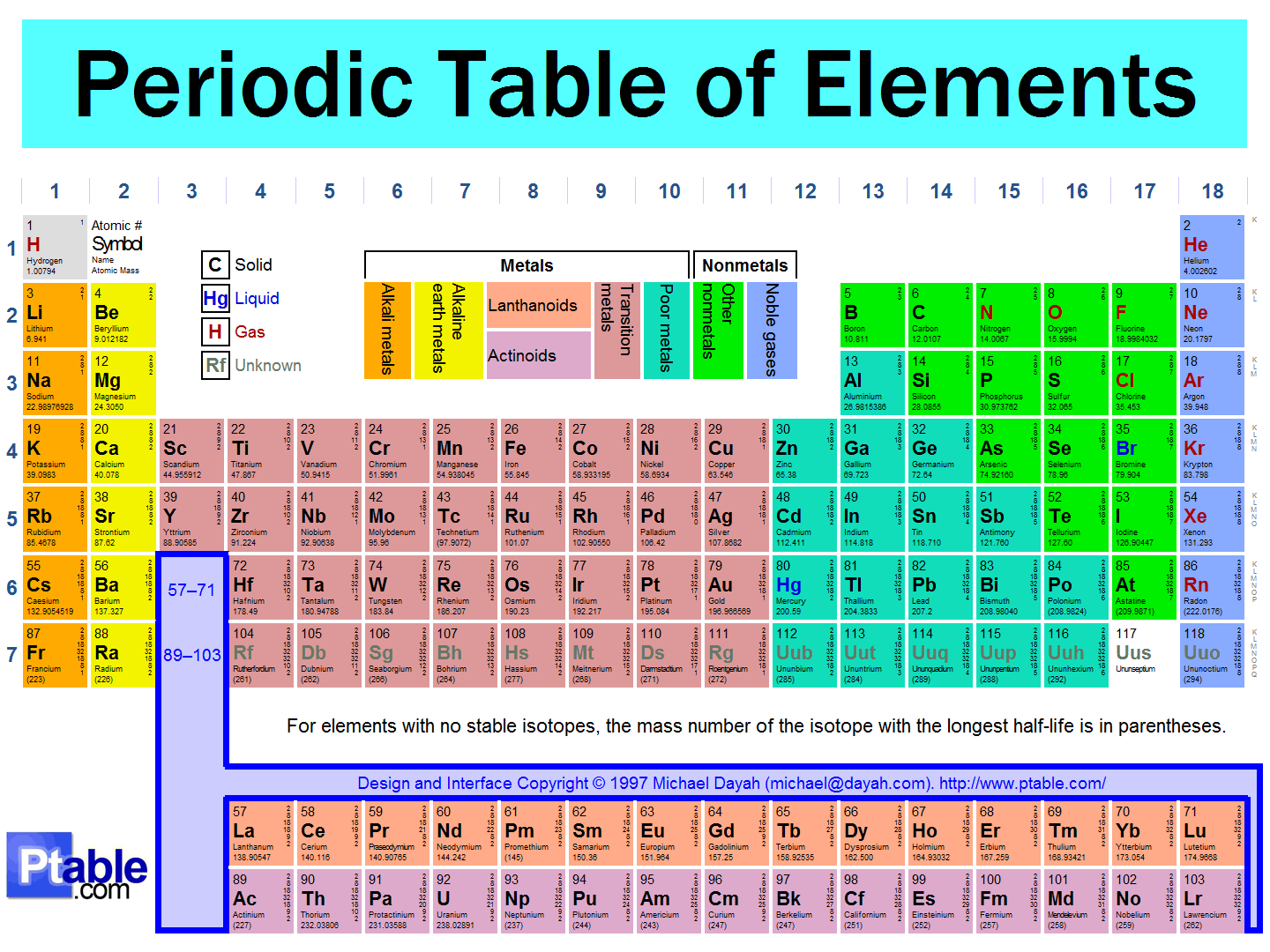
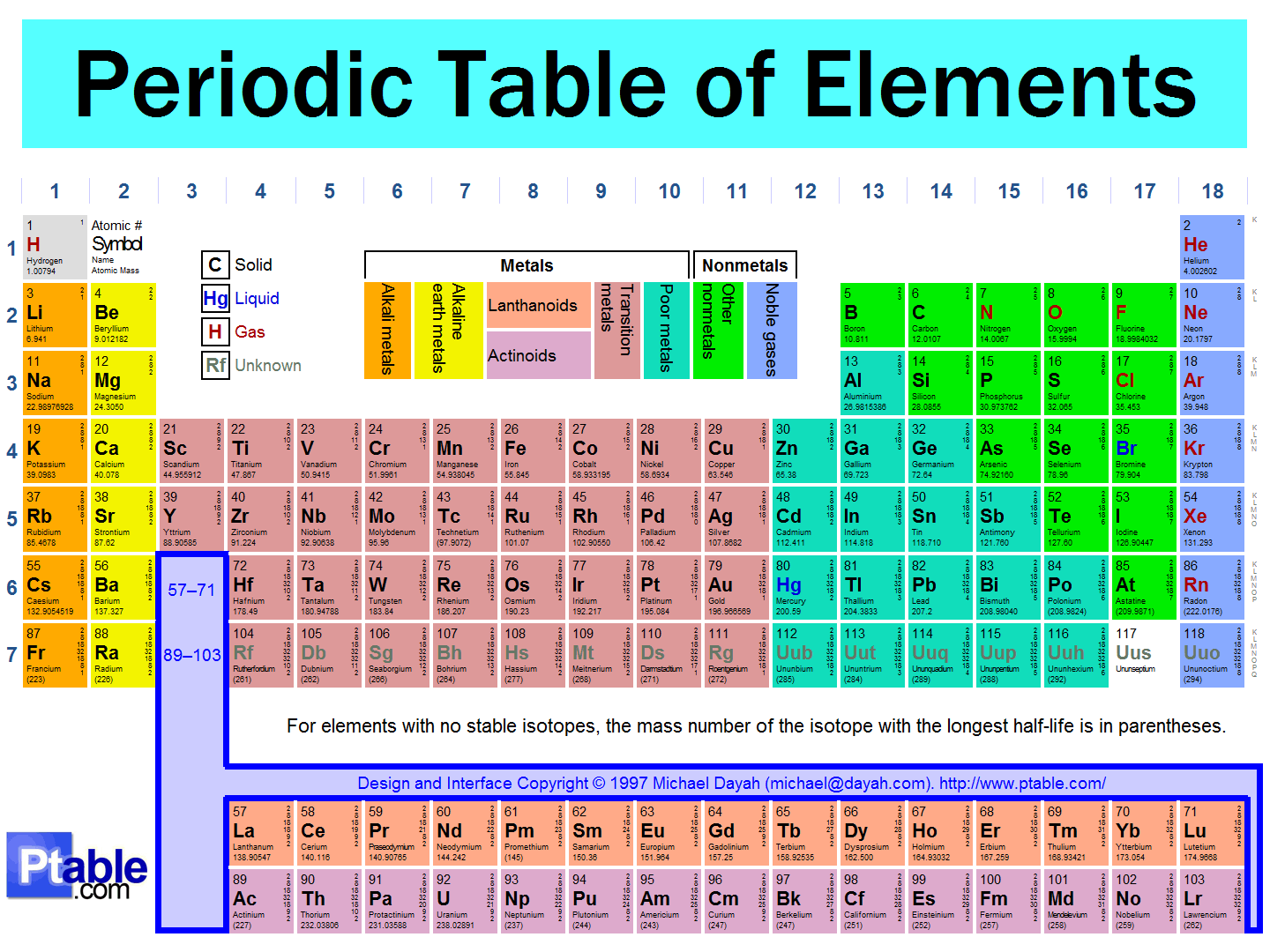
The horizontal row on the periodic table is called a
a)
group
b)
family
c)
period
d)
atomic number
34.
A vertical column is called...
a)
group
b)
tower
c)
period
d)
crew
35.

A ______ change can be undone and generally refers to a change of state.

a)

Reversible

b)

Irreversible

36.

An _______ change cannot be undone because the change is permanent and generally creates a new substance.

a)

Reversible

b)

Irreversible

37.

Reversible changes are also called

a)

Physical changes

b)

Chemical changes

38.

Irreversible changes can also be called

a)

Physical changes

b)

Chemical changes

39.

Fuels are _____ that are very good at burning.

a)

Substances

b)

Cars

40.

Water can't be used on

a)

Wood.

b)

Paper.

c)

Flammable liquids, like oil.

41.
an angle less than 90 degrees
a)
Right Angle
b)
Obtuse Angle
c)
Acute Angle
d)
Straight Angle
42.
an angle more than 90 degrees
a)
Right Angle
b)
Obtuse Angle
c)
Acute Angle
d)
Straight Angle
43.
an angle that equals 90 degrees
a)
Right Angle
b)
Obtuse Angle
c)
Acute Angle
d)
Straight Angle
44.
I have two acute angles and one 90 degree angle. I am...
a)
A Right Triangle
b)
A Scalene Triangle
c)
An Equilateral Triangle
d)
An Isosceles Triangle
45.
All my angles and sides are equal. I am what triangle?
a)
A Right Triangle
b)
A Scalene Triangle
c)
An Equilateral Triangle
d)
An Isosceles Triangle
46.
I have two equal sides. I am...
a)
A Right Triangle
b)
A Scalene Triangle
c)
An Equilateral Triangle
d)
An Isosceles Triangle
47.
None of my angles or sides are equal. I am a variety of everything. I am...
a)
A Right Triangle
b)
A Scalene Triangle
c)
An Equilateral Triangle
d)
An Isosceles Triangle
48.
What is the Pythagorean Theorem?
a)
a2+b2 > c2
b)
a2+b= c2
c)
a2+b2 < c2
d)
a2+b2-c2
49.
Choose the Right Angle
a)
b)
c)
 \__
d)
___
50.
Choose the Obtuse Angle
a)
b)
c)
 \__
d)
___
51.
To which shape(s) does the Pythagorean theorem apply?
a)
All triangles
b)
Right triangles only
c)
Some right triangles and some isosceles triangles 
d)
Right triangles and circles.
52.
The legs form what type of angle?
a)
Acute
b)
Obtuse
c)
Reflex
d)
Right
53.
The longest side of a right triangle is called the...
a)
leg A
b)
leg B
c)
hypotenuse
d)
right angle
54.
The longest side of a right triangle is DIRECTLY ACROSS from the...
a)
right angle.
b)
acute angle.
c)
obtuse angle.
55.
If a2 = 10 and b2 = 30, what is c2?
a)
20
b)
40
c)
300
d)
90
56.
What is the final step in solving this work for c?
a2 + b2 = c2
32 + 42 = c2
9 + 16 = c2
25 = c2
a)
Divide both sides by 2
b)
Take the square root of both sides
57.
The Pythagorean Theorem is
a2 + b+ c2
a)
false
b)
true
58.
solve for x
a)
5552363959656.
b)
10
c)
100
d)
89
59.
What is the formula for finding the hypotenuse?
a)
a2+b2=c2
b)
a+b=c
c)
a-b=c
d)
c-a=c
60.
Find x.
a)
10
b)
√3
c)
5
d)
10√3
61.
What is a possible integer that could be between -6 and 2 on a number line?
a)
4
b)
-8
c)
3
d)
-3
62.
Which of these terms is NOT an example of a negative number?
a)
credit
b)
below zero
c)
withdraw
d)
owe
63.
Finish this statement: "The opposite of 7 is......
a)
7 units to the right of zero
b)
7
c)
7 units to the left of zero
d)
14 units to the left of zero
64.
What is the decimal equivalent of 4/25?
a)
16%
b)
0.16
c)
1.6
d)
0.08
65.
What is the fraction equivalent of 0.40?
a)
40%
b)
1/25, 2/50, 4/100
c)
4/5, 20/25, 40/50, 80/100
d)
2/5,10/25,20/50,40/100
66.
Which of these lists is ordered from greatest to least?
a)
-10, -1, 2, 6
b)
1.8, 1/2, 1/4
c)
0.6, 0.30, 70%
d)
6, -6, -8, 8
67.
Which of these rational numbers is farthest to the left of a number line?
a)
-8/3
b)
-3
c)
-2.3
d)
-10/7
68.
Is the sum of -7 + 5 positive or negative?
a)
Positive
b)
Negative
69.
What is the absolute value of -3 1/2?
a)
1/2
b)
-1/2
c)
3 1/2
d)
-3 1/2
70.
Is the sum of -7 3/5 + -4 3/4 positive or negative?
a)
Positive
b)
Negative
71.
Adding a negative is the same as subtracting a ______________.
a)
negative
b)
positive
c)
integer
d)
opposite
72.
What is the sum of -6 and 2 3/4?
a)
-4
b)
-3 1/4
c)
-2 3/4
d)
-1 1/4 
73.
Which direction would the second arrow  go on the number line for the sum: 3 1/3 + (-4 1/2)
a)
Left
b)
Right
c)
Diaganol
d)
Up
74.
What is the absolute value:
| 3 + (-2 1/2)|
a)
-1 1/2
b)
1 1/2
c)
-1/2
d)
1/2
75.
Subtracting a ___________ is the same as adding a positive.
a)
integer
b)
positive
c)
negative
d)
fraction
76.
solve
a)
2   3/4
b)
2   2/3
c)
1   2/3
d)
not here
77.
Solve
a)
15.64
b)
5.21
c)
16.64
d)
not here
78.
Solve
a)
5   1/2
b)
3/4
c)
16/75
d)
not here
79.
Solve
a)
6.15
b)
- 61.5
c)
55.5
d)
not here
80.
Solve
a)
4.74
b)
5.74
c)
.74
d)
not here
81.

What is the S.I unit of work?

a)

N.m2

b)

(Kg.m2) / s2

c)

J/m

d)

J

82.

In which scenario is work = 0 J ?

a)

Pushing a stationary wall

b)

Pulling a trolley car

c)

Pushing a book across the table

d)

Dropping a set of keys from a height, h.

83.

Power depends on force and speed.

a)

True

b)

False

84.

A car is accelerated on a levelled road and attains a velocity 4 times of its initial velocity. In this process the potential energy of the car

a)

(a) does not change

b)

(b) becomes twice to that of initial

c)

(c) becomes 4 times that of initial

d)

(d) becomes 16 times that of initial

85.

When a body falls freely towards the earth, then its total energy

a)

(a) increases

b)

(b) decreases

c)

(c) remains constant

d)

(d) first increases and then decreases

86.

In case of negative work the angle between the force and displacement is

a)

(a) 0°0\degree

b)

(b) 45°45\degree

c)

(c) 90°90\degree

d)

(d ) 180°180\degree

87.
What is the unit used to measure work?
a)
Joule
b)
Watt
c)
Newton
d)
Pascal
88.
 Work done = Force x _________
a)
a. distance
b)
b. acceleration
c)
c. velocity
d)
d. speed
89.
What kind of energy is in a moving skateboard?
a)
Potential
b)
Kinetic
90.

Work is zero if the force has a component in the direction opposite of motion.

a)

True

b)

False

91.
Something that changes the speed, direction, or shape of another object by pushing or pulling
a)
force
b)
motion
c)
science
d)
sponge bob
92.
Forces change the speed, direction or shape by ____________________-
a)
pushing or pulling
b)
shoving
c)
rolling
d)
jumping
93.
The force when two objects are touching
a)
contact force
b)
action at a distance
c)
electrical force
d)
magnetic force
94.
A force that stops or slows down objects by (example: rubbing)
a)
applied force
b)
frictional force
c)
electrical force
95.
Pushing or pulling while touching
a)
frictional force
b)
applied force
96.
Pushing or pulling while touching
a)
frictional force
b)
applied force
97.
When 2 objects are not touching each other but can still push or pull.
a)
contact force
b)
action at a distance
98.
Work is done when a force causes an object to ...
a)
move
b)
stay still
c)
slow down
99.
energy of position
a)
potential energy
b)
kinetic energy
100.
Energy of motion
a)
kinetic energy
b)
potential energy