Wayground logo

Free Printable Worksheets

Font size

S
M
L
XL
Worksheets

Earth Study Guide

Total questions: 45

Worksheet time: 2hrs 15mins

Name
Class
Date
1.

Select ALL layers that are solid.

a)

crust

b)

mantle

c)

outer core

d)

inner core

2.
The outermost solid layer of the Earth is called the
a)
mantle
b)
outer core
c)
inner core
d)
crust
3.
The layer that lies beneath the mantle and surrounds the inner core. 
a)
mantle
b)
outer core
c)
inner core
d)
crust
4.

Select ALL layers that are liquid/molten rock.

a)

crust

b)

mantle

c)

outer core

d)

inner core

5.
This layer of the Earth is found between the core and the crust.
a)
mantle
b)
outer core
c)
inner core
d)
crust
6.
The solid, dense center of our planet that extends from the bottom of the outer core to the center of the Earth.. 
a)
mantle
b)
outer core
c)
inner core
d)
crust
7.

Which is true about continental crust?

a)

It is thinner and more dense than oceanic crust.

b)

It is thinner and less dense than oceanic crust.

c)

It is thicker and more dense than oceanic crust.

d)

It is thicker and less dense than oceanic crust.

8.
Which of the following causes Earth's tectonic plates to move?
a)
Energy from the Sun
b)
Magnetic Pole Reversal
c)
Convection currents in the mantle
d)
Faults in Mountain Ranges
9.

Which is true about oceanic crust?

a)

It is thinner and less dense than continental crust.

b)

It is thinner and more dense than continental crust.

c)

It is thicker and more dense than continental crust.

d)

It is thicker and less dense than continental crust.

10.
A divergent boundary occurs when plates ....
a)
Pull apart
b)
Come together
c)
Slide past each other
d)
subducting
11.

What is Wegener's idea that continents are slowly moving over Earth's surface called?

a)

divergence

b)

faults

c)

plates

d)

continental drift

12.

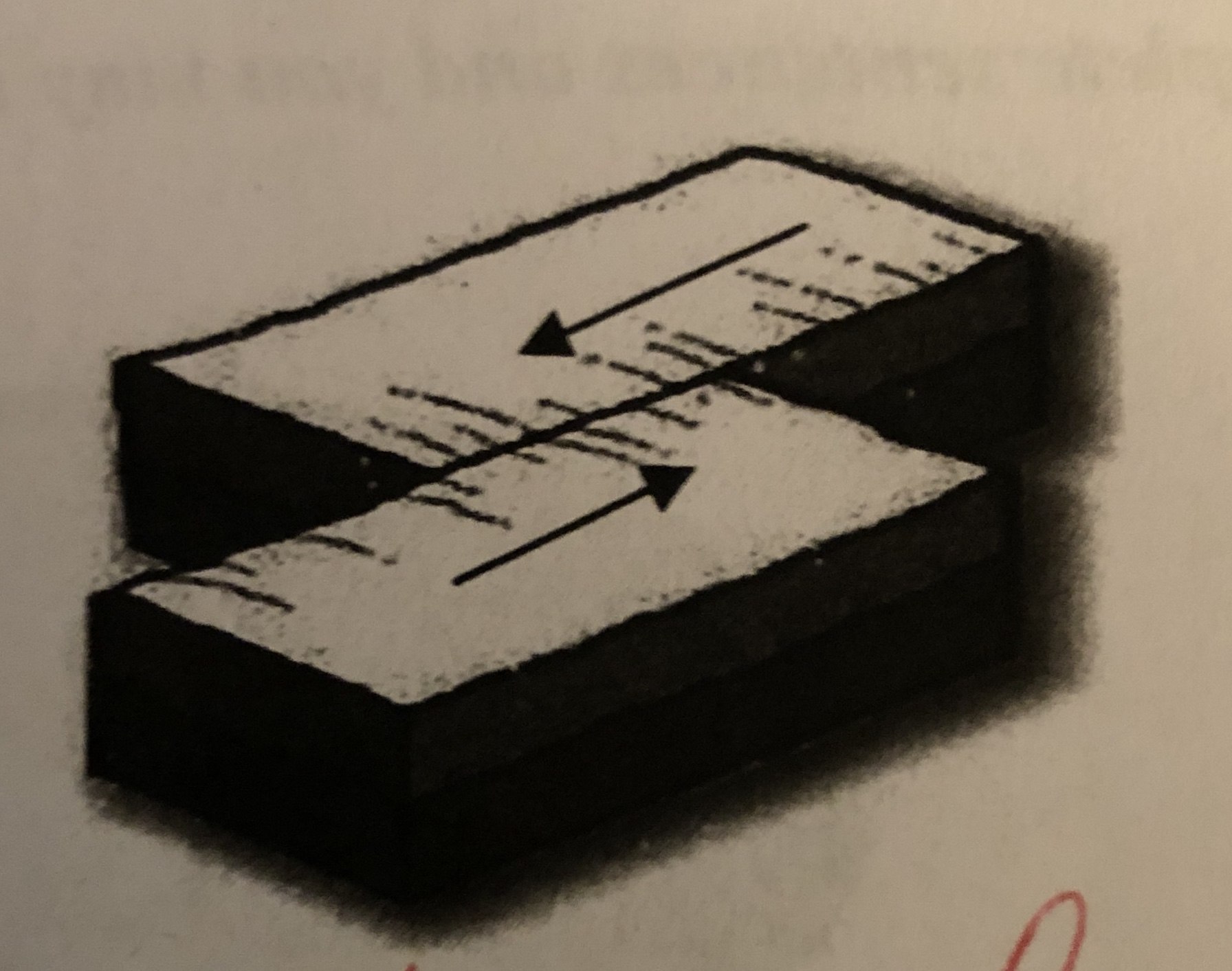
What type of boundary is this?

a)

convergent

b)

divergent

c)

transform

13.

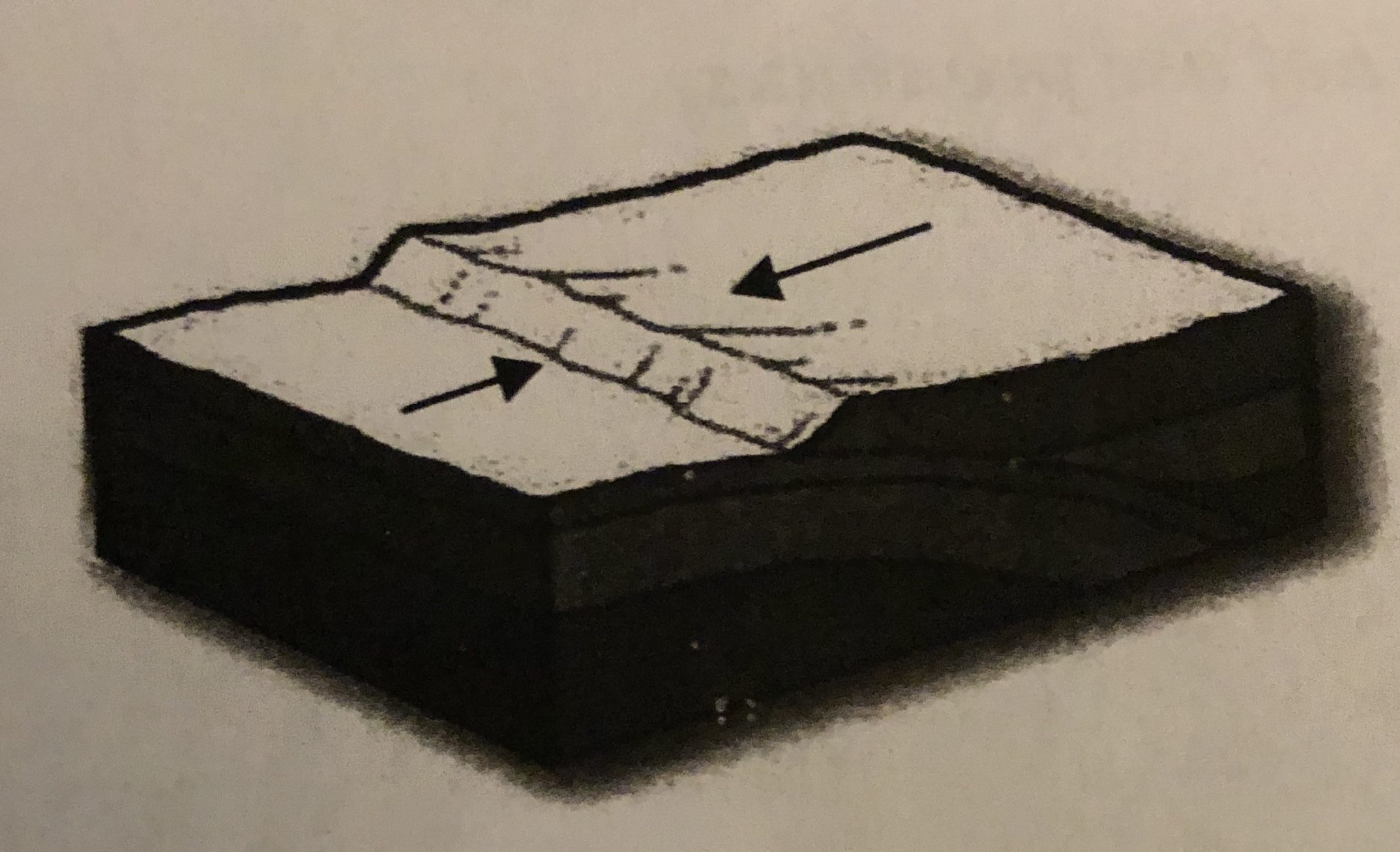
What type of boundary is this?

a)

convergent

b)

transform

c)

divergent

14.

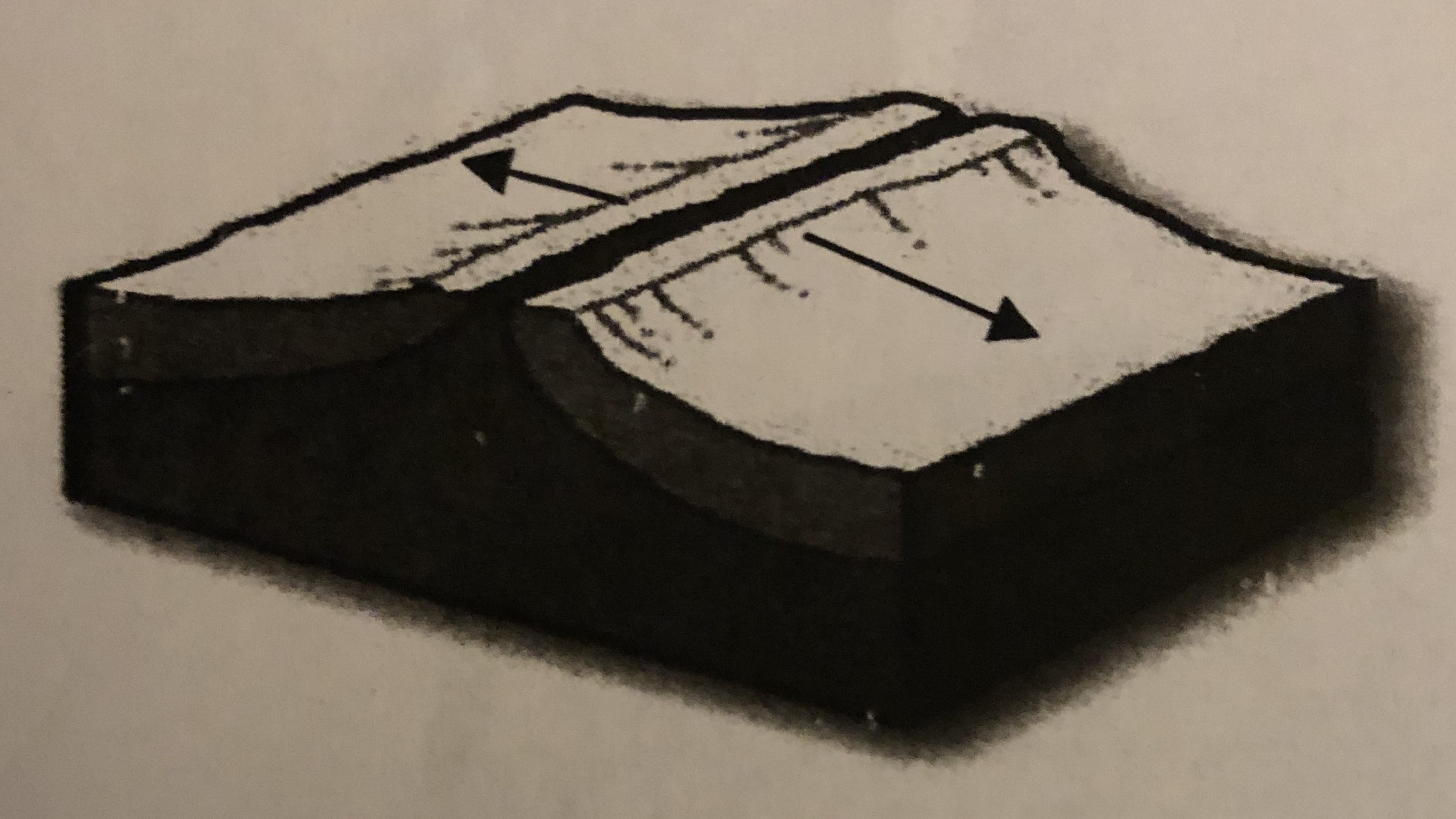
What type of boundary is this?

a)

convergent

b)

divergent

c)

transform

15.

What are the places of Earth's crust that carry the continents and oceans?

a)

sea floor spreading

b)

continental drift

c)

plates

d)

faults

16.

Any trace of an ancient organism that has been preserved in rock is called a

a)

landform

b)

continent

c)

fossil

d)

landmass

17.

The geological theory that states that pieces of Earth's plates are in constant, slow motion, driven by convection currents is the theory of

a)

subduction

b)

plate tectonics

c)

deep ocean trenches

d)

sea floor spreading

18.
The three groups of rocks are classified by
a)
How they form
b)
Color
c)
Grain size
d)
Chemical Composition
19.
Which of the following is not a rock
a)
Pumice
b)
Lava
c)
Halite
d)
Sandstone
20.
Fossils are only found in
a)
Sedimentary rocks
b)
Foliated Metamorphic rocks
c)
Igneous Rocks
d)
Nonfoliated Metamorphic rocks
21.
What are the 3 major types of rocks?
a)
Igneous, Metamorphic, Sedimentary
b)
Metamorphic, Igneous, Cementation
c)
Brown, Red, Gray
d)
Streak, Hardness, Breakage
22.
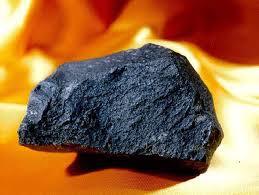
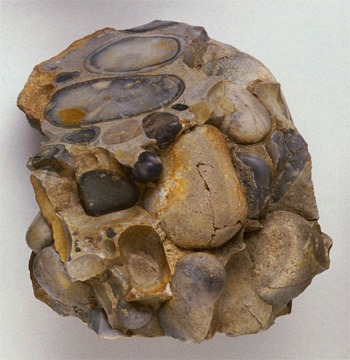
This rock was formed when molten rock cooled into a solid. What type of rock is it?
a)
Igneous Rock
b)
Metamorphic Rock
c)
Sedimentary Rock
23.
The process when rocks break into smaller pieces due to exposure to natural elements is called
a)
erosion
b)
weathering
c)
sediments
24.
True or False: Once a rock is sedimentary, it cannot become an igneous rock.
a)
True
b)
False
25.
The name rock is given when it is broken down into smaller pieces.
a)
texture
b)
weathering
c)
sediment
d)
erosion
26.

Any rock that forms from another rock as a result of changes in heat or pressure (or both) is a:

a)

chemical rock

b)

igneous rock

c)

sedimentary rock

d)

metamorphic rock

27.
This rock was found near the mouth of a volcano. What type of rock is this?
a)
Sedimentary
b)
Igneous
c)
Metamorphic
28.
This rock was formed by smaller pieces of rock that settled at the bottom of a lake millions of years ago. What type of rock is this?
a)
Sedimentary
b)
Igneous
c)
Metamorphic
29.
After lots of time, pressure, and heat, you get this kind of rock. What type of rock is this?
a)
Sedimentary
b)
Igneous
c)
Metamorphic
30.
Each rock type can follow only one pathway of the rock cycle.
a)
True
b)
False
31.
The top layer of soil is called ________.
a)
bedrock
b)
topsoil
c)
subsoil
d)
grass
32.
This is found in the topsoil and is made of decaying plants and animals. 
a)
dirt
b)
water
c)
humus
d)
subsoil
33.
This type of soil is sticky when wet and hard when dry. 
a)
clay
b)
silt
c)
sand
d)
gravel
34.
This type of soil is best for plant growth. 
a)
rock
b)
sand
c)
loam
d)
clay
35.
Loam is a mixture of clay, silt, and sand. 
a)
True
b)
False
36.
Why is soil an important natural resource?
a)
soil is used to make buildings
b)
soil can grow crops
c)
soil comes from bedrock
d)
soil is full of mircobes
37.
Which describes the soil layers in order from the surface?
a)
top soil, bedrock, horizon C, subsoil
b)
top soil, subsoil, horizon C, bedrock
c)
top soil, horizon C, subsoil, bedrock
38.
Why are good conservation practices important for lumber companies to follow?
a)
It adds groundwater
b)
it increases soil erosion
c)
it decreases soil erosion
d)
the soil is shaded
39.
Two methods of soil conservation in farming are
a)
reclamation and subsurface mining
b)
landscaping and nylon fencing
c)
selective harvesting and replanting
d)
contour plowing and windbreaks
40.
Which of the following soil types would contain the most nutrients?
a)
Soil with many large rock particles
b)
Soil with bedrock close to the surface
c)
soil that drains well through it
d)
soil with decomposed organic material
41.
What process breaks down bedrock to begin soil formation?
a)
leaching
b)
weathering
c)
decomposition
d)
humus
42.

What soil conservation method refers to forming steps in a hill to prevent water erosion?

a)

windbreaks

b)

contour plowing

c)

terrace farming

d)

strip cropping

43.
The two main factors that determine the rate of weathering are the TYPE of rock and_____.
a)
Music
b)
Climate
c)
Size of rock
d)
Weight of rock
44.
Which is NOT a layer of soil?
a)
bedrock
b)
topsoil
c)
undersoil
d)
subsoil
45.

What is the most important job of the earthworm?

a)

food for people

b)

to fertilize and mix up soil

c)

as bait to catch fish