
Font size
 Worksheets
Freshwater Wetlands Habitat
Total questions: 39
Worksheet time: 28mins

Which type of wetland is best described as, "The plants growing here are grasses, reeds, and rushes."
river
marsh
lake
ocean

How would you describe the SOIL in the wetlands?
always very dry
always very wet
like a sponge

All of the following are animals found in the wetlands EXCEPT...
frog
turtle
mosquito
polar bear

What are the three common types of freshwater wetlands?
forest, swamp and marsh
bog swamp and forest
marshes, swamps, and bogs
tundra, boreal, grassland

makes water

A land area that is covered with water seasonally or permanently is called:
Lake
Wetland
River

Which of the following is NOT a type of wetlands?
bog
swamp
marsh
cranberry

The water in a river habitat is salty.
True
False

Another word for a 'living thing' is:
computer
organism
paper
calendar

An example of a fresh water habitat is _____
ocean
sea
pond
rainforest

What helps animals blend in with their environment and match their color with it?
Hibernate
Migrate
Camouflage

Most animals that live in fresh water CANNOT live in salty water.
True
False
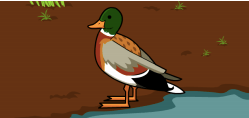
Which adaptation helps a duck swim?
its webbed feet
its wide bill
its soft feathers
its colorful tail

How are ponds and lakes alike?
They both have only salt water.
They both dry up in the summer.
They both get their water from oceans.
They are both bodies of water surrounded by land.

What covers most of Earth?
freshwater
saltwater
deserts
rainforests
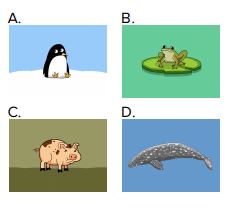
Which animal might live in a pond?
A
B
C
D

These plants are called cattails. Why are they important to a pond habitat?
They provide food for cats.
They scare animals away from the pond.
They erode the pond’s soil.
They provide shelter for pond animals.
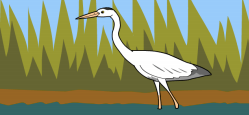
How might this heron’s long neck help it live in its habitat?
It helps the heron blend in with its environment.
It helps the heron lay eggs high in the trees.
It helps the heron catch animals in the water.
It helps the heron stay warm in the winter.

During a DROUGHT many ponds and small streams dry up. What is a DROUGHT?
a period of time where there is little or no rain
a large wave of water that floods an area
a time of hot, humid, and wet weather
a part of the year with heavy rain fall

How are a pond and a stream different?
A pond has plants and animals, while a stream does not.
A pond has still water, while a stream has moving water.
A pond flows into a lake, while a stream flows into a river.
A pond gets its water from the rain, while a stream does not.

How do adaptations help animals?
To escape animals
to hunt for food
to survive in their habitats
All of these are correct

1. What is an adaptation?
A feature or behavior that helps an animal survie.
The food that an animal eats.
How energy moves in a food web.

wetlands are good for everything EXCEPT...?
they help filter dirty water
they provide a habitat for many plants and animals
they help control flooding
throwing old tires in

Wetlands do not provide habitat for animals and plants
False
True

Louisiana has lots of wetland habitats.
True
False

A Nutria Rat is an animal found in the Louisiana Wetlands.
True
False
What covers most of Earth?
freshwater
saltwater
deserts
rainforests
These plants are called cattails. Why are they important to a pond habitat?
They provide food for cats.
They scare animals away from the pond.
They erode the pond’s soil.
They provide shelter for pond animals.
Which of the following bodies of water is not considered as having freshwater?
Rivers
Lakes
Oceans
Streams
Fishes that eat only plants and plant material are called?
Herbivores
Omnivores
Carnivores
Insectivores
Fishes that eat other organisms or animals are called?
Herbivores
Omnivores
Carnivores
Insectivores
Fishes that eat both plant materials and other living organisms are called?
Herbivores
Omnivores
Carnivores
Insectivores

How much of the world's water is freshwater?
100%
10%
3%
30%
Choose the animal that you can find in a freshwater habitat:


Check the organisms that live in a pond habitat


Check the plants that can be found in a pond habitat.



