
 Worksheets
KS3 Key Concepts in Biology
Total questions: 35
Worksheet time: 26mins
A cell with a nucleus are what type of cells:
Prokaryotic
Eukaryotic
Which structures are found in every living cell?
cell membrane and cytoplasm
chloroplasts and mitochondria
a cell wall and nucleus
chloroplasts and cell wall
What is the function of the cell nucleus found in both plant and animal cells?
to produce energy
contains DNA
to remove waste products
to allow molecules to enter the cell
All cells need energy to function. Which cell organelle is responsible for allowing respiration to take place, to produce energy?
chloroplasts
mitochondria
nucleus
vacuoles
In what part of the plant cell does the process of photosynthesis take place?
nucleus
mitochondria
chloroplasts
vacuoles
Check all the boxes for each organelle that plant and animal cells both have.
lysosomes
cell membrane
mitochondria
nucleus
cell wall
Bacterial cells do not have DNA in a nucleus. Bacteria is classified as a what?
Prokaryote
Eukaryote
Single celled organisms are called
unicellular
multicellular
bicellular
tricellular
Which of the following statements is part of the cell theory?
All living things are made up of one or more cells.
Cells are the basic units of living things.
All cells come from pre-existing cells.
All of these
Ian is looking at a cell using a microscope. He sees a nucleus and a large vacuole in the center of a cell. What type of cell is he most likely looking at?
animal cell
plant cell
blood cell
human cell

These are
plant cells
animal cells
bacteria cells
Which of the following is true about cells?
Cells have specialized components that perform different, specific functions.
A cell’s components are all identical and perform the same function.
Cells have specialized components that all perform the same functions.

What piece supports the microscope and is used to transport the microscope from one place to another?
Eyepiece
Stage
Base
Light Source

What piece contains a high-power magnifying lens (40x)?
HIgh-power Objective
Eyepiece
Stage

What part of the microscope is the platform that supports the microscope slide?
Base
Diaphragm
Stage Clips
Stage

What piece holds the microscope slide in place ?
Base
Diaphragm
Stage Clips
Stage

What piece controls the amount of light that enters the microscope ?
Eye piece
Diaphragm
Light Source
Arm

What piece is a larger knob usually found on either the body tube or the arm and it is used to focus the image under low power?
Eye piece
Fine Adjustment Knob
Diaphragm
Course Adjustment Know
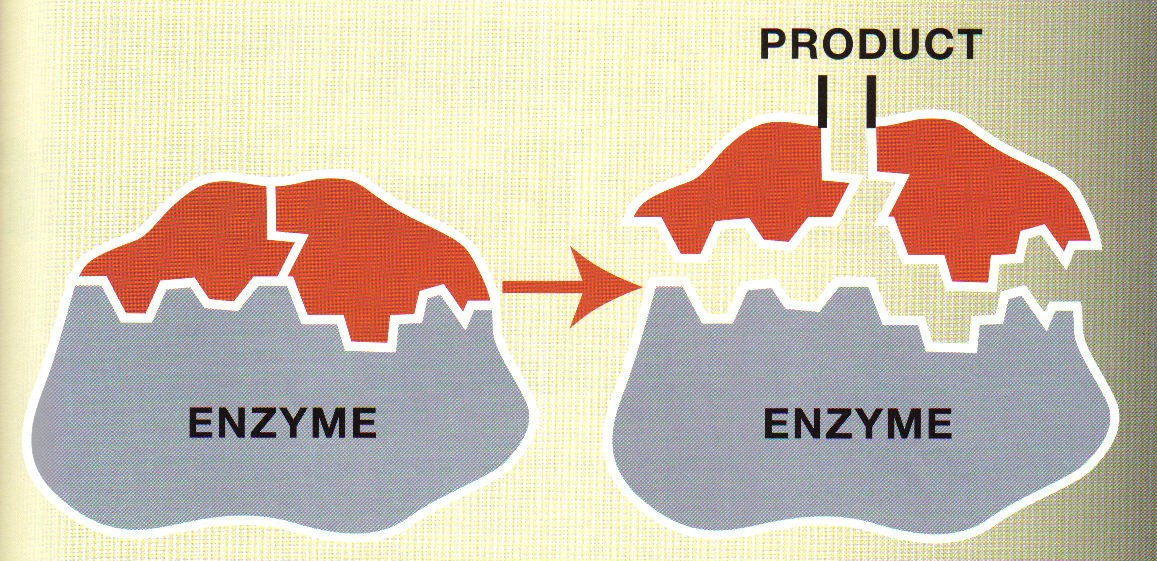
The area that the substrate fits into on the enzyme is called the:
Active Site
Door site
Building site
Chemical reaction site
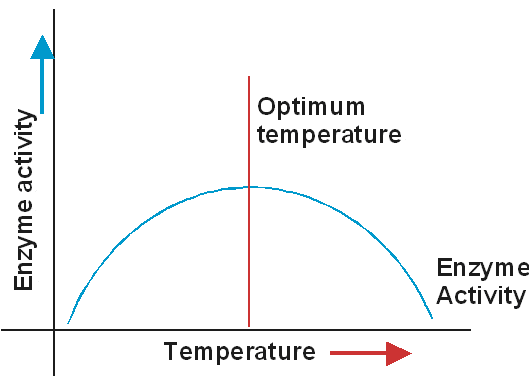
At high temperatures enzyme activity declines because of:
Because the enzyme has changed shape (denaturation)
Because the enzyme cannot be bothered to react
There are no cells for a reaction to take place
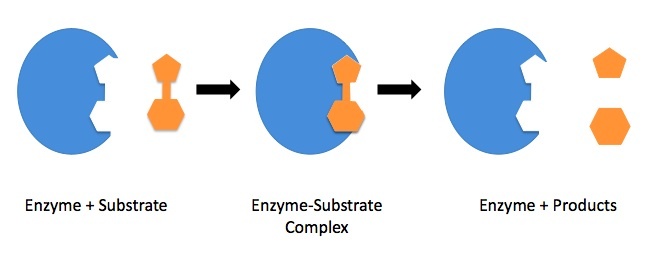
Enzymes are an example of
Lipids
Carbohydrate
Protein
Nucleic Acid
What is the purpose of an enzyme?
give permission for the reaction
raise activation energy
to make us feel better
control how many reactions occur
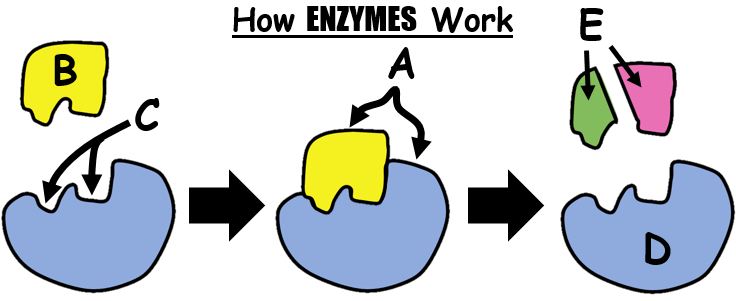
Diffusion occurs only in solids
True
False
How do the particles move in diffusion?
From a region of low concentration to a region of high concentration
From a region of high concentration to a region of low concentration
From a region of low concentration to a region of low concentration
From a region of high concentration to a region of high concentration

