
 Worksheets
Taxonomy
Total questions: 42
Worksheet time: 1hrs 12mins
Cold sores are caused by the herpes simplex virus type 1. A company that wants to develop antiviral drugs would ask a research immunologist to study-
the mechanism used by the virus to infect cells
how closely related the virus is to cold viruses
the metabolism of the virus
meiosis in the virus

A photograph of a virus is shown. The projections on the surface of this virus allow the virus to -
control a host cell's DNA
move inside a host cell
attach to a host cell
signal other viruses to infect a host cell
A person infected with the human immunodeficiency virus (HIV) may not have any symptoms for a period of time. During this period the virus affects the body by doing which of the following?
The virus damages immune cells while using their machinery to produce copies of itself.
The virus changes the identity of the nucleotides of immune cells to prevent the immune system from functioning normally.
The virus produces toxins that weaken immune cells and prevent them from reproducing.
The virus changes the identity of the nucleotides of immune cells to prevent the immune system from functioning normally.

H1N1 flu is a highly contagious viral infection caused by the influenza A (H1N1) virus. The symptoms of H1N1 flu are listed in the box below. An antiviral agent administered within 48 hours of the appearance of symptoms can reduce the severity of the illness. Why is it important to administer an antiviral agent to an infected person within 48 hours of the appearance of symptoms?
The H1N1 virus is dormant in cells.
The H1N1 virus replicates quickly.
The H1N1 virus does not mutate.
The H1N1 virus is transmitted through a vector host, such as a mosquito.

Models of the human immunodeficiency virus (HIV) and an animal cell are shown.
What is the difference in the function of the function of the glycoprotein structures of the HIV virion and the cilia of an animal cell?
The glycoprotein structures are used for defense, and the cilia are used for locomotion.
The glycoprotein structures are used to obtain nutrition, and the cilia are used to secrete proteins.
The glycoprotein structures are used to provide physical support for the viral envelope, and the cilia strengthen the cell membrane.
The glycoprotein structures are used for attachment, and the cilia are used to move fluids surrounding the cell.
How are virus bacteriophages and bacteria alike?
They contain antibodies.
They reproduce by mitosis.
They are both prokaryotes.
They have identical genomes.
Covid-19 virus can be transmitted through the air and direct contact. Once the virus gains entry to the body, it invades a host cell in order to -
metabolize host proteins and grow
synthesize antibodies for defense
use cellular process to replicate itself
deactivate the host cell's defenses
The 1918 influenza epidemic killed between 50 million and 100 million people worldwide. This epidemic happened near the end of World War I. More people died from the influenza epidemic than were killed in the war. Which of the following explains why this virus was so deadly worldwide?
Infected soldiers returning from the war spread the virus when they coughed.
all of these answers are correct
Food was scarce because of the war, so people were undernourished, and their immune systems were weakened.
Medical personnel often became ill as a result of exposure to airborne virus particles.
A person infected with the human immunodeficiency virus (HIV) may not have any symptoms for a period of time. During this period the virus affects the body by doing which of the following?
The virus produces toxins that weaken immune cells and prevent them from reproducing.
The virus uses nutrients meant for immune cells to fuel its own cellular respiration.
The virus changes the identity of the nucleotides of immune cells to prevent the immune system from functioning normally.
The virus damages immune cell while using their machinery to produce copies of itself.
Severe acute respiratory syndrome (SARS) is an illness caused by a coronavirus. Symptoms including a high fever, headaches, and body aches typically occur to to seven days after infection by the virus. SARS is more serious in elderly patients. This information suggests that the reproductive cycle of the SARS virus is -
lysogenic, because the virus is a coronavirus
lytic, because the virus causes respiratory illness
lysogenic, because the virus primarily affects older people
lytic, because of the quick onset of symptoms after infection
Scientists around the world use a standardized taxonomic system. Why would scientists want to use a taxonomic system that is standardized?
Because Linnaeus established the system
So that Latin names can be applied for a practical purpose
In order to avoid confusion with the identification of organisms
In order to place organisms in different groups

Adult mountain lions (Puma concolor) are almost 2 meters long. They have a black spot over each eye. The common names used throughout the United States for this species are listed. Why is it best for scientists to use the name from the standardized taxonomic system?
The standardized name differentiates mountain lions from pumas.
The standardized name is less descriptive of the animal that has been observed.
All scientists will be using one name for mountain lions.
Communication with other scientists about mountain lions will be reduced.
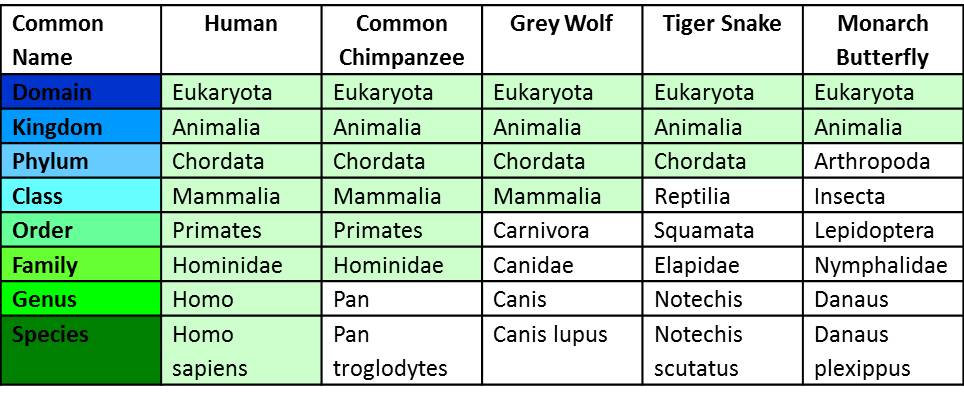
The Linnaean taxonomic system classifies organisms into divisions called taxa. If two organisms belong to the same taxonomic group, they are related. Similarity at which of these levels indicates the closest relationship?
Kingdom
Class
Order
Genus
Having a standard taxonomic system benefits the scientific community by allowing scientists from all over the world to do which of the following?
Have a common understanding in the classification of organisms.
Have a common system for the classification of locations containing fossils.
Use a similar system to classify the impact of removing species from ecosystems.
Understand how other scientists classify predator-prey relationships.

This dichotomous key can be used to identify some conifers. Based on the key, which of these best describes the leaves and cones of the longleaf pine?
Needle-like straight leaves that are mostly over 25 cm long and found in clusters of three; no thorns on cones
Flattened and scale-like leaves that are mostly over 25 cm long; soft and leathery cones
Needle-like straight leaves with a length of 25cm that are mostly found in clusters of five; thorny cones
Leaves with a length of 25 cm that are found in clusters of more than five; no thorns on cones
Frogs and toads belong to the order Anura. The smallest organism in this order is about 7 mm long, while the largest member is about 30 cm long. Which of these lists best describes this order?


What characteristic do all of the organisms to the right of the Pigeon have?
scales
feathers
fur
whiskers

Using a light microscope, a student identified the following characteristics of four organisms found in a sample of pond water. Based on the observations of the student, which organisms most likely belong to the taxonomic group for bacteria?
Organisms 1 and 2
Organisms 3 and 4
Organisms 1 and 4
Organisms 2 and 3

The diagram shows a dichotomous key and a picture of a fruit. According to the key, the fruit comes from which species of tree?
Fraxinus americana
Fraxinus nigra
Acer platanoides
Acer negundo

A student collected the animal shown below on a field trip. The student used a dichotomous key and a microscope to classify the animal. How should this animal be classified?
Arthropoda
Platyhelminthes
Annelida
Mollusca
Arthropods are joint-legged animals. Spiders, crabs, pill bugs, centipedes, and millipedes are examples of the many types of arthropods. Which of these arthropods are most closely related?
Arthropods of the same family
Arthropods of the same class
Arthropods of the same genus
Arthropods of the same species

Five general characteristics of organisms in kingdoms Plantae or Fungi are listed in the box. Which table correctly lists the characteristics of the organisms in the two kingdoms?


A student wants to use the Venn diagram below to show the characteristics of two kingdoms of organisms. The characteristics that the two kingdoms share will be listed in the shaded area where the circles intersect. Which of these is a characteristic that the student should list in the fungi part of the diagram?
Heterotrophic
Mobile
Prokaryotic
Multicellular

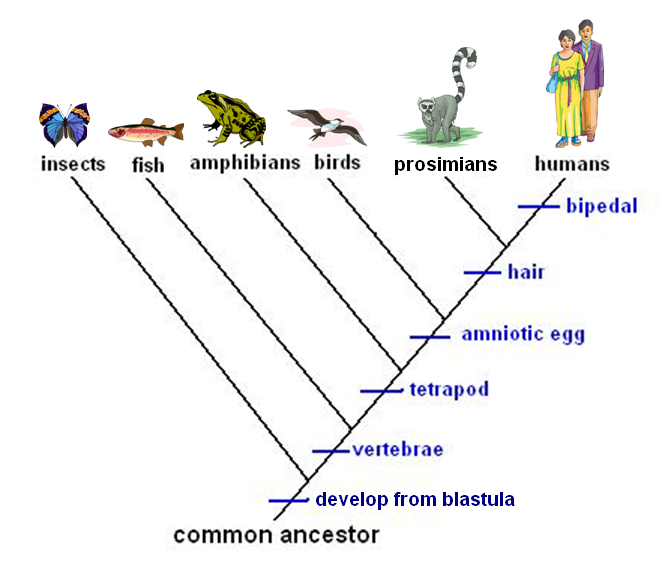
The diagram shows taxonomic groups and a major distinguishing characteristic of all but two of them. Which characteristic will be used to complete the chart?


The table shows some observations made by four students during a field trip to a nature area. Which student made observations of a population?
Student 1
Student 2
Student 3
Student 4
A science class is planning a field trip to a local farm that has a large pond. Which of the following lists the order of biological organization from smallest to largest that the students can expect to find at the pond?
organism, community, population, ecosystem
organism, population, community, ecosystem
population, organism, community, ecosystem
population, organism, ecosystem, community
Which of the following functions at the same organizational level as the kidney in the human excretory system?
skeleton
epithelial tissue
urinary bladder
a squamous cell

A student is studying the ecology of a playa lake, which forms after a rainfall in a dry lake bed. The table lists the organisms that the student observed. Which level of biological organization has the student described in the table?
biosphere
organelle
community
ecosystem
Ctenodiscus crispatus (Mud Starfish)


Identify the one that is NOT an archaea.
Methanogen
Thermophile
Halophile
Virus

An organism identified with binomial nomenclature includes which two taxa?
class and order
family and genus
genus and species
kingdom and phylum
Scientists currently classify organisms based on features they share. How will this most likely change in the future?
They will be classified based on DNA analysis.
They will be classified based on similar organs.
They will be classified based on common descent.
They will be classified based on protein production.

