wayground logo

Free Printable Worksheets

Font size

S
M
L
XL
Worksheets

Science 3 Review

Total questions: 70

Worksheet time: 2hrs 20mins

Name
Class
Date
1.

Animals are ..................elements .

a)

biotic

b)

abiotic

2.

The rabbit is an ............ animal.

a)

Insectivorous

b)

Carnivorous

c)

Herbivorous

3.

the lion is a ................. animal

a)

Insectivorous

b)

Herbivorous

c)

Carnivorous

4.

Which of the following is a characteristics of Mammal?

a)

Has Scales

b)

Has Fur

c)

Has Smooth Skin

d)

Has a 3 chambered heart

5.

What do Mammals, Fish, Birds, Reptiles and Amphibians have in common?

a)

Have backbones to support them

b)

Lay eggs

c)

Live in water

d)

Fly

6.

Reptiles have smooth skin

a)

True

b)

False

7.

Reptiles are Cold Blooded

a)

True

b)

False

8.

Which animal starts it life in the water, then moves on land?

a)

Fish

b)

Bird

c)

Reptile

d)

Amphibian

9.

How are Reptiles different Amphibians?

a)

They lay eggs

b)

They have scales

c)

The have smooth skin

d)

They are cold blooded

10.

What food do lions and tigers eat?

a)

meat and plant

b)

grass or plants

c)

meat

11.

Which of the following is a grass-eating animal?

a)

crocodile

b)

horse

c)

pig

12.

What part of the seed-,fish, and shell-eating animal use to eat?

a)

special body part

b)

teeth

c)

beak

13.

What part of nectar-feeding animal use to eat?

a)

mouth

b)

beak

c)

special body part

14.
The leaf's cuticle
a)
stores water
b)
reduces evaporation
c)
transports water in the leaf
d)
absorbs water for the leaf
15.
The energy that powers photosynthesis comes from
a)
water
b)
chemicals
c)
oxygen
d)
the sun
16.
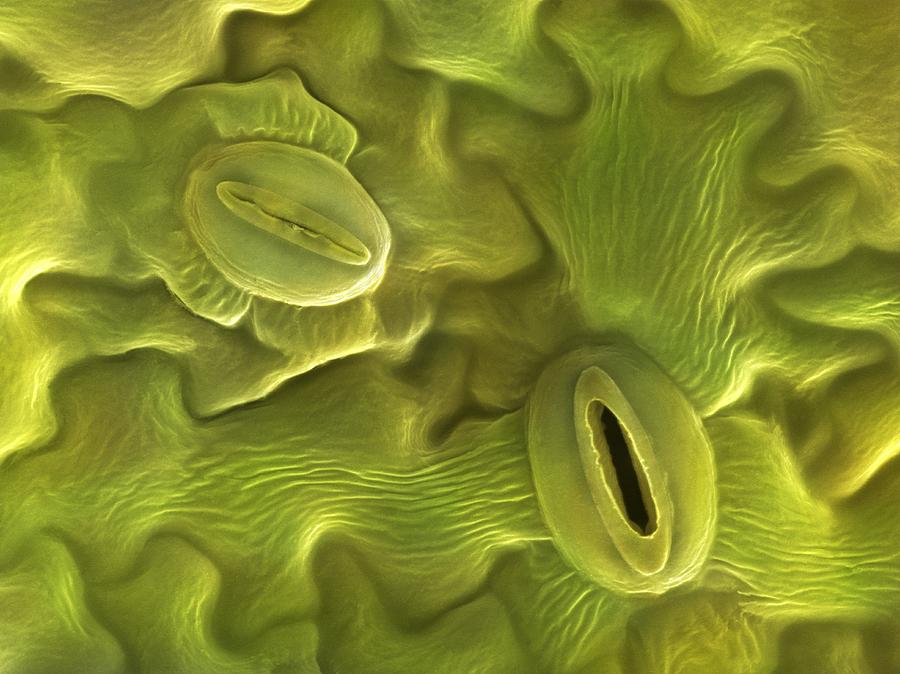
Gases pass in and out of a leaf through the 
a)
stomata
b)
phloem
c)
xylem
d)
cuticle
17.
All of the following is a root function, except
a)
water absorption
b)
food storage
c)
plant anchoring
d)
food production
18.
Root hairs help a plant
a)
transport food to the root
b)
absorb water and nutrients
c)
protect the root
d)
store food
19.
What is this?
a)
stem
b)
root
c)
flower
d)
leaves
20.

What is this?
a)
leaves
b)
stem
c)
fruit
d)
flower
21.
What is this?
a)
roots
b)
stem
c)
leaves
d)
flower
22.
What is this?
a)
flower
b)
fruit
c)
leaves
d)
stem
23.
What is this?
a)
fruit
b)
flower
c)
root
d)
leaves
24.
Roots and root hairs help a plant take in water and nutrients from this.
a)
soil
b)
air
c)
sun
d)
humans
25.
Part of the plant that attracts insects for pollination
a)
Root
b)
Stem
c)
Leaf
d)
Flower
26.
Part of plant that acts like an anchor
a)
Root
b)
Stem
c)
Leaf
d)
Flower
27.
What is the function of plant part #1?
a)
I take nutrients from the soil.
b)
I attract insects for pollination.
c)
I carry water and nutrients up to the rest of the plant.
d)
I take in sunlight and make food for the plant.
28.
What is the function of plant part #2?
a)
I take nutrients from the soil.
b)
I attract insects for pollination.
c)
I carry water and nutrients up to the rest of the plant.
d)
I take in sunlight and make food for the plant.
29.
What is the function of plant part #3?
a)
I take nutrients from the soil.
b)
I attract insects for pollination.
c)
I carry water and nutrients up to the rest of the plant.
d)
I take in sunlight and make food for the plant.
30.
What is the function of plant part #4?
a)
I take nutrients from the soil.
b)
I attract insects for pollination.
c)
I carry water and nutrients up to the rest of the plant.
d)
I take in sunlight and make food for the plant.
31.
What plant part makes seeds or fruit?
a)
the stem
b)
the roots
c)
the flower
d)
the leaves
32.
Type of root
a)
fibrous root
b)
taproot
33.
Opening that allows gas exchange
a)
Stomata
b)
Leaves
c)
Roots
d)
Vascular tissue
34.
___ opens and closes the stomata.
a)
Guard cells
b)
Xylem
c)
Roots
d)
Phloem
35.
Type of root
a)
fibrous root 
b)
taproot
36.
The male part of the flower is known as the _____.
a)
stamen
b)
pistil
c)
ovary
d)
petal
37.
The female part of the flower is known as the ____.
a)
stamen
b)
anther
c)
filament
d)
pistil
38.
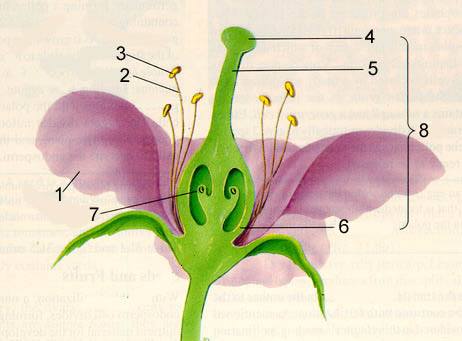
What is #6 pointing to?
a)
stigma
b)
style
c)
ovary
d)
petal
39.
What is #4 pointing to?
a)
anther
b)
style
c)
stigma
d)
ovary
40.
What is #3 pointing to?
a)
stigma
b)
filament
c)
ovary
d)
anther
41.

What type of habitat does this plant live in?

a)

the ocean

b)

rainforest

c)

desert

d)

arctic

42.

What kind of habitat does this plant live in?

a)

The arctic

b)

A forest

c)

A pond

d)

The desert

43.

What are adaptations?

a)

Special parts a plant or animal has that allow it to survive in a habitat.

b)

A plant or animal's favorite food.

c)

Nicknames for a plant or animal.

d)

What a plant or animal likes to dress up as for Halloween.

44.

What special adaptation does a cactus have?

a)

It has tough skin to keep water inside and spikes to keep animals from eating it.

b)

It can change colors like a chameleon.

c)

It grows really fast.

d)

It loses its leaves in the winter.

45.
Most animals have sexual reproduction.
a)
True
b)
False
46.
Eggs and sperm have similar features.
a)
True
b)
False
47.
An embryo grows into a zygote and develops into an adult.
a)
True
b)
False
48.
Most fish have external fertilization.
a)
True
b)
False
49.
It is reproduction which does not require reproductive cells. 
a)
Sexual reproduction
b)
Asexual reproduction
c)
Fertilization
d)
Implantation
50.
It refers to the fertilization between male reproductive cell and female reproductive cell.
a)
Sexual reproduction
b)
Asexual reproduction
c)
Implantation
d)
Fertilization
51.
Male animals produce reproductive cells known as _____.
a)
palisade
b)
ovum
c)
sperm
d)
egg
52.
Female animals produce reproductive cells called ______.
a)
sperm
b)
eggs
c)
palisade
d)
amoeba
53.
It refers to the fertilization outside female fish.
a)
External fertilization
b)
Internal fertilization
c)
Internal implantation
d)
External implantation
54.

The male reproductive cell is called the (a)   .

55.

The female reproductive cell is called the (a)   .

56.

Blood type is a (a)   that can be passed on from our parents to us.

57.

The word 'inherited' means _______________.

a)

reproduced

b)

fertilised

c)

passed on

d)

gave birth

58.

What is the scientific name for a sex cell?

a)

Gromets

b)

Embryo

c)

Gamete

d)

Stem cell

59.

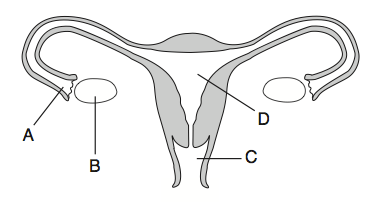
The function of part B is to _______.

a)

produce eggs

b)

produce sperms

c)

allow fertilisation to take place

d)

release the sperm

60.
In the male reproduction system, the testes produces sperm.
a)
True
b)
False
61.

All of these are examples of growth in an individual EXCEPT...

a)

physical

b)

emotional

c)

social

d)

mental

62.

Which of the following is an example of physical growth?

a)

growing long hair

b)

arms and legs grow longer

c)

nails grow longer

d)

none of the above

63.

It is the distance between your head and your foot.

(a)  

64.

This is the unit of measurement for the distance between your head to your foot.

a)

meter

b)

inches

c)

centimeter

d)

kilometer

65.

It is the measure of how heavy you are.

(a)  

66.

This is the unit used for the measurement of how heavy you are.

a)

pounds

b)

kilograms

c)

grams

d)

none of the above

67.

the following are examples of physical growth EXCEPT....

a)

height

b)

weight

c)

muscle mass

d)

walking

68.

What is growth?

a)

It is the quantitative change in form in an organism over a period of time

b)

It is quantitative increase in size in an organism over a period of time

c)

It is the change in the degree of specialization of tissues

d)

It is a measure of an increase in size of an object

69.

A type of development where one is curious about his or her environment.

(a)  

70.

These are activities that help you exercise your thinking.

(a)