wayground logo

Free Printable Worksheets

Font size

S
M
L
XL
Worksheets

Electricity and magnetism - Poulin

Total questions: 69

Worksheet time: 35mins

Name
Class
Date
1.

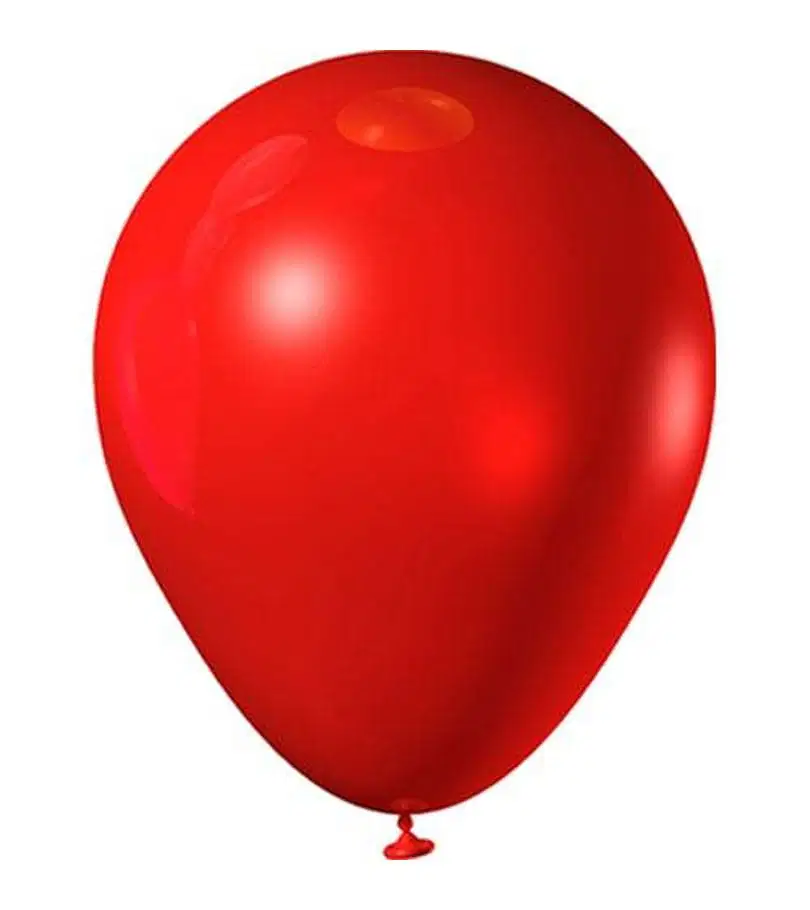
Ms. Jo rubbed two balloons with a piece of wool. What will happen when the balloons are brought near each other?

a)
The balloons will repel each other.
b)
The balloons will attract each other.
c)
The balloons will become positively (+) charged.
d)
The balloons will pop.
2.
The difference between attract and repel is that to attract is to pull something closer and repel is to push something away.
a)
True
b)
False
3.
What types of charges attract?
a)
Positive and Positive
b)
Positive and Neutral
c)
Negative and Neutral
d)
Positive and Negative
4.

When an object gains electrons, the electric charge on the object is called ________

a)
Static electricity 
b)
Electric discharge
c)
Resistance
d)
Circuit 
5.
If a substance has a higher number of electrons than protons on its surface, what type of charge does it have?
a)
A positive charge.
b)
A negative charge.
c)
A neutral charge
d)
No charge at all
6.
Why can you get a shock if you touch a metal doorknob after walking across a wool carpet?
a)

You have gained electrons; that are attracted to the protons on the doorknob

b)
You have gained neutrons; the doorknob has fewer electrons.
c)
You have lost electrons; the doorknob has many electrons.
d)
You have gained electrons; the doorknob has many electrons.
7.
A neutral object becomes negatively charged when it loses electrons.
a)
true
b)
false
8.
What is an insulator?
a)

A material that allows electricity to pass through it.

b)

A material which does not allow electricity to go through it

c)
The amount of devices which are in a circuit
d)
A battery or other device which provides energy for a circuit
9.

Which of the following is an example of an insulator?

a)

rubber

b)

copper

c)

silver

d)

gold

10.

Which of the following is an example of a conductor?

a)

copper

b)

rubber

c)

glass

d)

plastic

11.

A closed pathway through which electrons are conducted is called:

a)

electricity

b)

circuit

c)

insulator

d)

conductor

12.

Materials that allow electric current to flow through easily are called:

a)

electricity

b)

circuit

c)

insulator

d)

conductor

13.

A material that stops current from flowing is called:

a)

electricity

b)

circuit

c)

insulator

d)

conductor

14.

The build up of an electric charge on an object is called:

a)

conductor

b)

friction

c)

static electricity

d)

electric discharge

15.

Static electricity is when_________________

a)

electrons jump from one thing to another

b)

protons flow through a wire

c)

electrons flow through a wire

d)

protons are attracted to neutrons

16.

Current electricity is when_________________

a)

electrons jump from one thing to another

b)

protons flow through a circuit

c)

electrons flow through a circuit

d)

neutrons flow through a circuit

17.

What would cause two balloons to repel?

a)

one is positive and one is negative

b)

both balloons are neutral

c)

both balloons are negative

d)

one balloon is positive and one is neutral

18.

Two objects with LIKE static charges will

a)
attract each other
b)
even out in the end
c)
repel each other
d)
cause a spark
19.
Lightning is _____.
a)
a buildup of neutrons
b)
harmless
c)
a high-voltage electric current
d)
a large discharge of static electricity
20.
What is static electricity caused by?
a)
A balance of power
b)
A balance of positive and negative charges
c)
. An imbalance of positive and negative charges
d)
An imbalance of protons and neutrons
21.

Two balloons are hanging from a stick.

Both balloons have a positive charge.

How would you expect the balloons to move?

a)

there would be no movement

b)

towards each other

c)

away from each other

22.

Two balloons are hanging from a stick.

One balloon has a positive charge and the other has a negative charge.

How would you expect the balloons to move?

a)

there would be no movement

b)

towards each other

c)

away from each other

23.

Electrons have a _________________ charge.

a)

neutral

b)

positive

c)

negative

d)

balanced

24.

Protons have a ________________ charge.

a)

neutral

b)

positive

c)

negative

d)

balanced

25.

A balloon has been rubbed with a piece of wool fabric and placed next to some scraps of paper.

Some paper moves toward the balloon. The movement of the paper is caused by

a)

static electricity

b)

mechanical energy

c)

chemical energy

d)

magnetic attraction

26.
What is a switch's function in a circuit?
a)
to make the current hotter or colder
b)

to open and close the circuit

c)

to lower the energy in the circuit

d)
to add more power to the circuit
27.

How are electromagnets different from magnets?

a)
magnets can be turned on/off
b)

Electromagnets can be turned on and off.

c)
magnets are more powerful
d)
magnets have a North and South pole
28.
What is a stream of electrons moving through a copper wire called?
a)
current electricity
b)
light bulb
c)
series circuit
d)
motor
29.
Why is current electricity more useful than static electricity?
a)
because current electricity is safer
b)
because you can switch off current electricity
c)
because you can control current electricity 
d)
because it's faster than static electricity 
30.
Copper is used in wiring because it is an excellent______________ of electricity.
a)
circuit breaker
b)
conductor
c)
insulator
d)
fuse
31.
When a switch is turned on, you close a circuit so that it is___________.
a)
incomplete
b)
inactive
c)
complete
d)
broken
32.
I allow electricity to run through me easily.
a)
fuse
b)
conductor
c)
insulator
d)
electric circuit
33.
I am the path along which electricity travels.
a)
electric circuit
b)
conductor
c)
insulator
d)
fuse
34.
I am the crackle you hear when you touch a doorknob after rubbing your feet across a carpet.
a)
electric circuit
b)
electric discharge
c)
fuse
d)
conductor
35.
I try to keep electricity from getting to you.
a)
conductor
b)
fuse
c)
electric discharge
d)
insulator
36.
Copper is a good conductor of electricity.
a)
true
b)
false
37.
Rubber is a good insulator.
a)

true

b)
false
38.
Protons have a negative charge and electrons have a positive charge.
a)
true
b)
false
39.
Lightning is an example of static electricity.
a)
true
b)
false
40.

The path along which electricity flows is called ____________.

a)

static electricity

b)

electricity

c)

circuit

d)

discharge

41.

The result of electrical charges is called __________________.

a)

neutral

b)

discharge

c)

electricity

d)

open circuit

42.

The flow of electrical charges through a circuit is called ______________________.

a)

static electricity

b)

neutral

c)

current electricity

d)

discharge

43.

What material covers wires so electricity won't travel into people when they are plugging them in and harm them?

a)

cotton

b)

copper

c)

aluminum

d)

rubber/plastic

44.

You place a charged balloon next to a wall and let go. Which describes what will most likely occur?

a)

The negatively charged balloon will attract the positive charges in the wall, causing the balloon to stick to the wall.

b)

The negatively charged balloon will repel the positive charges in the wall, allowing the balloon to float away.

c)

The positively charged balloon will attract the positive charges in the wall, causing the balloon to stick to the wall.

d)

The positively charged balloon will repel the positive charges in the wall, allowing the balloon to float away.

45.

When two objects are rubbed together, some negatively charged particles from one object can be transferred to another object. What will happen if the objects have the same charge?

a)

They will create a spark.

b)

They will not act differently.

c)

They will attract each other.

d)

They will repel each other.

46.

Thomas created the circuit pictured below using a battery, a switch, and a wire connected to a light bulb. The light is not coming on. What is most likely the reason the bulb is not lit?

a)

The battery is not connected correctly.

b)

The bulb is broken.

c)

The circuit is open.

d)

The wire is not conducting electricity.

47.

What is wrong with this circuit so that it does not work?

a)

It is missing a switch.

b)

The light bulb needs to be on the other side of the circuit.

c)

The path needs to be connected to the battery.

d)

The light bulb needs to be touching the battery.

48.

What part of the atom makes both current and static electricity?

a)

proton

b)

electron

c)

neutron

49.

Bits of tissue are sticking to the balloon because of---

a)

static electricity

b)

electromagnetism

c)

magnets

d)

heat

50.

What is a material that electric current CANNOT easily pass through?

a)

electric current

b)

a conductor

c)

an insulator

d)

static electricity

51.

What is a material that electric current CAN pass through easily?

a)

a circuit

b)

a battery

c)

a conductor

d)

an insulator

52.
Which of these objects is an insulator?
a)
Copper Wire
b)
Paper Clip
c)
Steel Pole
d)
Rubber Gloves
53.

Electricity is ____________________.

a)

the movement of the sun

b)

the movement of electrons

c)

the movement of the moon

d)

the movement of air

54.
Magnets have a north and a south ___________
a)
shape
b)
color
c)
pole
d)
region
55.

What kind of objects can stick to a magnet?

a)

certain metals

b)

Plastic

c)

Cloth

d)

Wood

56.
When two magnets attract, they ______________
a)
push apart
b)
change color
c)
get colder
d)
pull together
57.
When two magnets repel, they ________________
a)
change color
b)
pull together
c)
push apart
d)
get colder
58.
What would we call a nail that can pick up a paperclip because it is touching a magnet?
a)
temporary magnet
b)
poles
c)
force
d)
detector
59.
The force of magnetism is stronger when magnets are ________________
a)
cold
b)
round
c)
closer together
d)
farther apart
60.
True or False: All metals are attracted to magnet.
a)
True
b)
False
61.
The space around a magnet where the force of a magnet can attract best is called__________
a)
magnetism
b)
bar magnet
c)
horseshoe magnet
d)
magnetic field
62.
A magnet will pick up a nail, but not a penny because the nail
a)
has rust on it.
b)
is lighter than the penny.
c)
has a sharp point.
d)
contains iron.
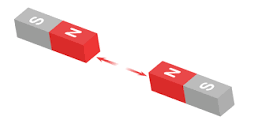
63.
What will happen when these magnets are brought close together?
a)
They will attract each other.
b)
They will repel each other.
c)
Both magnets will turn to the left
d)
Both magnets will turn to the right
64.
Where is the force of attraction the strongest on a magnet?
a)
at the poles
b)
in the middle
c)
above the magnet
d)
below the magnet
65.
In this image, matching north poles from two magnets are introduced.  What do you predict will be the outcome?
a)
There will be no interaction.  The poles of magnets do not have an effect on one another.
b)
The two north poles will attract each other
c)
The two north poles will repel each other
d)
The two magnets will combine and become one magnet
66.

In order to make an electromagnet stronger you __________.

a)

take away one power source

b)

wrap the wire around the nail less times

c)

wrap the wire around the nail more times

d)

wrap the wire around the nail looser

67.

A _____________ is a temporary magnet caused by an electric current being wrapped around iron or steel.

a)

permanent magnet

b)

electromagnet

c)

light magnet

d)

horseshoe magnet

68.

What type of magnets must have an electrical current running through it?

a)

permanent magnets

b)

electromagnets

c)

refrigerator magnets

d)

horseshoe magnets

69.

What happens when an electromagnet turns off?

a)

It is no longer a magnet, and the magnetic force goes away.

b)

Magnets start repelling.

c)

Magnets start attracting.

d)

Nothing changes