
 Worksheets
Energy and Ecosystems
Total questions: 35
Worksheet time: 21mins
Name
Class
Date
1.
What energy role describes an organism that makes its own food, usually by using energy from the sun?
a)
consumer
b)
producer
c)
carnivore
d)
decomposer
2.
All of the following are types of consumers EXCEPT for
a)
carnivore
b)
herbivore
c)
omnivore
d)
producer
3.
These organisms break down decaying biotic wastes and then return the materials to the ecosystem.
a)
decomposers
b)
scavengers
c)
carnivores
d)
producers
4.
An maple tree takes in energy from the sun and uses it to make food for itself. This energy role is
a)
herbivore
b)
omnivore
c)
producer
d)
consumer
5.

In the energy pyramid, what is the bottom level composed of?
a)
Producers
b)
First-Level Consumers
c)
Second-Level Consumers
d)
Third-Level Consumers
6.
Which of the following diagrams would show all of the feeding connections within an ecosystem?
a)
Food web
b)
Food Chain
c)
Energy Web
d)
Energy Pyramid
7.

Using the food web what would happen if the eagle became extinct?
a)
The frog population would decrease.
b)
The frog population would increase.
c)
The butterfly population would increase.
d)
The snake population would decrease.
8.
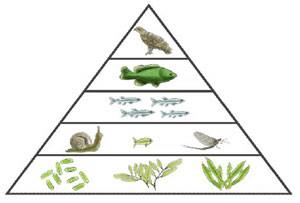
In the energy pyramid, what comes after the producers?
a)
Producers
b)
First-Level Consumers
c)
Second-Level Consumers
d)
Third-Level Consumers
9.
Nick was studying mountain lions. How could she classify them?
a)
omnivore, prey, consumer
b)
herbivore, predator, producer
c)
carnivore, predator, consumer
d)
carnivore, prey, consumer
10.
Which of these is the final link in every food chain?
a)
producer
b)
first-level consumers
c)
second-level consumers
d)
decomposers
11.
Which is the initial source of energy in most ecosystems?
a)
producers
b)
nutrients in the soil
c)
sunlight
d)
oxygen
12.
What would happen if all the mice died from disease in this food chain:
pine seed>>mouse>>snake>>hawk
pine seed>>mouse>>snake>>hawk
a)
The snakes would eat pine seeds
b)
The producers would stop making food
c)
The population of snakes would increase
d)
The population of snakes would decrease
13.
Scavengers
a)
are organisms that break down wastes and the remains of dead organisms.
b)
eat dead plants and animals.
c)
break down dead matter.
d)
are herbivores.
14.

What is a producer?
a)
an organism that consumes other organisms
b)
an organism that uses the suns energy to make its own food
c)
an organism that breaks down other organisms
15.
What is photosynthesis?
a)
how fungi obtain energy
b)
The process in which green plants use oxygen to make carbon dioxide
c)
the process in which green plants use carbon dioxide to make oxygen
d)
the process of absorbing energy by touching things
16.
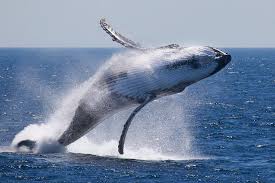
Which of the following is an abiotic factor in a marine ecosystem?
a)
grass
b)
whale
c)
water
d)
plankton
17.
A consumer gets energy by
a)
absorbing sunlight.
b)
breaking down dead organisms.
c)
soaking it up from the ground.
d)
feeding on other organisms.
18.
All the living and nonliving things interacting in a particular area create an ________________.
a)
ecosystem
b)
biodome
c)
playground
d)
park
19.

Which are decomposers ?
a)
humans
b)
trees
c)
red wolves
d)
worms
20.
What is a food chain?
a)
A necklace.
b)
Jewelry made of food.
c)
A path showing how energy moves from one living thing to another.
d)
A life cycle.
21.

What is this called?
a)
Food Web
b)
Food Chain
c)
Abiotic Factors
22.
Which is the correct sequence to show how organisms live in an environment?
a)
decomposer-->consumer-->producer
b)
consumer-->decomposer-->producer
c)
producer-->decomposer-->consumer
d)
producer-->consumer-->decomposer
23.
What does a Secondary Consumer eat?
a)
Tertiary Consumers
b)
Primary Consumers
c)
Producers
d)
Secondary Consumers
24.

Which organism recieves the least amount of energy from the producer?
a)
Owl
b)
Grasshopper
c)
Lilypad
d)
Mouse
25.
What does an energy pyramid show?
a)
Energy flow in a community
b)
Longest lifespans
c)
The stronger animal the higher it is on the pyramid
26.
Which is NOT a consumer?
a)
mushroom
b)
bird
c)
carnivore
d)
omnivore
27.
Which choice has a group of only consumers?
a)
grass, cows, birds
b)
tigers, turtles, seaweed
c)
owl, snake, bear
d)
castus, sun, mushroom
28.
Which choice has a group of only producers?
a)
red wolf, coyote, grey wolf
b)
sunflower, grass, pine tree
c)
mushrooms and worms
d)
seaweed, algae, mushrooms
29.
Consumers that eat only meat are called
a)
decomposers
b)
herbivores
c)
carnivores
d)
omnivores
30.
Herbivores eat
a)
meat only
b)
plants only
c)
both meat and plants
d)
freshly dead organisms
31.
Omnivores eat
a)
meat only
b)
plants only
c)
both meat and plants
d)
freshly dead organisms
32.

Which is the primary consumer in this food chain?
a)
rabbit
b)
grass
c)
snake
d)
hawk
33.
A frog eats a fly. The frog and fly are demonstrating ________.
a)
mutualism
b)
competition
c)
predator/prey
d)
parasitism
34.

A connection of food chains with many food energy paths in an ecosystem is a ____________.
a)
ecosystem
b)
food web
c)
environment
d)
population
35.
A consumer gets energy by
a)
absorbing sunlight.
b)
breaking down dead organisms.
c)
soaking it up from the ground.
d)
feeding on other organisms.
100 %

