
 Worksheets
Enthalpy
Total questions: 21
Worksheet time: 15mins
Define enthalpy.
The opposite of temperature
The temperature of molecule
The energy stored in the movements of the molecules
The internal energy and the product of pressure and wave
What is the Law of Conservation of Energy?
Energy is equal to reactants and products
Energy can be created nor destroyed
Energy is used up but it can be replenish
Energy is conserved and preserved
A process where the system absorbs heat from the surroundings.
Exothermic Reaction
Endothermic Reaction
Enthalpy
Entropy
Study the reaction below. Is it exothermic or endothermic?
H2 + Cl2 --> 2 HCl + 1845 kJ
Exothermic Reaction
Endothermic Reaction
How do you calculate the Enthalpy of Reaction?
ΔH = ΔHproducts - ΔHreactants
ΔG = ΔH -TΔS
ΔT = q / mC
E = mc2
A solute dissolves in water and gets cold.
Exothermic with positive ΔH
Exothermic with negative ΔH
Endothermic with positive ΔH
Endothermic with negative ΔH
The SI unit of energy.
Calorie
calorie
Joules
enthalpy
ΔH value in an endothermic reaction is negative.
True
False
According to the Particles Theory of Matter, one particle has the ability to vibrate within their mean position if added with heat. Which of the following is the statement referring to?
Solid
Liquid
Gas
H2 + ½ O2 --> H2O + 285kJ is an example of a(n)
Electrical equation
Thermodynamical equation
Thermochemical equation
Exothermic reactions feel ____.
warm
cold
A reaction that gives out energy to the surroundings is ____.
Exothermic reaction
Endothermic reaction
Electrical reaction
None of the above
A reaction which causes the temperature of the surroundings to drop.
Exothermic reaction
Endothermic reaction
Electrical reaction
None of the above
It is the study of energy, its different forms, and patterns of change.
Thermochemistry
Enthalpies
Thermochemical equation
Thermodynamics
A balanced equation showing the associated enthalpy change.
Thermochemistry
Enthalpy
Thermochemical equation
Thermodynamics
1 Calorie is equal to ______ calories.
10
100
1000
10000
Systemsincludes _______.
reactants
products
both reactants and products
None of the above
Endothermic:_________:__________
Exothermic:_________:__________
positive:warm
negative:cold
positive:warm
negative:warm
positive:cold
negative:cold
positive:cold
negative:warm
Change in enthalpy is also called as _______.
Systematic Reaction
Balanced Reaction
Energy of Reaction
Heat of Reaction
Hfinal > Hinitial means _____
change of enthalpy is positive and system absorbs heat
change of enthalpy is negative and system absorbs heat
change of enthalpy is positive and system loses heat
change of enthalpy is negative and system loses heat
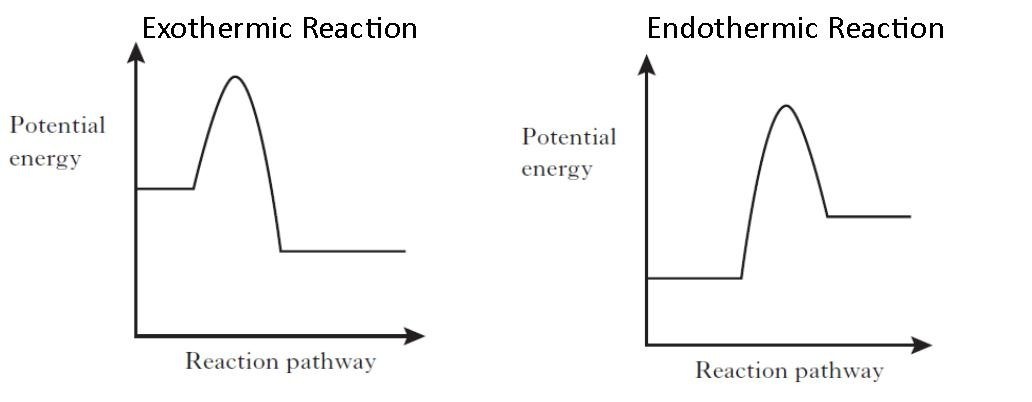
Explain this graph for 10 points.

