

wayground logo

Free Printable Worksheets

NEW

Font size

S
M
L
XL
Worksheets

Energy Review

Total questions: 25

Worksheet time: 11mins

Name
Class
Date
1.
Energy is the ability to do  ___________.
a)
Nothing
b)
Work
c)
Energy
d)
Change
2.

Which of these is a better conductor?

a)
b)
3.
Mrs. Tolson's students are complaining that it is hot in the classroom. She plugs in the fan and turns it on, which energy transformation occurs?
a)
mechanical to electrical
b)
electrical to mechanical
c)
chemical to mechanical
d)
electromagnetic to mechanical
4.
The sun’s energy used by green plants to produce food is an example of light energy being converted to what other form of energy?
a)
kinetic energy
b)
heat energy
c)
mechanical energy
d)
chemical 
5.
Energy can be created.
a)
True
b)
False
6.
The Law of Conservation of Energy states that...
a)
energy can be destroyed
b)
energy can not be created or destroyed
c)
energy can only be destroyed using the force
7.
Which skier will have a greater potential energy? 
a)
Skier 1
b)
Skier 2
8.
On a roller coaster, where is maximum potential energy?
a)
At the bottom of a big hill
b)
When going around a corner
c)
When going upside down
d)
At the top of a big hill
9.
What object can change electrical energy into light energy?
a)
A candle
b)
A fire
c)
A lamp
d)
A radio
10.
When you eat pizza, Chemical Energy is transferred to _____ Energy.
a)
Solar
b)
Electrical
c)
Mechanical
d)
Chemical
11.

What is an insulator?

a)

a material that heat moves through easily

b)

a material that heat does not move through easily

c)

a material that turns cold when heated

d)

a tool for measuring temperature

12.

When plants convert the sun's energy into food, which is the correct transformation of energy?

a)

kinetic to chemical

b)

radiant to chemical

c)

thermal to mechanical

d)

chemical to radiant

13.

What is Convection?

a)

When heat is passed from particle to particle through an object.

b)

When particles get heated, expand, and become less dense.

c)

When heat transfers by waves through empty space.

14.
On a roller coaster, where is maximum kinetic energy?
a)
At the bottom of a big hill
b)
When going around a corner
c)
When going upside down
d)
At the top of a big hill
15.
Gravitational potential energy depends on the ________ and ________ of the object. 
a)
Height and mass
b)
Friction and movement
c)
Mass and Movement
d)
Height and Friction 
16.
Kinetic Energy is:
a)
Energy of motion
b)
always conserved
c)
Energy due to position
17.

Where does the ball have the greatest potential energy?

a)

1

b)

2

c)

3

d)

4

e)

5

18.

A student uses a heat lamp in a terrarium to create a warm environment for her pet lizard. What types of energy are present when the heat lamp is on?

a)

light, sound, mechanical

b)

electrical, light, thermal

c)

sound, thermal, electrical

d)

thermal, light, sound

19.

All of the following are examples demonstrating mechanical energy except -

a)

a fire roasting marshmallows

b)

a fan blowing out air

c)

a girl kicking a ball across the yard

d)

a boy writing with a pen

20.

What is Conduction?

a)

When heat is passed from particle to particle through an object.

b)

When particles get heated, expand, and become less dense.

c)

When heat transfers by waves through empty space.

21.

An electric dishwasher uses thermal energy to clean and sanitize dishes by heating water to high temperatures. Which other household appliance is used to produce thermal energy?

a)
b)
c)
d)
22.

What is Radiation?

a)

When heat is passed from particle to particle through an object.

b)

When particles get heated, expand, and become less dense.

c)

When heat transfers by waves through empty space.

23.

What would be the energy transformation from Position A to Position B

a)

Kinetic to Potential

b)

There is no energy transformation

c)

Gravitational Potential to Kinetic

d)

Potential Elastic to Gravitational Potential
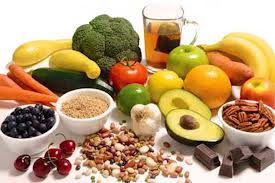
24.

What kind of energy is represented in the picture?

a)

Thermal

b)

Chemical

c)

Sound

d)

Kinetic

25.
Mechanical energy
a)
energy built up before being in motion
b)
energy released in a chemical reaction
c)
energy of motion
d)
sum of kinetic and potential energy
