wayground logo

Free Printable Worksheets

Font size

S
M
L
XL
Worksheets

IIT-JEE & NEET LEVEL - 11 (7-0)

Total questions: 100

Worksheet time: 2hrs 40mins
Name
Class
Date
1.
Neutralization reactions
a)
formed from joining positive and negative ions 
b)
increases OH ions
c)
froms a salt and water
d)
increases H2O ions
2.
Which of the following is a salt: ammonia or sodium chloride?
a)
ammonia 
b)
sodium chloride
3.

True or false: a neutral solution has equal amounts of H+ and OH-.

a)

True

b)

False

4.

NaOH may be found in drain cleaners and as a component of soaps. Is NaOH an acid or a base?

a)

Acid

b)

Base

c)

Neither (Neutral)

5.

Is pure water acidic, basic, or neutral?

a)

Acidic

b)

Basic

c)

Neutral

6.
hydrochloric acid
a)
HCl
b)
HClO
c)
H3ClO3
d)
HClO3
7.

sulfuric acid

a)

HSO3

b)

H2SO3

c)

H2SO4

d)

H3SO4

8.
Mg(OH)2
a)
magnesium hydroxide acid
b)
hydromagnesium acid
c)
magnesium oxygen hydride
d)
magnesium hydroxide
9.
In a neutralization reaction, what are the products of a reaction between an acid and a base?
a)
Another acid and base
b)
Carbon dioxide and a salt
c)
Water and a salt
d)
Either two acids or two bases
10.

A substance is found to have the following characteristics:


Very bitter taste

Feels soapy to the touch

Produces OH- ions when dissolved in water


In what category would the substance be classified?

a)

acid

b)

base

11.

Basic oxide

a)

BaO

b)

P2O5

c)

ZnO

d)

CO2

12.
How are metal oxides formed?
a)
When metals react with oxide.
b)
When metals react with water.
c)
When metals react with air.
d)
When metals react with oxygen.
13.

Acids are substances that release H+ ions when dissolved in water.

a)

True

b)

False

14.

Sulfuric acid reacts with sodium hydroxide to form salt X and water. Name the salt.

a)

sodium sulfate

b)

sodium nitrate

c)

sodium chloride

15.
Pure water has a pH of 7. Pure water _______.
a)
is a base
b)
is a neutral substance
c)
could be either an acid or a base
d)
is an acid
16.

What pH range would you get for an acid?

a)

0-6

b)

7

c)

7-14

d)

2-10

17.

Alkalis feel...

a)

Rough

b)

Granulated

c)

Soapy

d)

Smooth

18.

Acid in vinegar:

a)

Hydrochloric acid

b)

Sulfuric acid

c)

Acetic acid

d)

Carbonic acid

19.
Which of the following is a base?
a)
orange juice
b)
water
c)
vinegar
d)
dishwashing detergent
20.

Identify the acid present in tamarind.

a)

Tannic acid

b)

Lactic acid

c)

Tartaric acid

d)

Citric acid

21.

List the elements of A

a)

{2,3}

b)

{2,3,5,9}

c)

{1,2,3,4,5}

d)

{5,9}

22.

List the elements of A Ո B

a)

{5,9}

b)

{2,3,7,6,8}

c)

{2,3,5,9,7,6,8}

d)

{1,4}

23.

For the given sets A and B, which statement is true?

a)

A ⊂ B

b)

B ⊂ A

c)

A = B

d)

A' = B

24.

Use the Venn diagram to identify the statement that is true.

a)

2 ∈ P ∩ Q

b)

5 ∈ Q

c)

{5,7} ⊆ P

d)

P U Q = Q

25.

List the elements of (A U B)'

a)

{1,4}

b)

{2,3,5,6,7,8,9}

c)

{2,3,6,7,8}

d)

{5,9}

26.
Set  Q  contains the letters in the word  SISTER .
 Which of the following is set  Q ?
a)
Q = { S, T, R }
b)
Q = { I, E }
c)
Q = { S, I, S, T, E, R }
d)
Q = { S, I, T, E, R }
27.

Which of the following is the symbol for null set?

a)

b)

 \subset  

c)

 \in  

d)

 ⊄\not\subset  

28.

Which of the following means proper subset?

a)

 \subset  

b)

 \subseteq  

c)

 \in  

d)

=

29.

How do you write "the complement of A"?

a)

n(A)

b)

(A)

c)

\forall

d)

A'

30.

What does this symbol ( ∪ ) represent in set theory?

a)

Union

b)

Intersection

c)

Disjointed

d)

Subset

31.

Equivalent sets have

a)

the same number of elements

b)

the exact same elements

c)

the opposite elements

d)

nothing

32.

What is intersection of A and B?

a)

A ∪ B

b)

c)

∉

d)

A ∩ B

33.
Given that
R = { factors of  36 }. 
n(R) = 
a)
6
b)
9
c)
12
d)
15
34.

Which of the following is not a set?

a)

The set of boys wearing the school uniform.

b)

The set of even numbers

c)

The set of students wearing red dress

d)

The set of the colors of the rainbow

35.

Which of the following is not a set?

a)

The set of boys wearing the school uniform.

b)

The set of even numbers

c)

The set of students wearing red dress

d)

The set of the colors of the rainbow

36.

A set is a collection of specific, related and well-defined distinct objects.

a)

True

b)

False

37.

Another term for member of a set.

a)

element

b)

set

c)

set notation

d)

roster method

38.

Which of these is an empty set?

a)

The set of green apples.

b)

The set of two-legged elephants

c)

The set of white shirts

d)

The set of green bananas

39.

Which of the following sets is infinite?

a)

Set W is a counting number less than 5.

b)

Set A is a set of whole number between 10 and 15.

c)

Set Y is a set of letters in the English alphabet after U.

d)

Set S is a set or prime numbers.

40.

What way of expressing sets lists down all the elements contained in the set?

a)

set-builder

b)

roster

c)

graphical

d)

semantic

41.

What makes up around 55% of the blood?

a)

Plasma

b)

Red Blood Cells

c)

White Blood Cells

d)

Platelets

42.

What carries oxygen around the body?

a)

Plasma

b)

Red Blood Cells

c)

Platelets

d)

White Blood Cells

43.

What causes the blood to be the distinct red colour?

a)

Haemoglobin

b)

Glucose

c)

Hormones

d)

Oxygen

44.

What causes the blood to be the distinct red colour?

a)

Haemoglobin

b)

Glucose

c)

Hormones

d)

Oxygen

45.

Which of the following is NOT a type of blood vessel?

a)

Artery

b)

Capillary

c)

Vein

d)

Ventricle

46.

What is the function (job) of the red blood cells?

a)

To transport oxygen around the body and to the muscles.

b)

To release antibodies to fight infections.

c)

To carry dissolved nutrients and sugars.

d)

To clot and form scabs if there is a wound on the body.

47.

Which blood vessels take blood AWAY from the heart?

a)

Veins

b)

Arteries

c)

Capillaries

48.

Which blood vessels take blood TO the heart?

a)

Veins

b)

Arteries

c)

Capillaries

49.

Which is the smallest of the 3 blood vessels?

a)

Veins

b)

Arteries

c)

Capillaries

50.

What is blood made of?

a)

oxygen and plasma

b)

red blood cells and white blood cells

c)

plasma, red blood cells, white blood cells, and platelets.

d)

plasma and platelets

51.

What is plasma?

a)

only white blood cells

b)

only red blood cells

c)

fluid part of blood

d)

hemoglobin

52.

Which blood cells carry oxygen throughout the body?

a)

Red

b)

White

c)

Plasma

d)

Platelets

53.

What is the yellowish liquid that carries nutrients and proteins through the body?

a)

Red

b)

White

c)

Plasma

d)

Platelets

54.

Which blood cells fight infection?

a)

Red

b)

White

c)

Plasma

d)

Platelets

55.

This part of the Blood is mostly water with protein from the Liver.

a)

Plasma

b)

Erythrocytes

c)

Hemoglobin

d)

Leukocytes

56.

The fancy name for what gives blood its red colour.

a)

Plasma

b)

Erythrocytes

c)

Hemoglobin

d)

Leukocytes

57.

Which Blood cells are bigger, the white or red?

a)

White

b)

Red

c)

Granulocytes

d)

Lymphtocytes

58.
These blood cells are the protectors and help fight off disease.
a)
Red blood cells
b)
White blood cells
c)
Plasma
d)
Platelets 
59.
What does blood transport?
a)
Nutrients
b)
Oxygen 
c)
Carbon Dioxide
d)
All of the above
60.
what is the meaning of convection?
a)
cold rises heat falls
b)
heat
c)
cold
d)
hot rises cold falls
61.
what is the meaning of conduction
a)
when heat transfers from objects that are not touching
b)
heat rise 
c)
cold fall
d)
when heat transfers from objects that are touching
62.
what kind of heat is happening when the sun heats your body
a)
conduction
b)
convection
c)
density
d)
radiation
63.
heat energy traveling through space is an example of _____
a)
convection
b)
density
c)
radiation
d)
conduction
64.
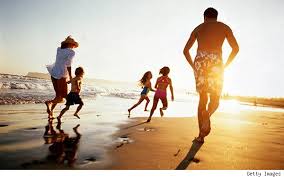
The sun shines down on this family as the play on the beach.
a)
conduction
b)
convection
c)
radiation
65.
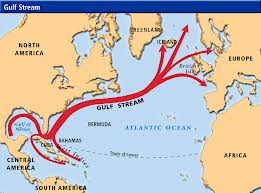
The Gulf Stream is a current that brings warm ocean water from the south to the north.
a)
conduction
b)
convection
c)
radiation
66.
Walking on the warm sand sand with your bare feet.
a)
conduction
b)
convection
c)
radiation
67.
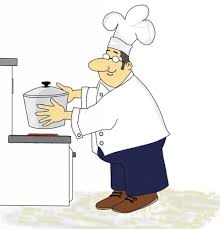
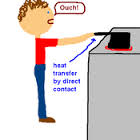
The man goes to take the hot pot off the stove with his bare hands.
a)
conduction
b)
convection
c)
radiation
68.
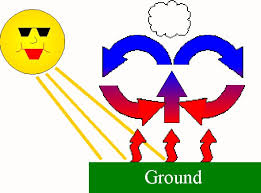
Warm air rises and the cool air sinks.
a)
conduction
b)
convection
c)
radiation
69.
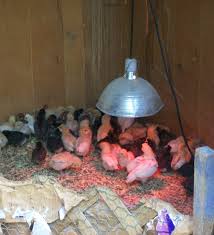
The baby chickens are kept warm from the heat lamps.
a)
conduction
b)
convection
c)
radiation
70.
In some cultures, walking on fire is the ultimate sign of strength.
a)
conduction
b)
convection
c)
radiation
71.
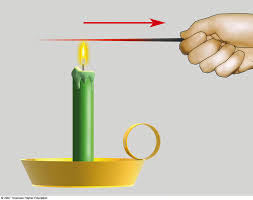
The candle will slowly heat the metal and transfer the heat directly to the mans hand.
a)
conduction
b)
convection
c)
radiation
72.
Johnny accidentally grabbed the handle of the hot pot.
a)
conduction
b)
convection
c)
radiation
73.
Heat transfers from an area of ____temperature to an area of ___ temperature.
a)
high to low
b)
low to high
c)
high to high
74.
The chocolate bunny and the iron.
a)
conduction
b)
convection
c)
radiation
75.
The chocolate bunny and the lamp.
a)
conduction
b)
convection
c)
radiation
76.
Heat transfers from ______ objects to cold objects. 
a)
Cold
b)
Hot
c)
Convection
d)
Radiation 
77.
What type of heat transfer happens in liquids and gases?
a)
Conduction
b)
Convection
c)
Radiation
78.
Touching hot sand is.... 
a)
Conduction
b)
Convection
c)
Radiation 
79.
Hot air ______ while cool air ____
a)
Sinks, Rises
b)
Rises, Rises
c)
Rises, Sinks
d)
Convection, Radiation 
80.

Another name for hypersensitivity ...

a)

allergy

b)

degranulation

c)

cytoxic hypersensitivity

d)

autoimmunity

81.
What is the degree classification of this polynomial?
x²+4x-8
a)
binomial
b)
trinomial
c)
quadratic
d)
cubic
82.
What is the term classification of the following polynomial?
x³-7x²+3
a)
monomial
b)
binomial
c)
trinomial
d)
polynomial
83.
Which is an example of a linear polynomial?
a)
x²-5
b)
6x+4
c)
5x⁵
d)
2x³-9x²
84.
Which is an example of a cubic binomial?
a)
x³+5
b)
x²+3
c)
x²+5x-6
d)
5x³
85.
What is the leading coefficient of the following polynomial?
5x²-3x+6
a)
2
b)
-3
c)
5
d)
6
86.
Which of these has a negative leading coefficient?
a)
x²+9x-4
b)
6x-9
c)
-8x+8
d)
9x
87.
What is the classification of the following polynomial?
x²-8x+10
a)
quadratic binomial
b)
cubic trinomial
c)
linear binomial
d)
quadratic trinomial
88.
Add the following polynomials:
(x³-2x²+3)+(2x³+3x²-1)
a)
3x³-2x²+3x+2
b)
3x³+x²+2
c)
3x³-5x²-2
d)
3x³-x²+1
89.
Add the following polynomials
(x³-6x²+3)+(3x³+4x-1)
a)
4x³-2x²+2
b)
4x³-6x²+4x+2
c)
-2x³+2x+2
d)
4x³-2x²-2
90.
Subtract the following polynomials:
(3x²-3x+2)-(x²-2x+1)
a)
2x²+x+1
b)
2x²-5x+3
c)
2x²-x+1
d)
4x²-5x+3
91.
Simplify:
5(3x+2)
a)
3x+10
b)
15x+10
c)
15x-10
d)
3x-10
92.
Find the product
(x +2)(x + 3)
a)
x2 + 5x + 6
b)
x2 + x + 6
c)
x2 + 5x + 5
d)
x2 + 6x + 6
93.
Find the product
(x + 5)(x + 4)
a)
x2 + x + 20
b)
x2 + 20x + 9
c)
x2 + 9x + 20
d)
x2 - 9x + 54
94.
Find the product
(x + 7)(x + 9)
a)
x2 + 63x + 16
b)
x2 + 16x + 63
c)
x2 + 79
d)
x2 + 16x + 2
95.
Find the product 
(x - 5)(x + 1)
a)
x2 - 4x - 5
b)
x2 + 6x - 5
c)
x2 - 5x - 4
d)
x2 - 4x - 4
96.
Find the product
(x - 4)(x - 6)
a)
x2 -10x + 24
b)
x2 - 10x - 24
c)
x2 +10x + 24
d)
x2 + 10x - 24
97.
Find the difference. 
(3- 2x + 2x2) - (4x -5 +3x2)
a)
x2 + 6x + 8
b)
2x+ 5x - 7
c)
-x2 -6x + 8
d)
-2x2 + 11x - 4
98.
What is the degree of the polynomial
 x2-2x+5
a)
1
b)
2
c)
3
d)
0
99.
4x2 + 8x - 7
is classified as a...
a)
Third Degree Monomial
b)
Second Degree Binomial
c)
Second Degree Trinomial
d)
Third Degree Cubic
100.
What is the above expression classified as?
a)
5th degree Monomial
b)
10th degree Monomial
c)
5th degree Trinomial
d)
10th degree Polynomial