Wayground logo

Free Printable Worksheets

Font size

S
M
L
XL
Worksheets

Grey Matter

Total questions: 55

Worksheet time: 46mins

Name
Class
Date
1.
The Medulla Obolongata controls our ___.
a)
Blood Pressure 
b)
Muscle Memory 
c)
Pain reaction
d)
Memory 
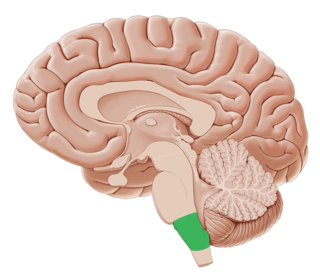
2.
What is this?
a)
Cerebrum
b)
Cerebellum
c)
Brain Stem
d)
Diencephalon
3.
The lobe responsible for vision
a)
Frontal Lobe
b)
Temporal Lobe
c)
Parietal Lobe
d)
Occipital Lobe
4.

What is this?

a)

Corpus callosum

b)

Medulla Oblongata

c)

Cerebellum

d)

Hypothalamus

5.
Controls behaviors (hunger, thirst, sleep, body temperature) through the release of hormones.
a)
hypothalamus
b)
thalamus
c)
adrenal glands
d)
pineal gland
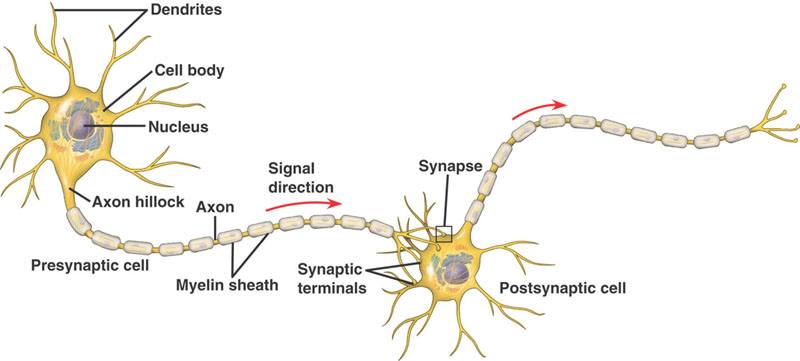
6.

What's in the picture?

a)

synaptic vesicles

b)

neurotransmitters

c)

presynaptic neuron

d)

postsynaptic neuron

e)

synaptic cleft

7.

Which pattern shows how signals are transmitted from the presynaptic neuron to the post synaptic neuron

a)

electrical --> electrical

b)

electrical --> chemical

c)

chemical --> electrical --> chemical

d)

electrical --> chemical --> electrical

8.

Which side of the synapse contains neurotransmitters?

a)

presynaptic

b)

postsynaptic

c)

both

9.

Gap between presynaptic and post synaptic neuron is called

a)

synaptic vesicle

b)

tight junctions

c)

synaptic cleft

d)

Synaptic knob

10.

The action potential arrives at the ____ and depolarizes the ____ membrane.

a)

Axon terminal, pre-synaptic

b)

Axon terminal, post synaptic

c)

pre-synaptic, axon terminal

d)

post synaptic, axon terminal

11.

What causes Parkinson's?

a)

Sensory neuron death

b)

Motor neurons apathy

c)

Decreased acetylcholine

d)

Loss of dopamine producing cells

12.

Who is the famous actor who funded a a well-known foundation to find a cure for Parkinson's disease?

a)

Elvis Presley

b)

Michael Jordan

c)

Michael J. Fox

d)

Muhammad Ali

13.
Dopamine...
a)
Contributes to voluntary movement control
b)
Contributes to mood and arousal
c)
Plays a key role in pain relief
d)
Resembles opiate drugs
14.
Prozac and similar antidepressant drugs predomintely affect which circuit
a)
GABA
b)
Dopamine
c)
Serotonin
d)
Endorphins
15.
Serotonin is a neurotransmitter that helps regulate:
a)
learning and memory
b)
pain and pleasure
c)
muscle movements
d)
sleep, moods/emotions
16.
Loss of Dopamine-producing neurons is a cause of:
a)
paralysis
b)
Parkinson's
c)
anxiety
d)
Alzheimer's
17.
What is a neurotransmitter?
a)
fatty covering of the axon
b)
nerve cell
c)
chemical messenger
d)
gap between neurons
18.

Which of the following most relates to the nature-nurture issue?

a)

parents and peers

b)

genes and environment

c)

culture and norms

d)

DNA and chromosomes

19.

In twin studies, behavior geneticists are looking for ______________.

a)

differences between fraternal twins because they are raised in the same home.

b)

whether being a twin affects emotional development and social behaviors

c)

similarities between identical twins because they share the same genetic code.

d)

how many times identical and fraternal twins occur in different cultures

20.
Part of a neuron that receives information from other neurons
a)
axon
b)
dendrites
c)
myelin sheath
d)
synapse
21.
What number(s) on the graph represents the Resting Potential?
a)
1 and 2
b)
1 and 5
c)
2 and 3
d)
3 and 4
22.
When a neuron is depolarized, what are the first channels to open?
a)
Sodium
b)
Potassium
c)
Calcium
d)
ACTH
23.
When a neuron is resting, the inside of the axon has a ____________ charge.
a)
-55 mV
b)
-70 mV
c)
40 mV
d)
-75 mV
24.
When a neuron is not engaged in an impulse.
a)
Resting potential
b)
Action potential
c)
Neural potential
d)
Synaptic potential
25.
Which ions are involved in the electrical nerve impulse?
a)
Iodine and Sodium
b)
Potassium and Sodium
c)
Iron and Sodium
d)
Calcium and Iodine
26.
What number on the graph represents the Depolarization phase?
a)
1
b)
2
c)
3
d)
4
27.
What number on the graph represents the Hyperpolarization phase?
a)
1
b)
2
c)
3
d)
4
28.
The sodium-potassium pump....
a)
Sends (Na+) into the cell
b)
Sends (K+) into the cell
c)
Exchanges (K+) & (Na+) during depolarization
d)
Exchanges (K+) & (Na+) during hyperpolarization
29.
Why is -55 mV a significant number?
a)
This is the largest charge achieved during an action potential
b)
This is the threshold required to complete an action potential
c)
This is the resting charge of a neuron
d)
This is the charge when all the sodium is inside the cell
30.
At what stage are both ions present in large concentrations INSIDE the neuron?
a)
Depolarizarion
b)
Repolarization
c)
Hyperpolarization
d)
Resting Potential
31.
Why is hyperpolarization important?
a)
It makes sure the neuron is healthy
b)
It prevents a second, unwanted signal from being sent
c)
It makes sure the neurons are in the correct space
d)
It makes sure the charge is back at -70 mV
32.

When we move from a dim lit room to a bright room

a)

rhodopsin is regenerated

b)

pupil is dilated

c)

rhodopsin is bleached

33.

The layer of the eye where rods and cones are located is

a)

cornea

b)

cochlea

c)

sclera

d)

retina

34.

The photosensitive pigment present in the cones of the eye

a)

melanin

b)

rhodopsin

c)

haemoglobin

d)

iodopsin

35.

A visual pigment is:

a)

always called photopsin

b)

always called rhodopsin

c)

a pigment in the retina of the eye which absorbs light energy

d)

the name of the nerve cells located in the retina of the eye

36.
Which molecule regulates the flowering of plants? (active form)
a)
Phytochrome red
b)
Chlorophyll
c)
Phytochomer far red
d)
Auxin
37.
What causes the conversion of Pr to Pfr?
a)
darkness
b)
red light
c)
far red light
d)
auxin
38.
What is photoperiodism?
a)
The amount of chlorophyll in plants
b)
The time in which photosynthesis can occur
c)
The fertile time for a plant
d)
The response of a plant to the length of night
39.

Plants that have no specific amount of daylight required to flower.

a)

Auxin

b)

Day Long Plan

c)

Short Day Plant

d)

Day Neutral Plant

40.

Plants that need 12 hours or more of darkness to flower.

a)

Day Neutral Plant

b)

Day long plant

c)

photoperiodism

d)

Short Day plant

41.

Phototropism is

a)

The plant response to water

b)

The plant response to light

c)

The plant response to gravity

d)

The plant response to soil

42.

Where is auxin formed

a)

Tip of stem and root

b)

Leaves

c)

Embryo

d)

All

43.

Promotes cell elongation

a)

abscisic acid

b)

auxin

c)

cytokinins

d)

gibberellin

e)

ethylene

44.
A short sequence of DNA can best be described as an _______.
a)
gene
b)
genome 
c)
chromosome 
d)
chromatin 
45.
A carrier molecule of DNA that allows the gene of interest to be copied is best known as a....
a)
transformation 
b)
restriction enzyme 
c)
vector or plasmid
d)
recombinant DNA
46.
What synthetic molecule is used to cut DNA open at a specific location and create sticky ends for the gene of interest to be attached?
a)
vector or plasmid 
b)
restriction enzyme
c)
DNA scissors 
d)
DNA Helicase
47.
The gene of interest + vector = __________
a)
recombinant DNA 
b)
restriction enzyme 
c)
transformation 
d)
genome 
48.
The entire set of genes that belongs to an organism is called its ____.
a)
genome
b)
chromosome
c)
gene
d)
DNA sequence 
49.
Which sequence below best represents the steps to making a GMO?
a)
Isolate the gene of interest, add gene of interest to vector, copy vector through mitosis in bacteria cell, add bacteria to plant cells, copy plant cells through mitosis, & test final product after growth period
b)
Add gene of interest to vector, copy vector through mitosis in bacteria cell, add bacteria to plant cells, copy plant cells through mitosis, isolate the gene of interest, & test final product after growth period
c)
Copy vector through mitosis in bacteria cell, isolate the gene of interest, add gene of interest to vector, add bacteria to plant cells, copy plant cells through mitosis, & test final product after growth period
d)
 Test final product after growth period, isolate the gene of interest, add gene of interest to vector, copy vector through mitosis in bacteria cell, add bacteria to plant cells, & copy plant cells through mitosis
50.
What is sustainability? 
a)
Meeting the needs of the community NOW and planning for the needs of the community in the FUTURE.
b)
Meeting the needs of the community NOW only.
c)
Meeting the needs of the community in the FUTURE only.
d)
Both the positive and negative outcome of a decision.
51.

The patient will be given a radioactive substance and asked to complete a task to see which part of the brain is being utilized.

a)

MRI

b)

PET

c)

CT Scan

d)

EEG

52.

This image uses magnetic fields and radio waves to produce computer-generated images that distinguish among different types of brain tissue.

a)

MRI

b)

PET

c)

EEG

d)

CAT scan

53.

This scan provides a visual of brain activity that detects where radioactive form of glucose goes while the brain performs a given task.

a)

MRI

b)

fMRI

c)

PET

d)

EEG

54.

What is the CT used for?

a)

To observe neurons

b)

To make images of the brain, through X-ray scans

c)

To study metabolic processes

55.

These use a magnetic field and a computer to give researchers a picture of a slice of the brain from any angle.

a)

MRI

b)

PET

c)

EEG

d)

fMRI