
 Worksheets
What's (the) matter?
Total questions: 21
Worksheet time: 1hrs 2mins
Matter is everything around us that has...
Mass
Flexibility
Volume
Mass and volume
Which ones are states of matter?
Gas
Atomic
Solid
Liquid
What is NOT matter? (clouds, belt, air or fire)


Volume is...
the quantity of matter.
the space an object takes.
the size of an object.
something you can't see.
Mass is...
the quantity of matter.
the space an object takes.
the size of an object
something you can't see.
Gas...
keep the shape, are hard and can't be compressed.
don't keep the shape, aren't hard and can't be compressed.
don't keep the shape, aren't hard and can be compressed.
keep the shape, aren't hard and can't be compressed.
Liquids...
keep the shape, are hard and can't be compressed.
don't keep the shape, aren't hard and can't be compressed.
don't keep the shape, aren't hard and can be compressed.
keep the shape, aren't hard and can't be compressed.
Solids...
keep the shape, are hard and can't be compressed.
don't keep the shape, aren't hard and can't be compressed.
don't keep the shape, aren't hard and can be compressed.
keep the shape, aren't hard and can't be compressed.
Which one is a liquid?


Which one is a gas?

Which one is a solid?


This represents the particles of a...
Gas
Liquid
Solid
Plasma

This represents the particles of a...
Gas
Liquid
Solid
Plasma

This represents the particles of a...
Gas
Liquid
Solid
Plasma

This change of state is called...
Evaporation
Solidification
Condensation
Melting

This change of state is called...
Evaporation
Solidification
Condensation
Sublimation

This change of state is called...
Evaporation
Solidification
Condensation
Melting

This change of state is called...
Sublimation
Solidification
Condensation
Melting
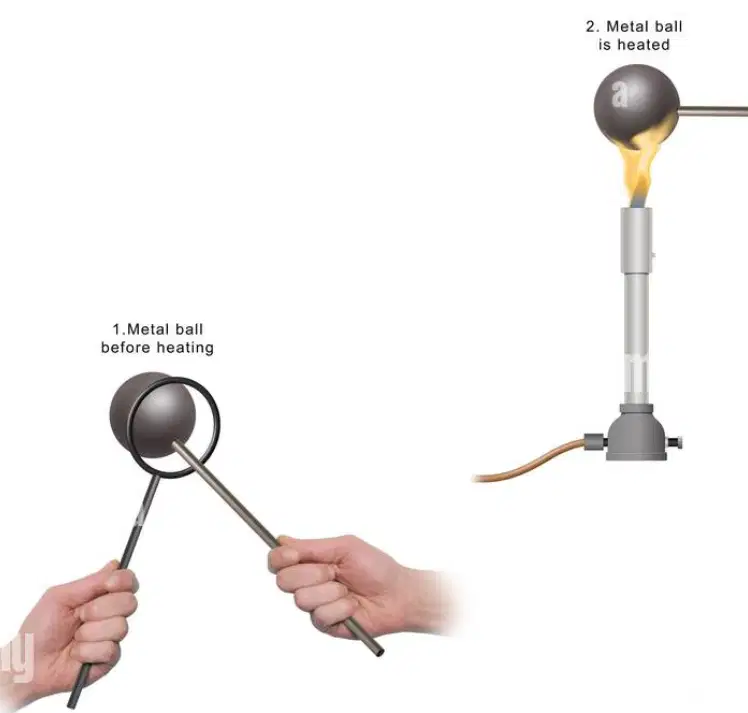
Will the ball cross the ring after heating it?
Yes.
No.
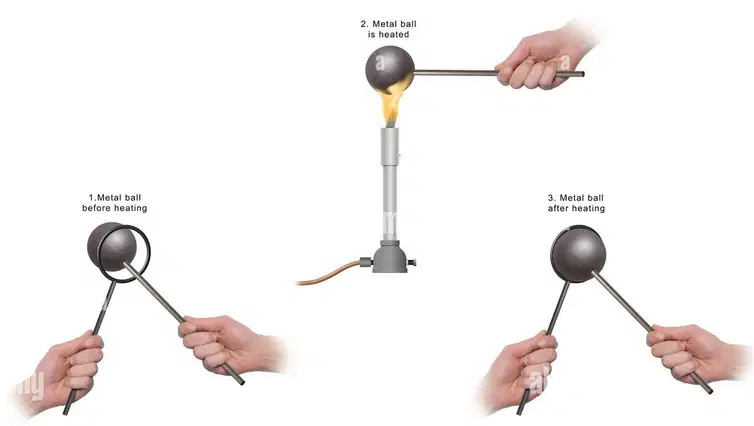
Why?
Because particles move less causing expansion (dilatació).
I don't know.
Because particles move more causing expansion (dilatació).
Because particles move more causing contraction (contracció).

When the ice-cube melts it will...
be a solid.
have the same masss.
be heavier.
be lighter.

