wayground logo

Free Printable Worksheets

Font size

S
M
L
XL
Worksheets

Ecology Test Review (Large/Asynchronous)

Total questions: 40

Worksheet time: 45mins

Name
Class
Date
1.
Which species was DIRECTLY affected by the wolves in Yellowstone?
a)
plants
b)
bears
c)
beavers
d)
elk
2.
An organism that does NOT eat other organisms to obtain energy because it can make its own energy!
a)
plant
b)
producer
c)
autotroph
d)
these are all correct
3.
These 2 levels of ecological organization contain both biotic and abiotic factors
a)
population, community
b)
community, ecosystem
c)
organism, population
d)
ecosystem, biosphere
4.
Which trophic level contains organisms that eat plants (herbivores)?
a)
producers
b)
primary consumers/ 1st order heterotrophs
c)
secondary consumers/ 2nd order heterotrophs
d)
tertiary consumers/3rd order heterotrophs
5.
Where would you find organisms that are apex predators and only occur in small populations in an ecosystem?
a)
producer/autotrophs
b)
first order heterotrophs
c)
second order heterotrophs
d)
third order heterotrophs
6.
A secondary consumer that eats a primary consumer is also called a(n)
a)
herbivore
b)
omnivore
c)
carnivore
d)
autotroph
7.
Which of these is the correct order of ecological levels of organization from LARGEST to SMALLEST?
a)
organism- population- community- ecosystem- biosphere
b)
biosphere- community- ecosystem- population- organism
c)
organism- community- population- ecosystem- biosphere
d)
biosphere- ecosystem- community- population- organism
8.
Why is nitrogen so important to living things?
a)
Nitrogen is part of the DNA inside of each cell that makes up ALL living things
b)
animals use the nitrogen they get from plants to make proteins, like blood 
c)
plants use the nitrogen they get from bacteria to make chlorophyll,  which is needed to absorb the sun's energy for photosynthesis
d)
all of these are correct
9.
Which type of interaction would describe the relationship between a barnacle attached to a whale that doesn't harm or hurt the whale, but the barnacle benefits by getting a free ride around the ocean?
a)
parasitism (+, -)
b)
mutualism (+, +)
c)
commensalism (+, 0)
d)
predation (+, -)
10.
A rabbit eating grass, or a wolf eating an elk, are both examples of what type of relationship where one organism benefits and the other is harmed?
a)
mutualism (+, +)
b)
commensalism (+, 0)
c)
predation (+, -)
d)
uniformitarianism
11.
Basic unit of LIVING things
a)
atom
b)
cell 
c)
matter
d)
energy
12.
All the different populations interacting with each other in a particular area. 
a)
ecosystem
b)
community
c)
population
d)
biosphere
13.

Which trophic level has the least energy?

a)

Producer

b)

Primary Consumer

c)

Secondary Consumer

d)

Tertiary Consumer

14.

Which is a biotic factor?

a)

Nitrogen

b)

Rocks

c)

Soil

d)

Bacteria

15.

There is already soil present in

a)

Primary Succession

b)

Secondary Succession

16.

A forest fire destroys an area. What is the likely succession of plants?

a)

Mosses, grasses, bushes, trees

b)

grass, large trees, bushes, moss

c)

grass, bushes, early trees, large trees

d)

moss, trees, bushes, grass

17.

Which is a community?

a)

Fish, Turtles, Frogs

b)

A group of turtles

c)

One frog

d)

The frogs, turtles, fish, and water temperature

18.

Fish cleaning a shark's teeth

a)

Mutualism

b)

Commensalism

c)

Parasitism

19.

What is the carrying capacity?

a)

40

b)

60

c)

65

d)

3

20.

Which would be a limiting factor for a squirrel?

a)

Sunlight

b)

Acorns

c)

Frogs

d)

Rabbits

21.

How much energy is passed to each trophic level?

a)

20%

b)

10%

c)

30%

d)

90%

22.

What happens to the energy lost between each trophic level?

a)

It is consumed by the next trophic level

b)

It is lost as heat

23.

What is a common characteristic among pioneer species?

a)

roots that break apart rocks

b)

long thick roots

c)

exposed surface roots

d)

soak up water quickly

24.

Which of the following best describes primary succession?

a)

Volcano wipes out ecosystem that gradually grows back from ash covered soil

b)

Volcano creates a new island of rock that must break down to form an ecosystem

c)

Forest fire burns down forest that must bounce back over time

d)

Tornado destroys a crop that must slowly grow back over time.

25.

What term best relates to equilibrium?

a)

pioneer species

b)

primary succession

c)

secondary succession

d)

climax community

26.

If farmers use a controlled burn to prevent forest fires, what would most likely be the first plants to return?

a)

trees

b)

shrubs

c)

mosses

d)

grasses

27.

Breaking News! A new island has formed off of Hawaii! What must occur for it to become an ecosystem?

a)

Secondary Succession

b)

Aquatic succession

c)

Primary Succession

d)

Ferns must grow

28.
What makes an energy pyramid different than a food web or chain?
a)
It shows energy flowing from the top of the chain and downward. 
b)
The tropic levels are the opposite
c)
It shows the amount of energy in each trophic level
d)
It shows specific predator/prey relationships
29.
Where does the energy that travels through an ecosystem originally come from?
a)
Earth's Core
b)
Water
c)
Plants
d)
The Sun
30.
An organism that lives by breaking down dead organic matter into simpler parts is a _______________________.
a)
scavenger
b)
consumer
c)
decomposer
d)
carnivore
31.
Recently, a family of bobcats moved into an area with a large rabbit population. What changes may occur in the ecosystem?
a)
The rabbit population may increase
b)
The rabbit population may decrease
c)
The rabbit population may increase first, then decrease
d)
The rabbit population will remain the same
32.
In the food web shown, the snail would be considered...
a)
primary consumer
b)
secondary consumer
c)
tertiary consumer
d)
producer
33.
Which organism do the owl and the weasel compete for in the food web?
a)
Hawk
b)
Spider
c)
Grasshopper
d)
Shrew
34.
What might happen if you remove a primary consumer from the ecosystem?
a)
There would be more food for secondary consumers.
b)
The number of primary consumers would increase.
c)
The number of plants would increase.
d)
The number of secondary consumers would increase.
35.

What would happen to the rabbit population if the fox population moved out of the area represented by the food web?

a)

The rabbit population would increase

b)

The rabbit population would decrease

c)

The rabbit population would neither increase nor decrease
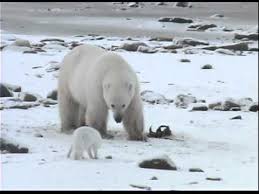
36.

Two arctic fox are fighting with a polar bear for a sea lion carcass. One fox distracts the bear while the other eats. What type of limiting factor is the polar bear?

a)

Predator-Prey Relationships

b)

Competition

c)

Herbivory Effect

d)

Weather

37.
The total number of individuals a habitat can survive with the resources it has available.
a)
Carrying capacity
b)
Limiting factors
c)
Resources
d)
Population
38.
Excessive amounts of rain caused a flood in the southwest United States that resulted in substantial amounts of deaths in the rabbit population? This situation is an example of a density _____________ limiting factor.
a)
density-independent
b)
density-dependent
c)
density- too high
d)
density- too low
39.

Which of the following would NOT be an example of a density dependent limiting factor?

a)

fire

b)

disease

c)

lack of food

d)

space

40.

Which of the following would NOT be an example of a density independent factor?

a)

predation

b)

tornado

c)

hurricane

d)

fire