
 Worksheets
Year 10 Motion Physics Revision
Total questions: 36
Worksheet time: 33mins
hitting the breaks on a bike reduces your speed this is called
acceleration
deceleration
slowing down
velocity
Increase rate of speed over time
Acceleration
Velocity
speed
fast
Calculate the velocity of a cyclist traveling 100km south over a period of 5 hours
20km/h south
10km/h south
10mi/h
20km/h
An objects speed does no change over its entire distance
Constant speed
acceleration
average speed
velocity
24km/hr South is an example of
speed
direction
velocity
acceleration
What does velocity include (click all that apply)
speed
direction
distance
height
SI unit for speed
Mph
m/s or km/h
newtons
pounds
What two things do you need to find speed (select both)
distance
time
velocity
direction
The pace an object travels in a certain amount of time
speed
acceleration
Velocity
motion
How fast is a train moving if it travels 32km in 4 hours
8km/h
8m/s
128m/s
128km/h
How far does a car driving 50 m/s for 10 seconds travel
500m
50m/s
5km
5m
How long does it take to travel 60km when going at a speed of 5km/h
12s
12h
.08h
300km/h
What equation is Distance/ Speed
time
speed
velocity
distance
What is the least distance between the starting and ending points?
motion
displacement
reference point
distance
Speed has a direction.
true
false
The formula to determine speed is
change in velocity/change in time
change in distance/change in time
time/distance
distance/time
Acceleration has a direction.
true
false
When an object’s speed and direction remain the same the object is accelerating.
true
false

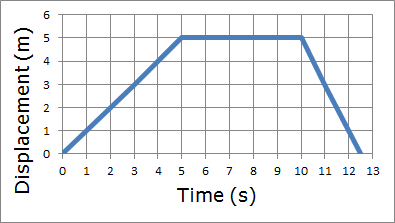
During which interval is the object not moving?
B to C
A to B
E to F
only at point A

During which interval is the object moving back to its original position?
A to B
D to E
E to F
G to H



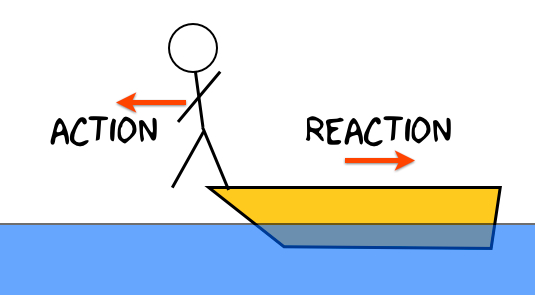
A student inflates a balloon attached to a plastic straw. A string is threaded through the straw and tied to opposite ends of the room. When the air in the balloon is released, the balloon travels the length of the string. Which of Newton's laws explain this?
The law of action-reaction
Newton's law of magnetism
The law of force and acceleration
The law of gravity

If a 40 kg student is pushed in a rolling chair with a force of 30 N, what is the student's acceleration?
(a)
A car driving down the road runs out of gas. Which of Newton's laws explains why the car continues to move without gasoline? Be able to explain why. This will be a constructed response question.
(a)
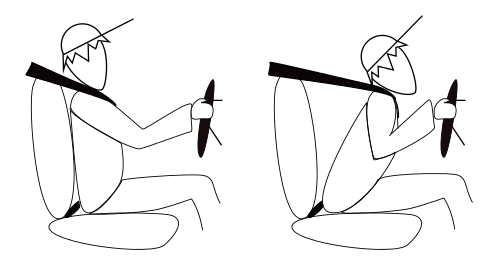
This law of motion states that heavier objects need a larger force to make them move.
Newton's First Law of Motion
Newton's Second Law of Motion
Newton's Third Law of Motion
All of the Above

