
 Worksheets
The Motor Effect
Total questions: 22
Worksheet time: 11mins
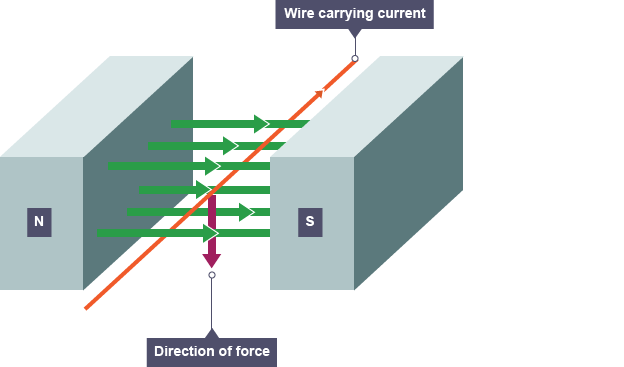
Why might a current-carrying wire be placed between a magnetic field?
To increase the current from the interaction of magnetic fields
To increase the voltage from the interaction of magnetic fields
To produce a force from the interaction of magnetic fields
What does the thumb indicate in flemings left hand rule?
Force
Motion
Current
Magnetic field direction
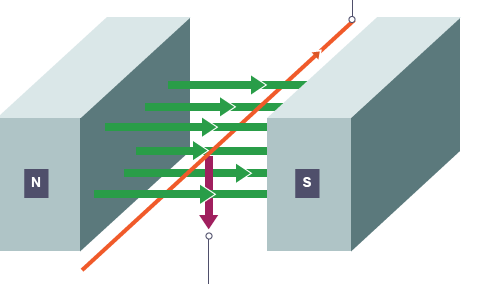
What direction is the force/motion in the following diagram?
Perpendicular to the magnets
Downwards
Parallel and through the magnets
Name the effect that causes a coil of current-carrying wire in an electric motor to move.
The electromagnetism effect
The magnetic effect
The motor effect
Which rule can be used to work out which way a coil of wire rotates in a motor?
Fleming's left-hand rule
Fleming's right-hand rule
Give two ways you can reverse the direction of a basic dc motor?
Reverse the current
Keep the current the same
Reverse the magnetic field
Keep the magnetic field the same
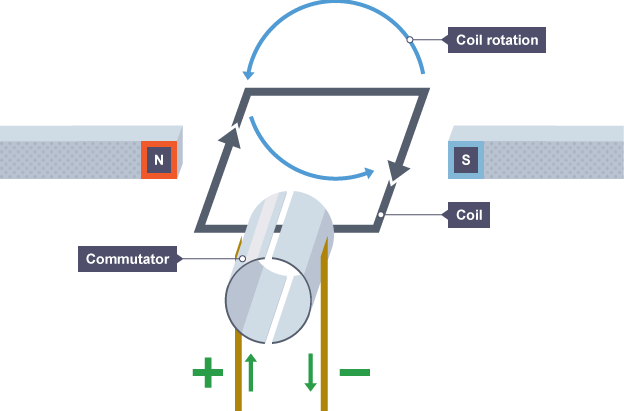
How does a split ring commutator work?
Swaps the contact evert full turn, so that the left-hand and right-hand arms of the coil always experience a force in the same direction.
Swaps the contact evert half turn, so that the left-hand and right-hand arms of the coil do not experience a force in the same direction.
Swaps the contact evert half turn, so that the left-hand and right-hand arms of the coil always experience a force in the same direction.
Which hand should you use if you want to investigate the motor effect?
Left
Right
What needs to be present for motion to occur in the motor effect? Tick all that apply
Air
Magnetic field
Current
A conductor
A turning force
In Flemming's left hand rule, what does the first finger stand for?
Movement
Field
Current
In Fleming's left hand rule, what does the second finger stand for?
Movement
Field
Current
In Fleming's left hand rule, what does the thumb stand for?
Movement
Field
Current
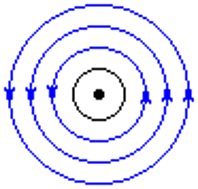
In this diagram, which way is the current flowing?
Into the page
Out of the page
Left to right
Right to left
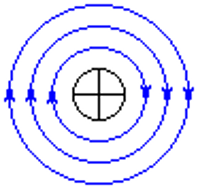
In this diagram which way is the current flowing?
Into the page
Out of the page
Left to Right
Right to Left
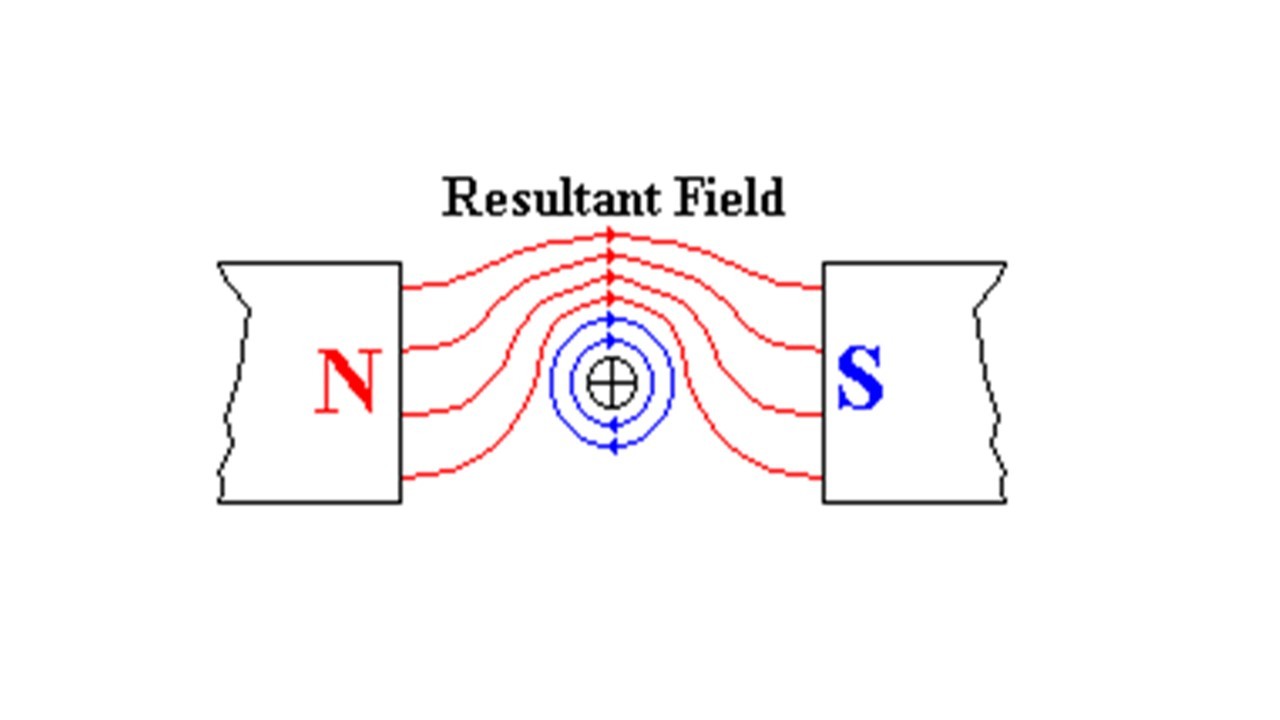
Which way will the conductor move in this picture?
Left
Up
Right
Down
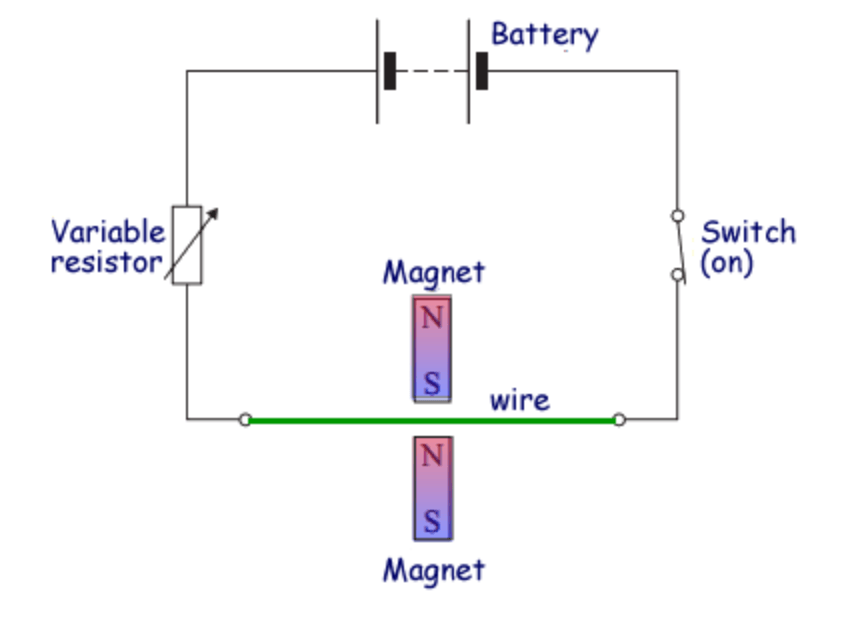
The magnetic field lines near a long straight wire carrying current are:
Straight lines
Concentric rings
Spiral lines
Radial lines
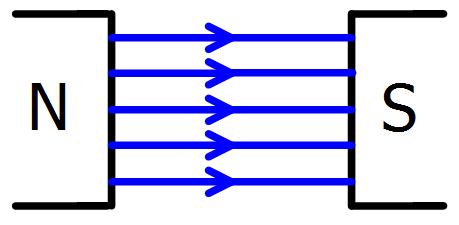
A magnetic field like this is called...
a parallel field
a distorted field
a uniform field
a paramagnetic field
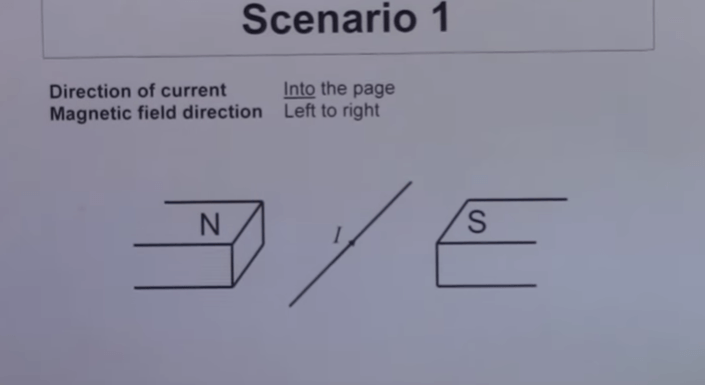
What direction does the wire move?
Up
Down
Left
Right
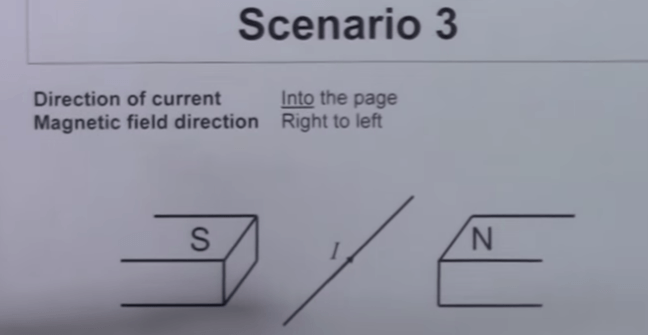
What direction would the wire move?
Up
Down
Left
Right
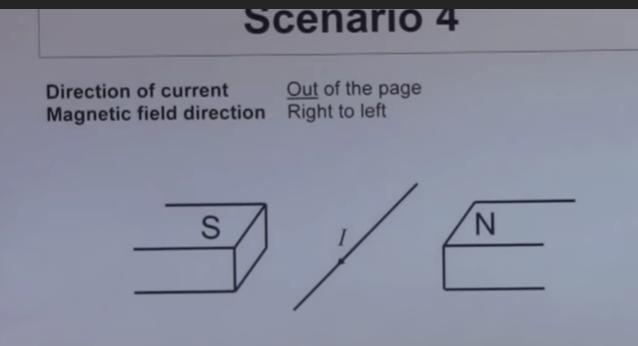
What direction does the force act?
Up
Down
Left
Right
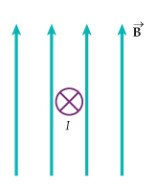
The diagram show the direction of magnetic field,B. The current is going into the page.
By using Fleming left hand rules, determine the direction of Magnetic force, F.
no force produced
right
into the page
out from the page

