

Wayground logo

Free Printable Worksheets

Font size

S
M
L
XL
Worksheets

Posen-Periodic Table PRACTICE

Total questions: 50

Worksheet time: 3hrs 10mins
Name
Class
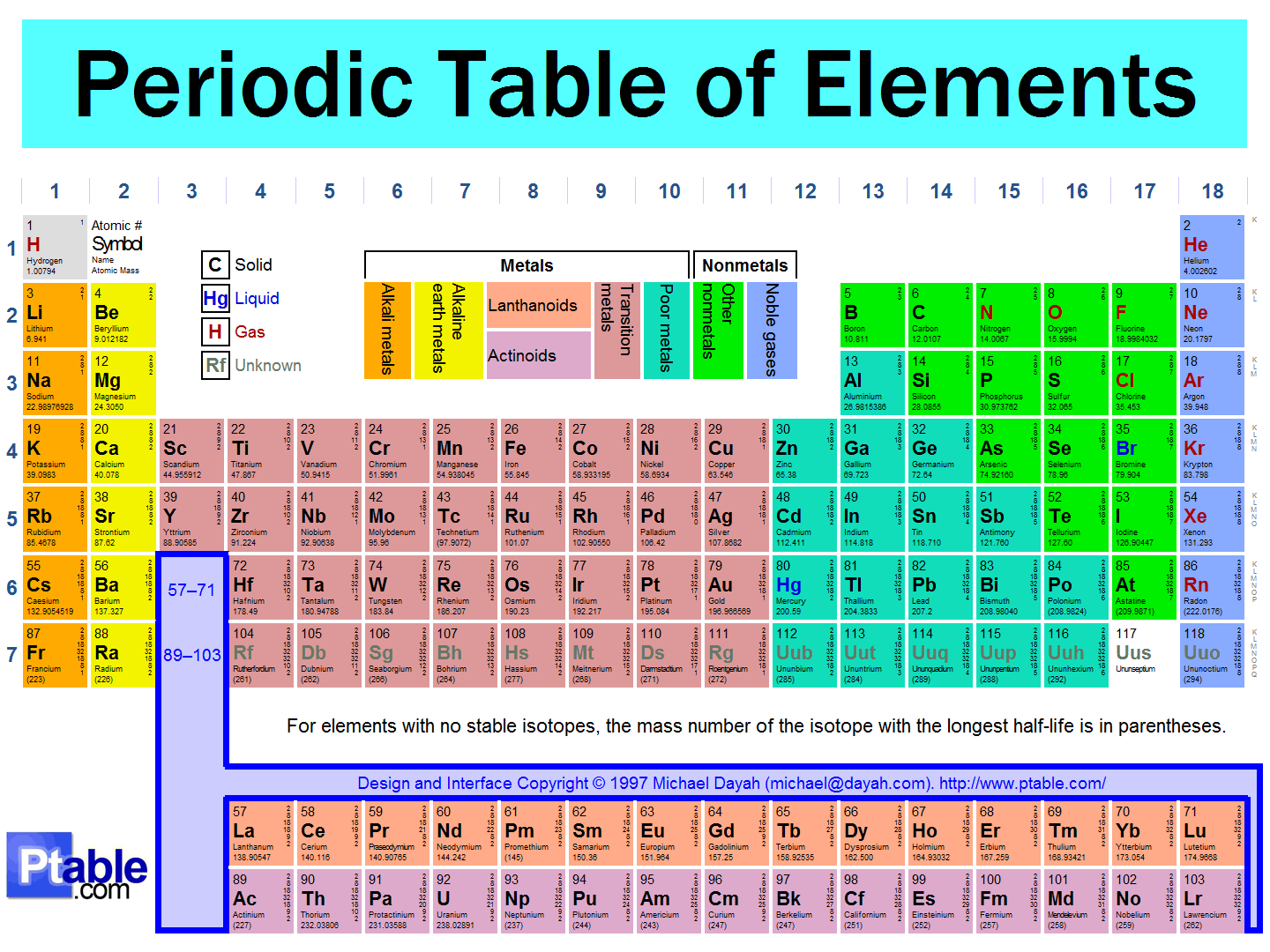
Date
1.
The horizontal row on the periodic table is called a
a)
group
b)
family
c)
period
d)
atomic number
2.
A vertical column is called...
a)
group
b)
tower
c)
period
d)
crew
3.

The elements in this family(1A) are soft, silvery, and very reactive with water.

a)

Alkaline Earth Metals

b)

Alkali Metals

c)

Transition Metals

d)

Lanthanides

4.
Which element is not in the Alkali metal family?
a)
Li
b)
H
c)
Fr
d)
Cs 
5.

This type of element is dull, brittle solids and gases, insulators, poor conductors of heat and electricity, as well as having low melting points.

a)

metals

b)

metalloids

c)

nonmetals

6.
Which of these is a property of metals?
a)
It's malleable
b)
It can't conduct electricity
c)
They are used in food
d)
It's very brittle
7.
Which elements have the most similar chemical properties?
a)
K and Na
b)
K and Ca
c)
K and Cl
d)
K and S
8.
Elements in the same ________ are more chemically similar.
a)
group
b)
period
c)
club
d)
table
9.

As you move down the group, halogens' reactivity (ionization energy)...

a)

increases

b)

decreases

c)

doesn't change

d)

shows no trend.

10.

How many electrons are there on the outer shell of the Halogens?

a)

1

b)

2

c)

7

d)

9

11.

Which group includes non-reactive gasses that have a full outer electron shell?

a)

Alkai Metals

b)

Alkaline Metals

c)

Halogens

d)

Noble Gases

12.
What does an atom's period tell us?
a)
Number of protons
b)
Number of electrons
c)
Number of valence electrons
d)
Number of shells
13.
The yellow atoms are called 
a)
metals
b)
nonmetals
c)
metalloids
d)
noble gases
14.

Which of the following is an Alkaline Earth Metal?

a)

Calcium (Ca)

b)

Lithium (Li)

c)

Phosphorus (P)

d)

Copper (Cu)

15.

Which of the following is a transition metal?

a)

Iron (Fe)

b)

Oxygen (O)

c)

Neon (Ne)

d)

Barium (Ba)

16.

Where are the metals on the periodic table?

a)

Blue

b)

Green

c)

Yellow

d)

There are no metals on the periodic table

17.
Metalloids can be described as...
a)
same as nonmetals
b)
bad conductors
c)
characteristics of metals and nonmetals
d)
same as metals
18.

Which two elements on the periodic table are in the same period?

a)

Sn and Rb

b)

K and Ba

c)

F and Cl

d)

Se and Te

19.

Statement: when the elements are arranged by increasing atomic number, there is a periodic repetition of their chemical and physical properties is the...

a)

octet rule

b)

periodic law

c)

transition elements

d)

noble gases

20.
Energy required to remove an electron from a gaseous atom
a)
electronegativity
b)
octet rule
c)
ionization energy
d)
ion
21.
Statement that atoms tend to gain, lose, or share electrons to acquire a full set of eight valence electrons
a)
electronegativity
b)
octet rule
c)
ionization energy
d)
ion
22.
Elements in the same group have the same
a)
atomic radius
b)
energy level of outer electrons
c)
nuclear charge
d)
number of valence electrons
23.
What is the trend in atomic radii as you move from left to right across a period?
a)
generally decreases
b)
generally increases
c)
remains the same
d)
varies randomly
24.

The trend in the atomic radii as you move down the group 1 elements is partially due to

a)

decreased distance of outer electrons

b)

increased nuclear charge

c)

increased number of electrons in outer energy level

d)

addition of energy shells

25.
How many valence electrons does a halogen have? 
a)
1
b)
2
c)
7
d)
8
26.

The period for Bromine is ___________.

a)

3

b)

2

c)

4

d)

1

27.

What type of element makes up the largest percentage of elements on the Periodic Table?

a)

metals

b)

nonmetals

c)

metaloids

d)

halogens

28.

How many groups/families are on the Periodic Table?

a)

15

b)

16

c)

17

d)

18

29.

Shares properties of metals and nonmetals and are semi-conductors of heat and electricity.

a)

metalloid

b)

metal

c)

nonmetal

d)

alkali metals

30.

Able to be hammered or pressed out of shape without breaking or creaking

a)

flammable

b)

malleable

c)

ductile

d)

conductor

31.

The atomic NUMBER tells you what?

a)

number of electrons

b)

number of protons

c)

number of neutrons

d)

number of protons AND electrons in an element

32.
What's a valence electron?
a)
electrons in the second energy level
b)
electrons in the outermost energy level
c)
the atomic number
d)
electrons in the first level
33.

The vertical (up and down) columns in the Periodic Table are called

a)

groups

b)

towers

c)

periods

d)

atomic numbers

34.
Which of the following will have a larger radius than Zinc?
a)
Gallium
b)
Aluminum
c)
Magnesium
d)
Strontium
35.
As atoms of elements in group 16 are considered in order from top to bottom, the electronegativity of each successive element....
a)
decreases
b)
increases
c)
remains the same
d)
none of the above
36.
a)
2
b)
3
c)
5
37.
How many valence electrons are in an atom of Ar?
a)
2
b)
8
c)
4
d)
1
38.
Which atom has the largest atomic radius?
a)
potassium
b)
rubidium 
c)
francium
d)
cesium
39.
As you move down the periodic table atoms get bigger.  This is because ____________.
a)
The atoms have more mass.
b)
The atoms have more protons.
c)
The atoms have more energy levels
d)
The atoms have more nuetrons
40.
What element is will have the most similar physical and chemical properties to the element Lithium (Li)?
a)
Sodium (Na)
b)
Magnesium (Mg)
c)
Beryllium (Be)
d)
Calcium (Ca)
41.
What element is will have the most similar physical and chemical properties to the element Sulfur (S)?
a)
Carbon (C)
b)
Phosphorous (P)
c)
Oxygen (O)
d)
Neon (Ne
42.
How are elements on the periodic table arranged by?
a)
in alphabetic order
b)
simular physical & chemical properties
c)
their symbols
d)
Just simular physical properties
43.

The first energy shell can hold ______ electrons.

a)

2

b)

8

c)

18

44.

Mendeleev's genius was his ability to

a)

predict elements that were not discovered yet

b)

organize elements by their mass

c)

had an element named after himself

d)

organize elements by properties

45.

Elements in the same group or column have the same ...

a)

# of valence electrons

b)

# of shells

c)

# of protons

d)

Mass Number

46.
How many protons are in this element?
a)
79
b)
196
c)
117
d)
Cannot be determined
47.
What element is represented in this Bohr Model? 
a)
Carbon
b)
Hydrogen
c)
Aluminum
d)
Lithium
48.
?
a)
Beryllium
b)
Boron
c)
Barium
d)
Bromine
49.
What identifies the element?
a)
Protons
b)
Neutrons
c)
valence electrons
d)
Nucleus
50.
?
a)
Lithium
b)
Boron
c)
Carbon
d)
Neon

