wayground logo

Free Printable Worksheets

NEW

Font size

S
M
L
XL
Worksheets

Unit 10: 7 C, 7D, 7E and 7F

Total questions: 47

Worksheet time: 44mins
Name
Class
Date
1.

A physical trait favored by an environmental change can be called an

a)

adaptation

b)

extinction

c)

possibility

d)

mutation

2.

Two populations of the same species are separated by land barriers like rivers or mountains.

a)

geographical isolation

b)

temporal isolation

c)

adaptive ratiation

d)

behavioral isolaton

3.

After a long time in isolation, Island fruit flies and mainland fruit flies meet. They do not produce viable eggs due to genetic differences. The flies have resulted in two seperate lineages due to:

a)

Gene Pool

b)

Genetic Drift

c)

Gene Frequency

d)

Speciation

4.

According to the theory of natural selection, why are some individuals more likely than others to survive and reproduce?

a)

Some individuals pass on to their offspring new characteristics they have acquired during their lifetimes.

b)

Some individuals are better adapted to exist in their environment than others are.

c)

Some individuals do not pass on to their offspring new characteristics they have acquired during their lifetimes.

d)

Some individuals tend to produce fewer offspring than others in the same environment.

5.
In natural selection, the selective agent is the
a)
humans
b)
mutations
c)
breeders
d)
environment
6.

Mutations are important because they bring about

a)

death of the organism in which they develop

b)

genetic variation needed for a population to evolve

c)

benefits for the individual, not for the population

d)

Hardey-Weinberg equilibrium within a population

7.
Which of the following is a term for a group of similar organisms that can reproduce fertile offspring?
a)
individual
b)
population
c)
species
d)
fossil
8.
On this map there are many different geographical barriers, which could be mountains, rivers, or oceans. Animals that do not have a barrier between them have more similarities, which set shows that common ancestry existed?
a)
1 and 2
b)
3 and 4
c)
7 and 8
9.

Why has antibiotic resistance evolved in bacteria?

a)

Bacteria reproduce quickly

b)

Bacteria with a resistance to the antibiotic, passed that trait to offspring

c)

Bacteria that are resistant reproduce faster than non resistant strains

d)

Bacteria exposed to antibiotics develop a resistance to them

10.

Genetic drift is change in the allele frequency of a population due to...

a)

random chance

b)

natural selection

c)

non-random mating (sexual selection)

d)

artificial selection

11.

A(n)________ is a measure of how common a certain allele is in a population.

a)

Allele Frequency

b)

Gene Pool

c)

Genotypical Number

d)

Genetic Drift

12.

Which word means the formation of new species?

a)

speciation

b)

specialization

c)

founder effect

d)

sexual selection

13.

When members of two populations cannot successfully reproduce.

a)

reproductive isolation

b)

lonely isolation

c)

convergent isolation

d)

genetic drift

14.
A rabbit that can easily outcompete other rabbits for food and that can produce many offspring has a high
a)
sexuality
b)
mutation rate
c)
fitness
d)
adaptability
15.

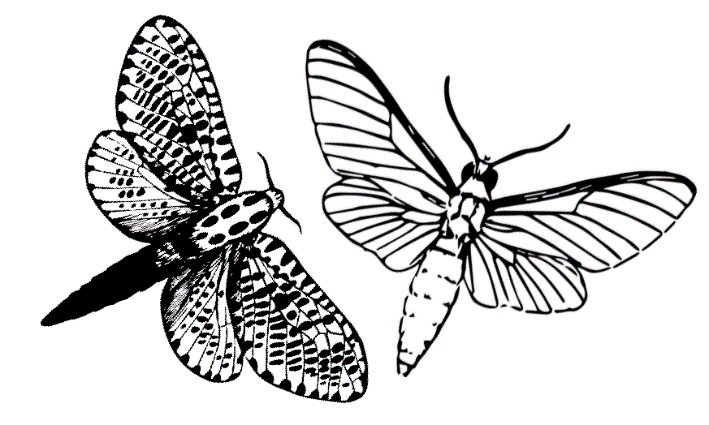
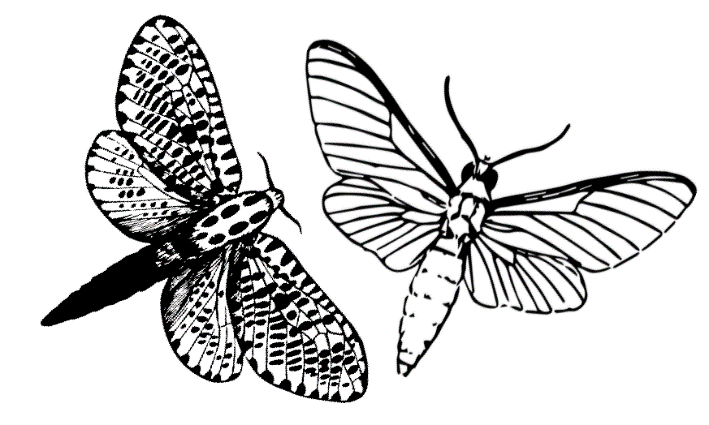
According to natural selection, light colored tree trunks would favor

a)

light colored moths

b)

dark colored moths

c)

red colored moths

d)

red and light colored moths

16.
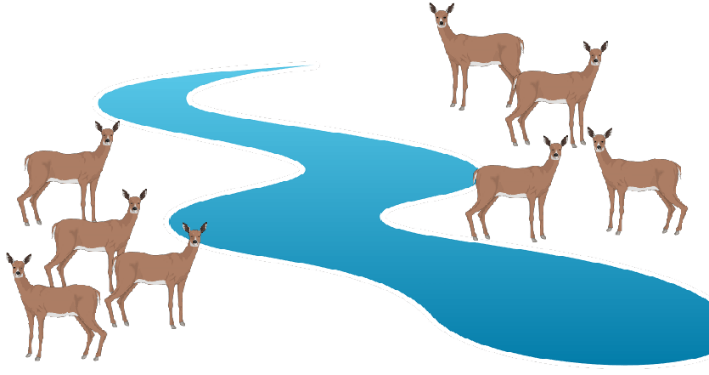
A few deer wander out of their native woods into a completely new park where no deer had ever been before. They go on to create an entirely new population.
a)
Genetic Drift
b)
Natural Selection
c)
Non-random mating
d)
Mutation
17.
Yellow toucan birds seek out one another to make babies together and tend to avoid the green toucan birds.
a)
Genetic Drift
b)
Non-random mating
c)
Gene flow
d)
Mutation
18.
Five hundred years after the deer had established a flourishing population in the park, a few of them venture back to their original woods and have babies with the deer there.
a)
Genetic Drift
b)
Mutations
c)
Non-random mating
d)
Gene flow
19.
Bats are common in Texas, especially in rocky regions. Bats with longer hang claws have demonstrated higher fitness because of their ability to cling to rock while resting.
a)
Adaptation
b)
Non-random mating
c)
Gene Flow
d)
Mutation
20.
Wolves from the Arizona mesa were transferred to the Colorado Rockies after a forest fire destroyed their habitat. They quickly became part of the local pack and had offspring.
a)
Mutation
b)
Natural Selection
c)
Genetic Drift
d)
Gene Flow
21.

During gestation (pregnancy), a developing male pig had a change in his genetic code. The result was a new variation of pig skin color.

a)

Genetic Drift

b)

Non-random mating

c)

Mutation

d)

Natural Selection

22.
7 Wild Mustangs were taken from the prairies of Iowa after a Texan Rancher purchased them and provided them with their own pasture. Those 7 Mustangs eventually became 122.
a)
Genetic Drift (small popultaion)
b)
Non-random mating
c)
Gene flow
d)
Mutations
23.
Two track stars fell in love and after marriage had 5 children that became record-setting athletes.
a)
Non-random mating
b)
Gene flow
c)
Genetic drift
d)
Mutation
24.
What does the picture represent?
a)
Founder Effect
b)
Mutations
c)
Bottleneck effect
d)
Gene Flow
25.
What does the image represent?
a)
Founder effect
b)
Bottleneck effect
c)
Mutation
d)
Natural Selection
26.
What does the image represent?
a)
Gene flow
b)
Gene drift
c)
Mutation
d)
Adaptation
27.
What does the image represent?
a)
Founder effect
b)
Bottleneck effect
c)
Natural Selection
d)
Mutations
28.

Which of the following best describes gene pool?

a)

The alleles only in the immediate family members

b)

A total set of different alleles in a population

c)

A frequency of given alleles in a population

d)

Half the number of the alleles within the population

29.

Which of the following is an example of the bottleneck effect?

a)

Cheetah populations reach their lowest levels with reduced diversity and as they rebound are so genetically similar they appear to be inbred.

b)

Affected individuals with blue skin can trace their ancestry back to one of the first settlers in the region.

c)

The environment of a fox population changes and over time foxes who are white survive and pass on their genes to their offspring.

d)

Humans choose two dogs they like the characteristics of and breed them together.

30.
Which of the following is an example of the founder effect?
a)
Bald Eagles are hunted until near extinction, population recovers.
b)
Small group of iguanas floats to an island, starts a new population.
c)
Red fox pups are more likely to survive in a snowy environment if they are born white.
d)
Farmer chooses seeds from largest apples to plant next year.  This results in larger apples from year to year.
31.

Bahamian female birds preferred mating with white-feathered males and produces more white-feathered offspring than dark feathered offspring. Which process apples to this scenario?

a)

Gene Flow

b)

Natural Selection

c)

Mutation

d)

Non-Random Mating

32.

_______ are two sources of genetic variation in a population

a)

Bottleneck and Bacteria

b)

Small Population and Viruses

c)

Mutations and Recombination

d)

Founder Effect and Artificial Mating

33.
A flash flood carried a raft of Amazon ants away from their original population. There is enough distance between the two groups, that they will never meet in nature again. What type of reproductive barrier is this?
a)
behavioral isolation
b)
temporal isolation 
c)
gametic isolation
d)
geographic isolation 
34.
Some female peacocks prefer males with large, colorful tales while other female peacocks prefer males with no tail at all. Females are beginning to only mate with the type of males with the tail they prefer. What type of reproductive barrier is this?
a)
behavioral isolation
b)
hybrid sterility 
c)
temporal isolation
d)
mechanical isolation 
35.
The flowers of pink tulips open in the morning, while the flowers of lavender tulips open in the early afternoon. The bees that pollinate these tulips cannot carry pollen back & forth between the two types of tulips because of their flowers being closed at different times of day. What type of reproductive barrier is this?
a)
behavioral isolation
b)
hybrid sterility 
c)
temporal isolation
d)
mechanical isolation 
36.
The genitalia of the male damselfly varies in shape. Certain males can only hold onto & mate with females whose genitalia fit.  What type of reproductive barrier is this?
a)
behavioral isolation
b)
temporal isolation 
c)
gametic isolation
d)
mechanical isolation 
37.
The term for the formation of new and distinct species over the course of evolution is...
a)
speciation
b)
biological species concept
c)
reproductive barrier
d)
natural selection
38.

The emergence of new rivers or streams is a type of ____________ isolation.

a)

Temporal

b)

Mechanical

c)

Behavioral

d)

Geographic

39.
What word describes the process of having the advantageous traits that helps an organism survive  and reproduce?
a)
natural selection
b)
adaptation
c)
mutation
d)
genetic engineering
40.
Why do frogs and other organism reproduce so many eggs or offspring?
a)
so that their babies can have friends to play with
b)
the more offspring the more likely the offspring will survive
c)
the more offspring the less likely offspring will survive 
d)
the more offspring the less competition
41.
What did Darwin conclude about the finches on the Galapagos Islands?
a)
They evolved from a common ancestor on the main land
b)
They evolved from many different types of birds
c)
They all came from different countries and continents
d)
They developed from other types of organisms
42.
Inherited variation means...
a)
an animal produces a large number of offspring.
b)
some individuals die from starvation, competition, disease or predation.
c)
individuals have different traits that can be passed on to their children.
d)
individuals best adapted to the environment have many offspring.
43.
In recent years "SuperBugs" (bacteria that aren't effected by antibiotics) are becoming more and more common. How could natural selection explain this?
a)
Superbugs survive antibiotics and reproduce
b)
Antibiotics cause bacteria to become superbugs
c)
We have always had the same amount of superbugs; modern media just discusses them more.
d)
There is no reliable data on the origin of super bugs.
44.
Why are advantageous traits more likely to be passed onto offspring?
a)
Because they are more likely to survive and reproduce.
b)
Because they come from dominant alleles.
c)
Because they come from recessive alleles.
d)
Because the trait is an acquired phenotype.
45.
Mutations are important because they bring about
a)
death of the organism in which they develop
b)
genetic variation needed for a population to evolve
c)
benefits for the individual, not for the population
d)
Hardey-Weinberg equilibrium within a population
46.
Mutations are a change in what?
a)
DNA
b)
tRNA
c)
genotype
d)
phenotype
47.
Occurs when a population of organisms cannot adapt quickly enough to environmental changes.
a)
Evolution
b)
Adaptation
c)
Selective Pressure
d)
Extinction