wayground logo

Free Printable Worksheets

Font size

S
M
L
XL
Worksheets

Sixth Grade Science Review

Total questions: 36

Worksheet time: 25mins

Name
Class
Date
1.
A student conducted an experiment about the movement of a marble through four different liquid substances. Looking at the figure designed by the student, what is an error in his experiment?
a)
The amount of liquid substances used is not consistent.
b)
The type of liquid substances are not labeled correctly.
c)
The type of marble used is not consistent.
d)
The marbles are not dropped from the same distance.
2.
The dependent variable in this experiment is - 
a)
Number of Bacteria
b)
Time of Incubation
c)
Culture Number
d)
Type of Bacteria
3.

What can you infer about the temperature for E.coli bacterial growth?

a)

E. coli does not grow well at low and high temperatures.

b)

E coli will continue to grow at very high temperatures.

c)

E.coli grows best at very low temperatures

d)

E.coli grows best at very high temperatures.
4.
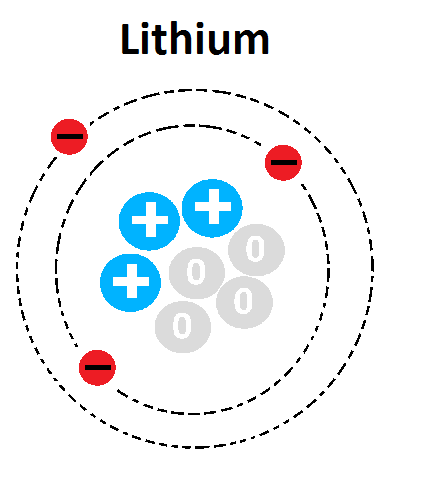
What is the atomic number of this atom?
a)
1
b)
3
c)
4
d)
7
5.

Which particles make up the nucleus of an atom?

a)

protons and neutrons

b)

electrons and protons

c)

electrons, protons, and neutrons

d)

electrons and neutrons

6.
An element with a mass number of 11 and an atomic number of 5 has how many neutrons?
a)
11
b)
5
c)
6
d)
16
7.

A substance made of 2 or more elements that are chemically joined in a specific combination

a)

compound

b)

molecule

c)

atoms

d)

element

8.

What group on the periodic table is completely nonreactive or stable?

a)

Alkali

b)

Noble Gases

c)

Halogens

d)

Transition metals

9.
At room temperature, the phase or state of matter that most elements on the periodic table of elements are in is 
a)
liquids
b)
gas
c)
solids
10.
How many atoms of aluminum are on each side of the following equation: 4Al + 3O--> 2AlO3
a)
2
b)
6
c)
1
d)
4
11.

78% of earth's atmosphere is composed of ______________.

a)

methane (CH4)

b)

oxygen (O2)

c)

argon (Ar)

d)

nitrogen (N)

12.
The amount of water vapor present in the air is called ________________.
a)
weather
b)
humidity
c)
air mass
d)
dew point
13.
What layer does weather occur in?
a)
mesosphere
b)
troposphere
c)
thermosphere
d)
stratosphere
14.
LABEL THE FOLLOWING FRONTS AND/OR WEATHER MAP SYMBOLS.
a)
 warm front
b)
cold front
c)
stationary front
d)
occluded front  
15.
A hurricane gets its energy from
a)
Warm ocean waters
b)
high air pressure
c)
winds along surface
d)
Sun
16.
What causes seasons?
a)
The distance of a planet from the sun
b)
The gravitational pull of the Earth and Moon
c)
The tilt and revolution of Earth around the sun
d)
Changing temperatures on Earth
17.
Differences in the moon's and sun's pull on different sides of the Earth cause _________.
a)
gravity
b)
lunar phases
c)
tides
d)
dabbing
18.

When the Northern Hemisphere of Earth is leaning away from the Sun, What season is the Southern Hemisphere experiencing?

a)

Summer

b)

Winter

c)

Spring

d)

Fall

19.
This particle determines what element you have - the elements identity.
a)
electron
b)
proton
c)
neutron
d)
valence shell
20.

Which choice shows the correct order of the planets (from closest to the Sun & out)?

a)

Mars, Venus, Earth, Mercury, Jupiter, Saturn, Uranus, Neptune

b)

Earth, Venus, Mars, Mercury, Jupiter, Saturn, Uranus, Pluto

c)

Mercury, Venus, Earth, Mars, Jupiter, Saturn, Uranus, Neptune

d)

Saturn, Venus, Mars, Mercury, Jupiter, Neptune Mercury, Uranus

21.

Select all of the following that are considered "inner planets".

a)

Venus

b)

Neptune

c)

Earth

d)

Saturn

22.

An oreo cookie has a mass of 20 grams. It gets crushed into crumbs for a recipe. What is the mass of the crumbs?

a)

15 grams

b)

25 grams

c)

20 grams

23.

The Law of Conservation of Matter states that...

a)

matter can simply appear.

b)

matter can neither be created nor destroyed.

c)

matter can simply disappear.

d)

matter can change form between a solid, liquid, and gas.

24.
When a hot object touches a cooler object, heat energy is transferred from the warmer object to the cooler object through:
a)
radiation
b)
electrical energy
c)
conduction
d)
solar heating
25.
You and your family are sitting around a campfire.  You can feel the heat on your face, even when you back your seat away from the fire.  The heat energy from the fire warms your face through:
a)
light energy from the fire
b)
conduction
c)
chemical reactions in the fire
d)
radiation
26.
Warm air rises and cool air sinks due to...
a)
Radiation
b)
Convection
c)
Conduction
27.
Which energy transformation occurs in a toaster?
a)
chemical to electric
b)
electric to thermal
c)
kinetic to chemical
d)
thermal to potential
28.
What is the energy transformation?
a)
Kinetic to Mechanical to Electrical
b)
Mechanical to Electrical to Kinesthetic
c)
Electromagnetic to Chemical to Electrical
d)
Kinetic to Sound to Chemical
29.
What is the energy transformation?
a)
Kinetic to Mechanical and Electrical
b)
Chemical to Thermal and Electromagnetic (light)
c)
Electromagnetic to Chemical and Electrical
d)
Kinetic to Sound and Chemical
30.

The energy coming in to from the sun minus the energy being radiated out is known as

a)

the greenhouse effect

b)

global warming

c)

Earth's energy budget

d)

the electromagnetic spectrum

31.

According to the diagram, what can happen when solar energy hits clouds in Earth's atmosphere?

a)

it can be reflected or absorbed

b)

it can only be absorbed

c)

it can only be reflected

d)

it is neither reflected nor absorbed

32.

As altitude increases, air pressure....

a)

Increases

b)

Decreases

c)

Stays the same

d)

Goes up and down

33.

What is the order of the layers of the atmosphere, starting with the layer closest to Earth's surface?

a)

Stratosphere, Troposphere, Exosphere, Mesosphere, Thermosphere

b)

Troposphere, Stratosphere, Mesosphere, Thermosphere, Exosphere

c)

Troposphere, Stratosphere, Mesosphere, Exosphere, Thermosphere

d)

Troposphere, Stratosphere, Thermosphere, Exosphere, Mesosphere

34.
The property where water molecules are attracted to other types of molecules (surfaces).
a)
adhesion
b)
capillary action
c)
cohesion
d)
universal solvent
35.

The property where water can pull itself up tubes (like in a plant stem) or through spaces in paper or fabrics.

a)

adhesion

b)

capillary action

c)

cohesion

d)

universal solvent

36.
Why can some insects walk on water?
a)
The water sticks to the insect.
b)
The insect is too light to break the surface tension.
c)
The insect has hydrophobic oils on its legs.
d)
Insects can't walk on water.