
 Worksheets
Skeletal Review
Total questions: 35
Worksheet time: 12mins
Which of the following is NOT a function of bones?
hematopoiesis
storage
maintenance of body temperature
protection
Blood cell formation:
ossification
hemostasis
hematopoiesis
hemophilia
What is the number of bones that compose the adult skeleton?
205
206
208
200
Bone tissue that is heterogeneous with many open spaces:
lacunae
compact bone
canaliculi
spongy bone


The ends of a long bone are called the
diaphysis
epiphyses
periosteum
endosteum
Articular cartilage is found:
covering the epiphyses
between sutures
surrounding the diaphysis
at the growth plate
Mature bone cells:
osteoblasts
osteomasts
osteocytes
osteoclasts
Bone destroying cells:
osteocytes
osteoblasts
osteomasts
osteoclasts
Process of bone formation is called:
ossification
hematopoiesis
appositional growth
atrophy
Remnant of the growth plate:
epiphyseal plate
spongy bone
epiphyseal line
lacunae
Which of the following is NOT a category of bone?
short
irregular
fat
flat
The long shaft of a bone:
epiphyses
diaphysis
periosteum
endosteum
Two bones, the ___ and the ulna, form the skeleton of the forearm.
radius
tibia
fibula
femur
The skeleton of the hand consists of the ___, the metacarpals, and the phalanges.
tarsals
metatarsals
carpals
fibula
The ___ is also known as the shin bone.
femur
fibula
radius
tibia
The bones of the fingers and toes are called ___.
carpals
phalanges
tarsals
metacarpals
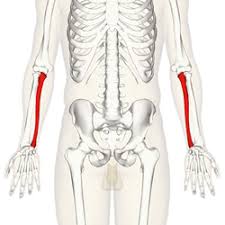
Which bones are highlighted
humerus
radius
ulna
fibula
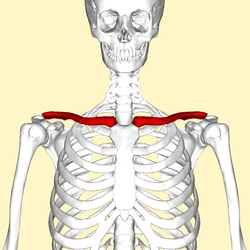
Which bones house teeth?
The mandible and the parietal.
The parietal and the maxilla.
The temporal and the maxilla.
The mandible and the maxilla.
Where would you look for the zygomatic bones?
The face.
The back of the head.
The arm.
The trunk.


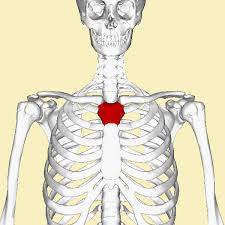
Which one is C1, the bone that articulates with the head
Axis
Atlas
The joints that allow the most movement are called
Fixed
Fibrous
Cartilaginous
Synovial
Examples of a Ball & Socket Joint are found in the
Shoulder
Knee
Hip
Ankle

