wayground logo

Free Printable Worksheets

Font size

S
M
L
XL
Worksheets

IIT-JEE & NEET FOUNDATION EXAM LEVEL - 12 (7-O)

Total questions: 100

Worksheet time: 2hrs 40mins

Name
Class
Date
1.
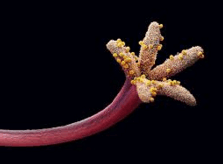
What is #8 pointing to?
a)
petal
b)
stamen
c)
pistil
d)
ovary
2.
The male part of the flower is known as the _____.
a)
stamen
b)
pistil
c)
ovary
d)
petal
3.
The female part of the flower is known as the ____.
a)
stamen
b)
anther
c)
filament
d)
pistil
4.

What is letter "A" in the image?

a)

Pistil

b)

Stamen

c)

Sepal

d)

Petal

5.

What is letter "C" in the image?

a)

Pistil

b)

Stamen

c)

Sepal

d)

Petal

6.
The part of the flower on which the pollen grains land.
a)
pistil
b)
stamen
c)
style
d)
stigma
7.
The yellow, powdery stuff on the stamens
a)
Pollen
b)
Dust
c)
Mites
d)
Germs
8.
What is #1 pointing to?
a)
ovary
b)
petal
c)
stigma
d)
stamen
9.

The part of the stamen that produces the pollen grains is the ___.

a)

anther

b)

pistil

c)

filament

d)

ovary

10.

The enlarged base of the pistil that stores the eggs of the plant is the ___.

a)

ovary

b)

ovule

c)

stigma

d)

style

11.

The tip of the style that has sticky hairs to trap pollen is the ___.

a)

stamen

b)

stigma

c)

ovary

d)

style

12.

Small grains that contain a plant's male reproductive cells.

a)

stamen

b)

pollen

c)

anther

d)

stigma

13.

Brightly colored parts of flowers that attract insects.

a)

petals

b)

pistils

c)

stamen

d)

filaments

14.

The transfer of pollen, containing the sperm cells, to the female part of the flower.

a)

seed disperal

b)

pollination

c)

germination

d)

fertilization

15.

The ovary, style, and the stigma make up the female part of a plant called the ?

a)

stamen

b)

petals

c)

stem

d)

carpel (pistil)

16.

After fertilization what does the ovary develop into?

a)

Fruit

b)

Bud

c)

Seed

d)

Flower

17.

I am a flower that produces nectar. What is the function of the nectar?

a)

To provide food for the flower

b)

To attract pollinators

c)

To attract animals to disperse the fruits

d)

To produce perfumes for Man

18.
Which part produces sperm enclosed in pollen?
a)
A
b)
B
c)
C
d)
E
19.

The male reproductive structure of a flower is the ___.

a)

pistil

b)

ovary

c)

stamen

d)

ovule

20.
Heat is the movement of ______.
a)
radiation
b)
thermal energy
c)
cold
d)
fire
21.
Thermal energy ALWAYS moves from _____ to _____.
a)
solid to liquid
b)
ice to water
c)
hot to cold
d)
solid to gas
22.
Heat moves by ______ when it travels through waves.
a)
radiation
b)
conduction
c)
insulator
d)
convection
23.
Heat moves by ______ when it travels from one solid to another solid.
a)
radiation
b)
convection
c)
thermal energy
d)
conduction
24.
The way heat moves in liquids and gases is called _______.
a)
convection
b)
radiation
c)
conduction
d)
temperature
25.
All matter is made of _____ that are constanly moving.
a)
insulators
b)
particles
c)
convection
d)
pieces of plastic
26.
If an object has particles that are moving very quickly, the object 's temperature is probably _____.
a)
cold
b)
slow
c)
big
d)
hot
27.
If an object has particles that are moving very slowly, the object's temperature is probably ______.
a)
hot
b)
small
c)
cold
d)
big
28.
The flow of thermal energy from warmer objects to cooler objects is called ______.
a)
heat
b)
movement
c)
friction
d)
energy
29.
Sawing a piece of wood causes the end being sawed to become warm.  In this case, heat is produced by ____.
a)
burning fuels
b)
mixing matter
c)
electricity
d)
friction
30.
Glass, steel, and aluminum are good examples of ______.
a)
insulators
b)
thermal energy
c)
conductors
d)
radiation
31.
The heat from a hot burner to a pot is transferred by ______.
a)
convection
b)
insulation
c)
radiation
d)
conduction
32.
The way the heat is moving from the hot coffee is called...
a)
convection
b)
radiation
c)
insulation
d)
conduction
33.
A metal spoon placed in a bowl of hot soup is heated by _____.
a)
radiation
b)
conduction
c)
friction
d)
convection
34.
How are heat from the sun and heat from a campfire alike?
a)
They move by radiation.
b)
They move by convection.
c)
They move by conduction.
d)
They are solar energy.
35.

What happens when a cold drink sits in a hot room?

a)

It remains cold

b)

It gets warmer

c)

It starts boiling

d)

It starts to freeze

36.

Which of the following best describes temperature?

a)

Number of molecules

b)

Motion of molecules

c)

Size of molecules

d)

Type of molecules

37.

When you heat a pot on a stove, the handle gets warm. Which type of heat transfer is responsible?

a)

Conduction

b)

Radiation

c)

Convection

d)

All of the above

38.

Which of the following best describe a vacuum?

a)

Hot

b)

Cold

c)

Shiny

d)

Empty

39.

Thermoses work because they minimize which kinds of heart transfer?

a)

Conduction and convection

b)

Conduction and radiation

c)

Convection and radiation

d)

Conduction, convection, and radiation

40.

A straight path with no beginning or end is a...

a)

ray

b)

line

c)

plane

d)

angle

41.

Two rays that meet at a common end point are called an...

a)

point

b)

line

c)

angle

d)

line segment

42.

Part of a line that has a beginning, but no end is called a...

a)

line segment

b)

ray

c)

angle

d)

plane

43.

A flat surface is called a...

a)

plane

b)

line

c)

point

d)

ray

44.

Part of a line that has a beginning and an end is called a...

a)

ray

b)

plane

c)

angle

d)

line segment

45.

A specific location in space is called a...

a)

line

b)

point

c)

line segment

d)

ray

46.
What are these figures called?
a)
Points
b)
Lines
c)
Angles
d)
Planes
47.
The common endpoint of 2 rays
a)
Point
b)
Midpoint
c)
Vertex
d)
Bisect of an Angle
48.
Two angles whose measures have a sum of 90.
a)
Complementary
b)
Right Angle
c)
Linear Pair
d)
Adjacent Angles
49.
Two angles whose measures have a sum of 180.
a)
Straight Angle
b)
Linear Pairs
c)
Supplementary
d)
Adjacent Angles
50.
A location in space that is represented by a dot and has no dimensions
a)
Point
b)
Line
c)
Plane
d)
Angle
51.
A line has one dimension. It is represented by a line with two arrowheads, but it extends without end.
a)
Point
b)
Line
c)
Plane
d)
Angle
52.

To lines that intersect to form right angle.

a)

Parallel Lines

b)

Perpendicular Lines

c)

Congruent Segments

d)

Parallel Planes

53.

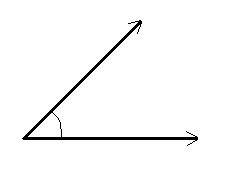
Which one is NOT a way to name this angle?

a)

∠ABC

b)

∠CAB

c)

∠1

d)

∠A

54.

Which Symbol represents this picture?

a)

b)

c)

d)

55.

What does this picture represent?

a)

Ray

b)

Line

c)

Segment

d)

Angle

56.
What angle is exactly 90 degrees?
a)
acute
b)
right
c)
obtuse
d)
straight line
57.
What angle is less than 90 degrees?
a)
right
b)
straight line
c)
obtuse 
d)
acute
58.
Which angle is greater than 90 but less than 180 degrees?
a)
acute
b)
right
c)
obtuse
d)
straight line
59.

What geometric term could be represented a floor?

a)

point

b)

line

c)

plane

d)

arc

60.

Which of these pH values represent an acid?

a)

4

b)

8

c)

10

d)

12

61.

Which of the following is an acid?

a)

vinegar

b)

bleach

c)

sugar in water

d)

starch in water

e)

toothpaste in water

62.

Which of the following is a property of a base?

a)

bitter taste

b)

reacts with metals

c)

salty

d)

sour taste

63.

Bases have many uses. They are mainly used to make

a)

cleaning products

b)

soaps

c)

concrete

d)

all of the answer choices

64.

All bases have a sour taste.

a)

True

b)

False

65.

Which of the following is a base?

a)

baking soda in water

b)

orange juice

c)

vinegar

d)

lemonade

66.

Bases turn blue litmus paper red.

a)

True

b)

False

67.

If the substance is neutral, what would the pH be?11

a)

3

b)

5

c)

7

d)

9

e)

11

68.
Ammonia has a pH of 12.  Ammonia is __________.
a)
an acid
b)
a base
c)
an element
d)
a metal
69.
When dissolved in water, bases produce:
a)
acids
b)
salts
c)
hydrogen ions
d)
hydroxide ions
70.
Which of these solutions is an acid?
a)
Dish Soap: pH of 12
b)
Tomato Soup: pH of 4
c)
Baking Soda: pH of 9
d)
Drain Cleaner: pH of 14
71.
What does the pH scale measure?
a)
the concentration of acids and bases
b)
the malleability of a metal
c)
the temperature of the water in a swimming pool
d)
the amount of phosphorus in a compound
72.
The pH of vinegar is 2.5.  Vinegar is a _____________.
a)
strong acid
b)
strong base
c)
weak base
d)
weak acid
73.
What is the pH of water?
a)
0
b)
4
c)
7
d)
14
74.
What is the pH of a neutral substance?
a)
0
b)
5
c)
7
d)
10
75.
Which has a pH below 7?
a)
Acid
b)
Base
76.
Which has a bitter taste?
a)
Base
b)
Acid
c)
flagella
d)
cila
77.
Which has a slippery texture?
a)
Acid
b)
Base
78.
Turns litmus red
a)
Acids
b)
Bases
c)
All
79.

HCl is found in household products, including some toilet bowl cleaners. Is HCl an acid or a base?

a)

Acid

b)

Base

c)

Neither (Neutral)

80.
Simplify:
5(3x+2)
a)
3x+10
b)
15x+10
c)
15x-10
d)
3x-10
81.
Find the product
(x +2)(x + 3)
a)
x2 + 5x + 6
b)
x2 + x + 6
c)
x2 + 5x + 5
d)
x2 + 6x + 6
82.
Find the product
(x + 5)(x + 4)
a)
x2 + x + 20
b)
x2 + 20x + 9
c)
x2 + 9x + 20
d)
x2 - 9x + 54
83.
Find the product
(x + 7)(x + 9)
a)
x2 + 63x + 16
b)
x2 + 16x + 63
c)
x2 + 79
d)
x2 + 16x + 2
84.
Find the product 
(x - 5)(x + 1)
a)
x2 - 4x - 5
b)
x2 + 6x - 5
c)
x2 - 5x - 4
d)
x2 - 4x - 4
85.
Find the product
(x - 3)(x +10)
a)
x2 - 7x + 13
b)
x2 - 6x - 30
c)
x2 + 7x - 30
d)
x2 + 13x + 30
86.
Find the product
(x - 3)(x +10)
a)
x2 - 7x + 13
b)
x2 - 6x - 30
c)
x2 + 7x - 30
d)
x2 + 13x + 30
87.
Find the product
(x - 4)(x - 6)
a)
x2 -10x + 24
b)
x2 - 10x - 24
c)
x2 +10x + 24
d)
x2 + 10x - 24
88.
Find the difference. 
(3- 2x + 2x2) - (4x -5 +3x2)
a)
x2 + 6x + 8
b)
2x+ 5x - 7
c)
-x2 -6x + 8
d)
-2x2 + 11x - 4
89.
Find the sum.
(2x2 + 5x - 7) + ( 3 - 4x2 + 6x)
a)
2x+ 3x +1
b)
-2x- 11x -4
c)
2x2 + 5x -7
d)
-2x2 + 11x -4
90.
What is the degree of the polynomial
 x2-2x+5
a)
1
b)
2
c)
3
d)
0
91.
4x2 + 8x - 7
is classified as a...
a)
Third Degree Monomial
b)
Second Degree Binomial
c)
Second Degree Trinomial
d)
Third Degree Cubic
92.
Find the product
(r + 7)(r − 7) 
a)
r 2 − 49 
b)
r 2 + 14
c)
r 2 − 7r + 49 
d)
r 2 + 49
93.
Find the product
(3x – 1)(x + 5) 
a)
3x2 + 4x + 5
b)
3x2 + 4x - 5
c)
3x2 + 14x + 5
d)
3x2 + 14x - 5
94.
Find the product
(3x + 2)(2x + 4)
a)
6x2 + 16x + 8
b)
5x2 +11x + 6
c)
5x2 + 16x + 6
d)
6x2 + 11x + 8
95.
What is the degree classification of this polynomial?
x²+4x-8
a)
binomial
b)
trinomial
c)
quadratic
d)
cubic
96.
What is the term classification of the following polynomial?
x³-7x²+3
a)
monomial
b)
binomial
c)
trinomial
d)
polynomial
97.
Which is an example of a linear polynomial?
a)
x²-5
b)
6x+4
c)
5x⁵
d)
2x³-9x²
98.
Which is an example of a cubic binomial?
a)
x³+5
b)
x²+3
c)
x²+5x-6
d)
5x³
99.
Add the following polynomials:
(x³-2x²+3)+(2x³+3x²-1)
a)
3x³-2x²+3x+2
b)
3x³+x²+2
c)
3x³-5x²-2
d)
3x³-x²+1
100.
What is the classification of the following polynomial?
x²-8x+10
a)
quadratic binomial
b)
cubic trinomial
c)
linear binomial
d)
quadratic trinomial