
Font size
 Worksheets
Unit 7 Waves Basics
Total questions: 39
Worksheet time: 43mins
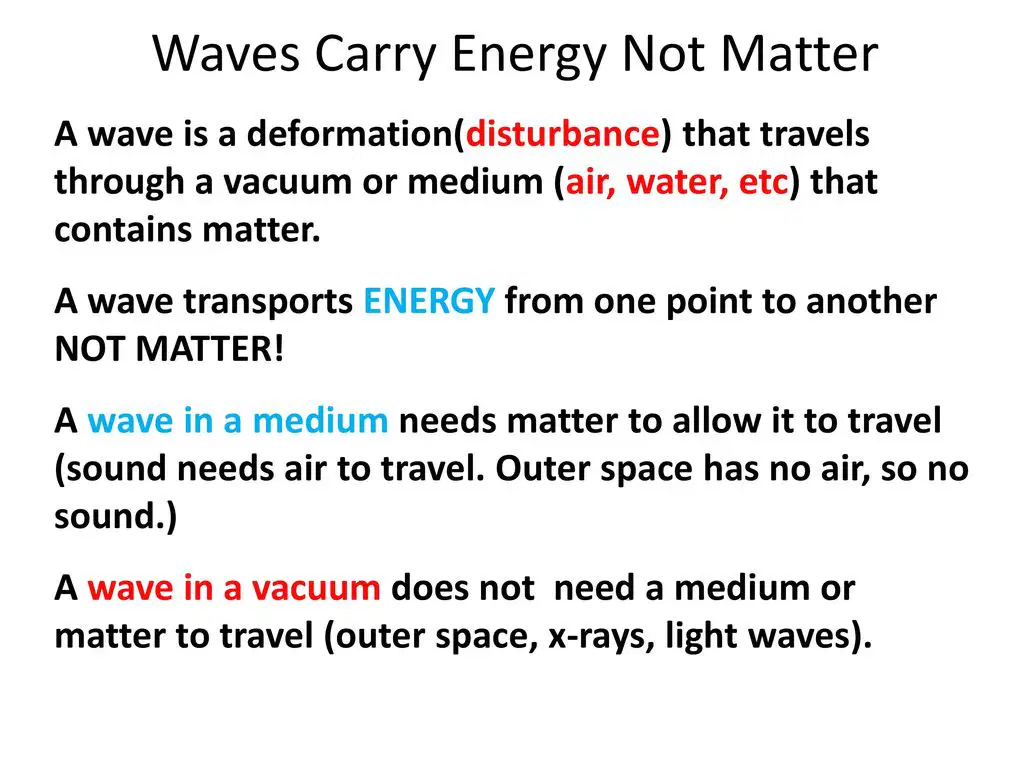
All waves carries or transmit _______
energy
water
air molecules
empty space
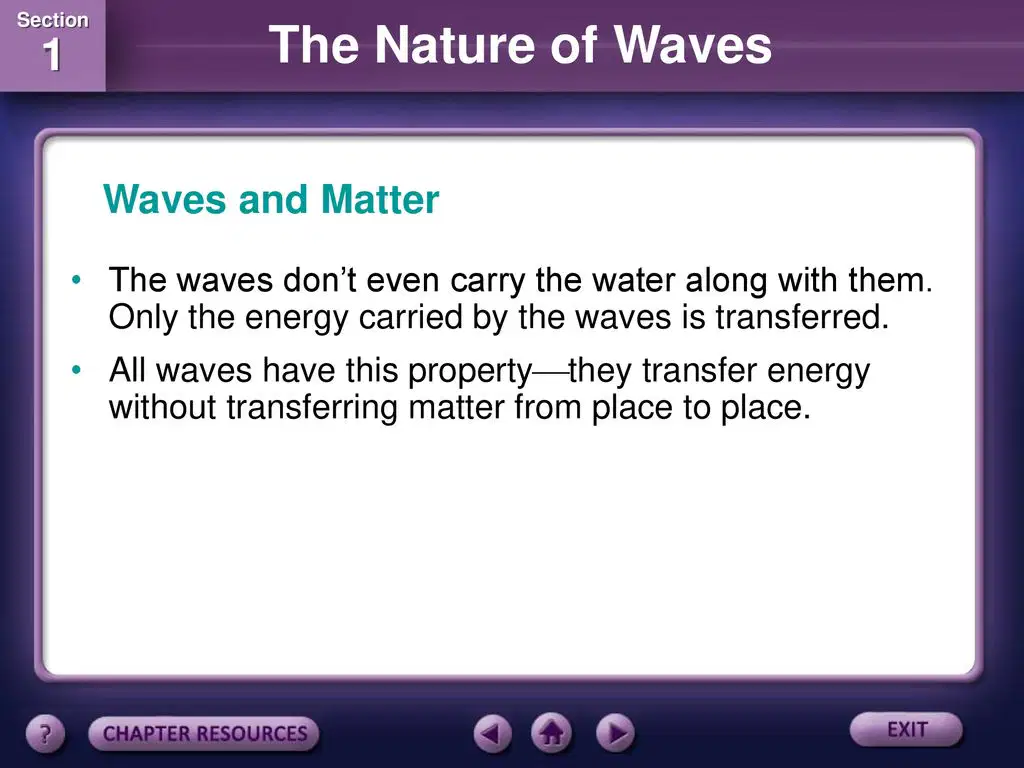
All waves _____ transfer matter
do
do not

A wave that vibrates perpendicular (up/down) to the direction of motion is called:
a transverse wave.
a longitudinal wave.
a compression wave.
a crested wave.
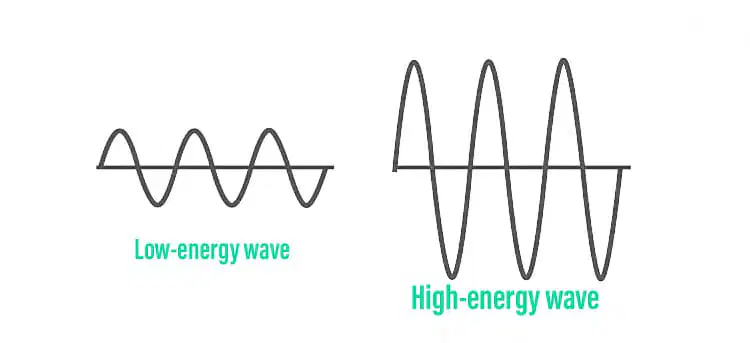
The energy of a wave
Measured from equilibrium to farthest point of the wave.
amplitude.
height.
length.
frequency.

What letter best shows the amplitude of the wave?
A
B
C
D
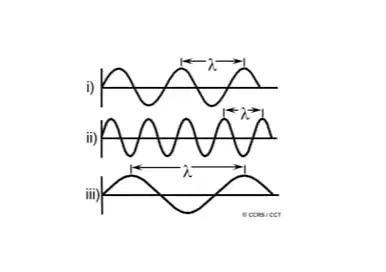
Which statement best describes wavelength?
the speed at which a wave travels.
length of two complete wave cycles.
length of one complete wave cycle.
the same as pitch.
What letter best shows the wavelength of the wave?
A
B
C
D

The mid point of a wave
said to be 'the resting point'
amplitude
crest
trough
equlibrium

The lowest point of a wave
crest
trough
wavelength
amplitude

The top of a wave
trough
wavelength
crest
equilibrium
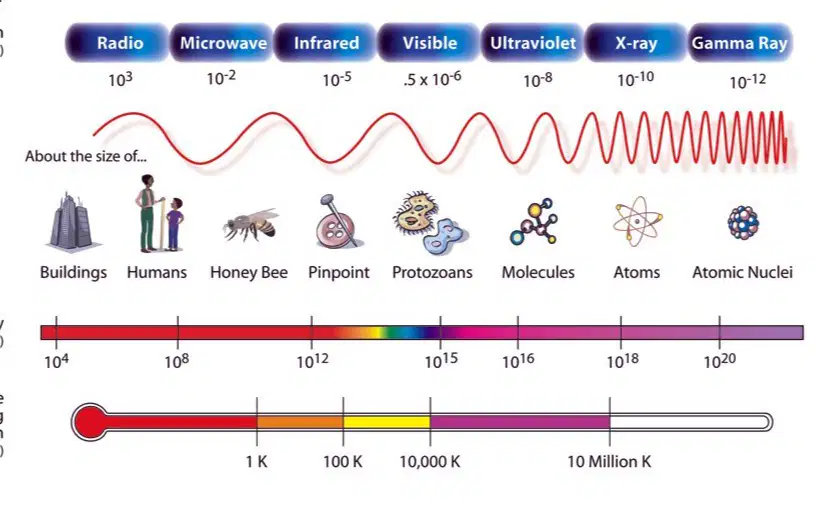
definition of frequency:
the distance between rest and crest
the amount of time that it takes to complete one wave cycle
the number of wave cycles in an amount of time
the distance between crest-to-crest

The velocity of a wave is determined by:
frequency and wavelength.
amplitude and trough.
wavelength only.
frequency only.
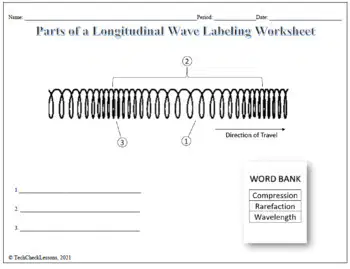
Point 3 in th image
1 complete cyle of the wave
compression
rarefaction
Wavelength
trough
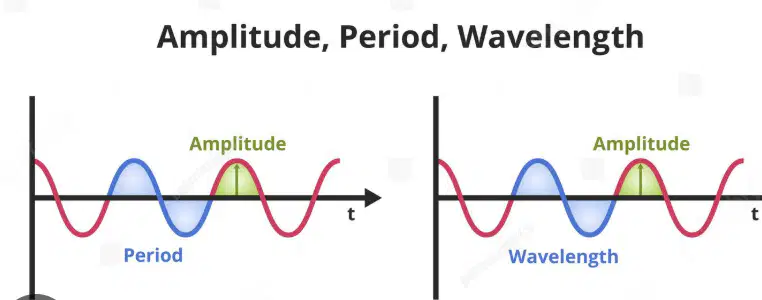
The amount of time for one particle of the medium to make one complete vibration cycle is a good description of ____________.
period
amplitude
frequency
speed

A wave that vibrates parallel (side-side) to the direction of motion is called:
a transverse wave.
a longitudinal wave.
a compression wave.
a crested wave.
Point 1 in th image
Where the wave is least dense, particles are far apart
compression
rarefaction
wavelength
crest
Point 2 in th image
Where the particles of a wave are most dense, particles are closer together
compression
rarefaction
Wavelength
trough

The matter that waves travels to through
the density of the substance is the only thing that can affect the speed of a wave
High
Low
Medium
Twinkies
The pattern of the standing wave is called _________ motion
Interference
Antinode
Harmonic
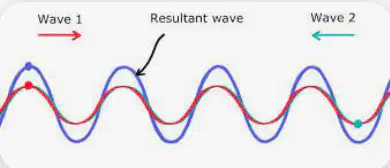
What type of wave appears to vibrate in place because the wave is trapped between 2 boundaries?
standing wave
breaking wave
traveling wave
tsunami
Standing waves occur when a wave_____ s a boundary and is ______________ back at the same frequency as the original wave.
hits
Reflected
passes ove
Refracted
passes over
Coincidental
hits
Incidentingh
in a Standing waves the wave that goes out, the original wave is called the _____________ wave
Reflecting
Refract
Coincident
Incident
in a Standing waves the wave that returns is called the _____________ wave
Reflecting
Refract
Coincident
Incident
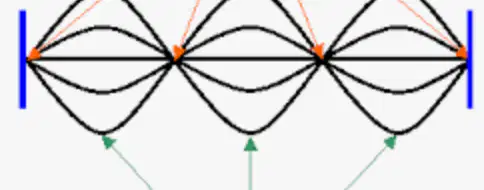
Points of maximum amplitude on a standing wave are called
Nodes
Antinodes
Points of interference
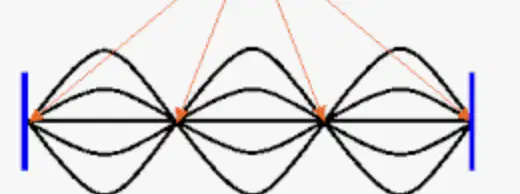
Points of maximum amplitude on a standing wave are called
Nodes
Antinodes
Points of interference


How many nodes does this standing wave have?
1
2
3
4
How many antinodes does this standing wave have?
1
2
3
4
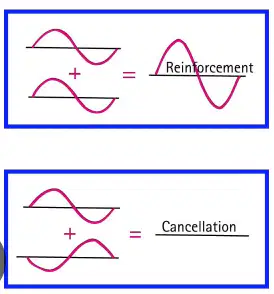
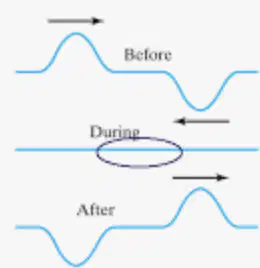
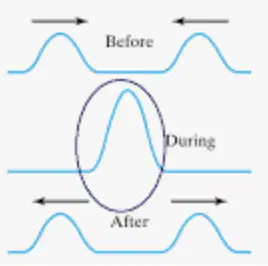

What the result of this interference?
Constructive, combine to larger amplitude
Destructive, combine to reduce amplitude
Diffractive
Refractive

What the result of this interference?
Constructive, combine to larger amplitude
Destructive, combine to reduce amplitude
Diffractive
Refractive
If a wave traveling West with an amplitude of 7m above the equilibrium interferes with a wave traveling East with an amplitude of 2m above the equilibrium, the amplitude during interference
5m above the equilibrium
5m below the equilibrium
9m above the equilibrium
9m below the equilibrium
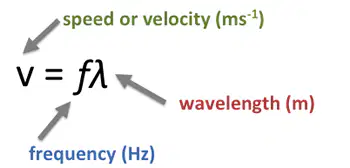
A shark creates a wave with a wavelength 6 meters long and frequency of 4Hz.
What is the speed of the wave?
10m/s
1.5m/s
0.67m/s
24m/s
the unit for wave frequency
m
s
m/s
Hz
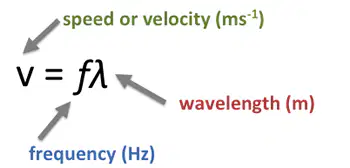
A sound wave with a speed of 800 m/s moves along a guitar string. If the wavelength is 2 meters, what is the frequency of the wave?
400 hz
800 hz
200 hz
1600 hz

