wayground logo

Free Printable Worksheets

NEW

Font size

S
M
L
XL
Worksheets

Chapter 7 - Weather Exam Review

Total questions: 40

Worksheet time: 53mins

Name
Class
Date
1.
What causes Hurricanes?
a)
Warm Ocean Water
b)
Convection
c)
Tornadoes that make it to the Ocean
d)
Earthquakes in the Ocean
2.
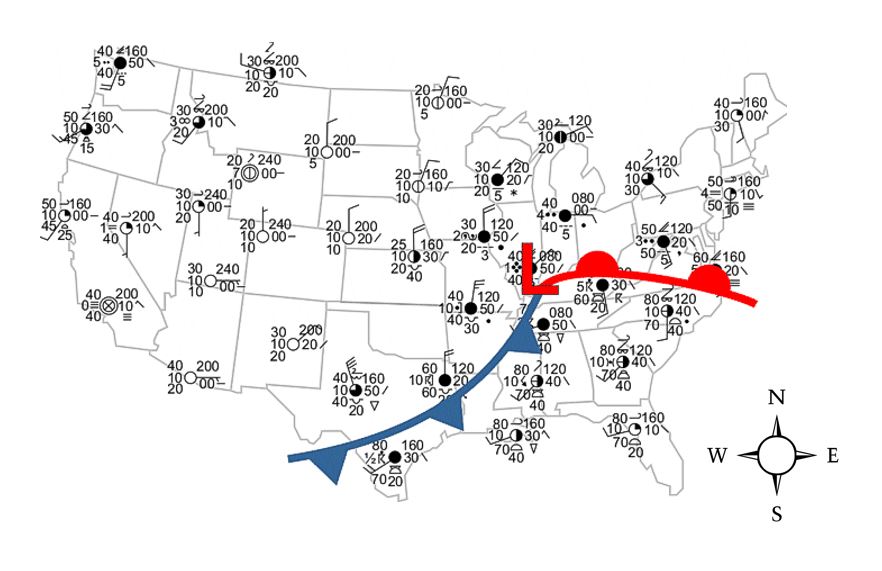
Predict what will happen to Dallas in a few days.
a)
The temperature will decrease and there will be rain
b)
The temperature will increase and there will be rain
c)
There will be a Hurricane
d)
The temperatures will remain the same
3.
A High Pressure system generally brings...
a)
Wet Weather
b)
Clear Skies
c)
Thunderstorms
d)
Tornadoes
4.

What can you do to stay safe during a thunderstorm?

a)

You can stay safe by standing under a tree

b)

You can stay safe by staying inside a strong building.

c)

You can stay safe by using electricity

d)

You can stay safe by wearing warm clothing

5.

Pressure moves from

a)

Low to High

b)

High to Low

c)

It depends on the temperature

d)

It depends on the wind speed

6.

Which tool measures air pressure?

a)

Wind sock

b)

Thermometer

c)

Barometer

d)

Anemometer

7.
A storm with fast winds and heavy rain that begins over oceans is a ____________.
a)
weather
b)
tornado
c)
hurricane
8.
A storm with fast, twisting winds that form a cloud that can touch the ground is a  ______________________.
a)
condensation
b)
hibernate
c)
tornado
9.
Which cloud is a thin, wispy cloud?
a)
Cirrus
b)
Hail
c)
Stratus
d)
Cumulus
10.
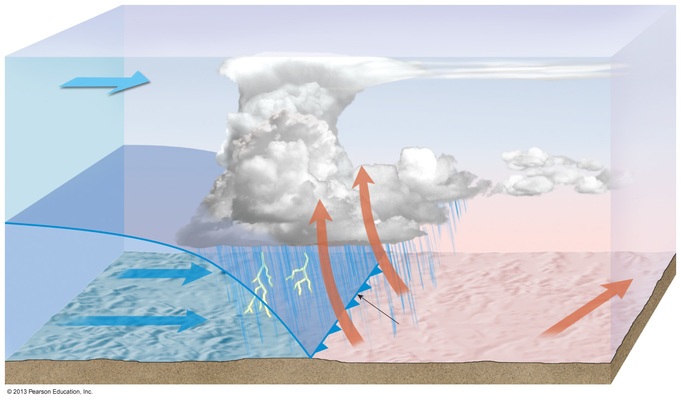
What type of storm front is this? 
a)
warm front
b)
cold front
c)
stationary front
d)
occluded front
11.
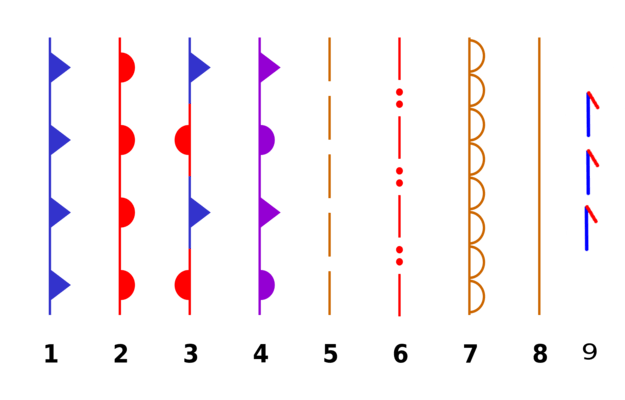
What does symbol # 3 mean?
a)
stationary front
b)
occluded front
c)
warm front
d)
cold front
12.
A front is
a)
where warm air is cooling at earth's surface
b)
a line where hot and cold air are separating
c)
a line where two different air masses meet
d)
where cold air is rising and forming rain clouds
13.
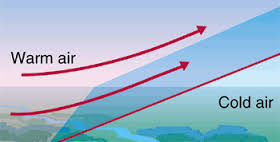
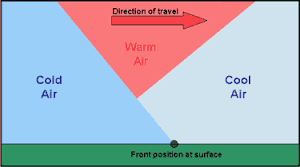
Which type of front is pictured?
a)
Cold front
b)
Warm front
c)
Occluded front
d)
Stationary front
14.
When a cold front is approaching, what happens?
a)
warm air is pushing under cold air causing humid weather and lower temperatures
b)
warm air is pushing under cold air causing humid weather and higher temperatures
c)
warm air rises, cools, and causes rain and thunderstorms
d)
cold air is pushed over warm air causing rain and thunderstorms
15.
The symbol on a weather map for a cold front is what?
a)
a line with triangles on it
b)
a line with semi-circles on it
c)
a line with squares on it
d)
a line with circles on it
16.
What direction is the warm front moving on the map? 
a)
North
b)
South
c)
East
d)
West
17.
Which front leads to steady rain for several days?
a)
warm front
b)
cold front
c)
stationary front
d)
occluded front
18.
Which type of front is pictured?
a)
Cold front
b)
Warm front
c)
Occluded front
d)
Stationary front
19.
What is storm that contains storm surges and has wind speeds of 74 mph - 200 mph?
a)
thunderstorms
b)
severe thunderstorms
c)
tornadoes
d)
hurricanes
20.
What are thunderstorms?
a)
a storm with thunder and lighting and typically also heavy rain or hail
b)
a storm that can be the same as thunderstorms, but even more dangerous
c)
a mobile, destructive vortex of violently rotating winds having the appearance of a funnel shaped cloud and advancing beneath a large storm system.
d)
a huge storm with strong winds and storm surges
21.
What is the scale used to measure hurricanes?
a)
MPH scale
b)
Fujita Scale
c)
Weight Scale
d)
Saffir/Simpson Scale
22.
Does lightning or thunder come first?
a)
thunder
b)
lightning
c)
it depends
23.
If the water temperature increases, what will happen to the strength of hurricanes?
a)
Increase
b)
Decrease
c)
Stay the same
24.

An air mass is a large mass of air that is defined by its temperature and ____________________.

a)

Elevation (altitude)

b)

Water vapor content (humidity)

c)

Strength

d)

Weather

25.

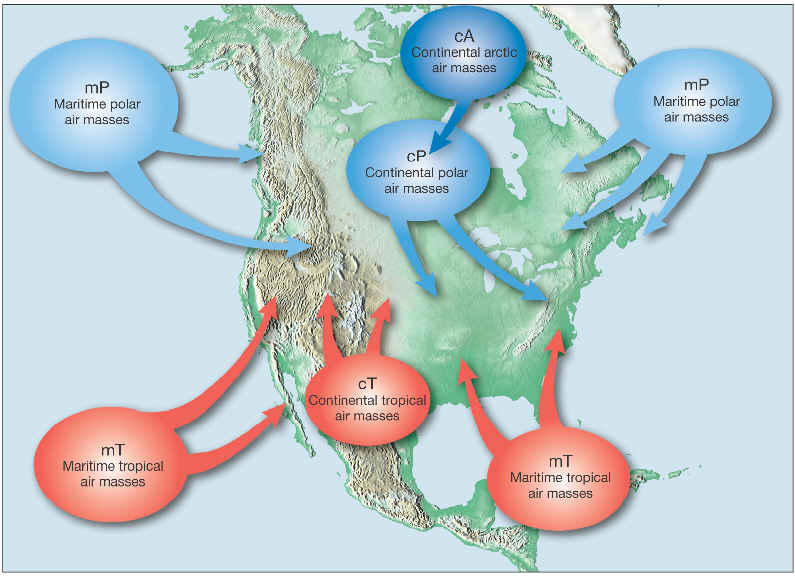
Which type of air mass is dry and warm?

a)

Continental polar

b)

Continental tropical

c)

Maritime polar

d)

Maritime tropical

26.

Applying what you know about air masses, which air mass would you expect to find here in Chad, Africa? (circled on the picture **hint: find the equator line**)

a)

Continental polar

b)

Continental tropical

c)

Maritime polar

d)

Maritime tropical

27.
The amount of water vapor present in the air is called ________________.
a)
weather
b)
humidity
c)
air mass
d)
dew point
28.

What kind of weather would you expect when you have decreased air pressure?

a)

Warm temperatures

b)

Cool temperatures

c)

Clear conditions

d)

Cloudy conditions

29.

How do air masses move across the US?

a)

The trade winds move the air masses from west to east

b)

The jet stream moves air masses from west to east

c)

The trade winds move the air masses from the Atlantic Ocean to the Pacific Ocean

d)

The Gulf Stream air moves around the Gulf of Mexico

30.

What is weather?

a)

The amount of moisture in the air

b)

The number of clouds in the sky

c)

The speed of the wind

d)

The state of the atmosphere at any particular time.

31.

If it's a hot day outside, what can you conclude?

a)

There are a lot of clouds in the sky

b)

The air can hold a lot of moisture

c)

The wind is blowing extremely fast

d)

The air can hold very little moisture

32.

If the air is only holding one-third as much moisture as it can possibly hold, what is the relative humidity?

a)

25 percent

b)

50 percent

c)

33 percent

d)

67 percent

33.

What will happen if the relative humidity is 100 percent, and the temperature begins falling?

a)

It will start to rain

b)

The air will be sticky and uncomfortable

c)

The temperature will rise

d)

The barometric pressure will rise

34.
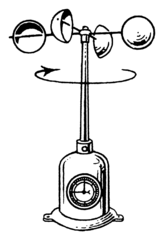
This weather instrument is an...
a)
wind vane
b)
anemometer
c)
barometer
d)
thermometer
35.

What is humidity?

a)

the patterns of weather

b)

the amount of water vapor in the air

c)

the amount of water

36.
A hurricane forms over the Atlantic Ocean. When it hits land and comes ashore, its wind speed decrease significantly.  This happens because the hurricane:
a)
gains more water from the flooded land than the ocean
b)
meets a land breeze
c)
meets a stronger hurricane moving from land
d)
no longer gains energy from warm ocean water
37.
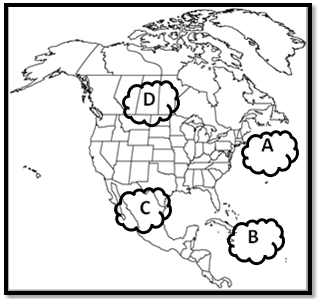
Which type of air would you find at air mass A?
a)
cold, dry
b)
warm, humid
c)
warm, dry
d)
cold, humid
38.
Air masses are named for ______.
a)
the type of air they contain 
b)
animals
c)
 people
d)
 where they form 
39.
What is an air mass?
a)
a place where weather always changes in an extreme way
b)
a large body of air with the same temperature and moisture
c)
any cloud that produces rain, sleet, snow or hail
d)
any kind of air, as long as it is always wet and freezing
40.
What is the purpose of a barometer?
a)
Tells you that it is going to rain.
b)
Measures the amount of wind.
c)
Measusres the amount of clouds in the sky.
d)
It measure the amount of pressure in the air.