Wayground logo

Free Printable Worksheets

Font size

S
M
L
XL
Worksheets

Science 8 Review

Total questions: 24

Worksheet time: 8mins

Name
Class
Date
1.
The layer of the atmosphere containing the ozone layer is
a)
troposphere
b)
stratosphere
c)
thermosphere
d)
mesosphere
2.
The layer of the atmosphere containing our weather is
a)
thermosphere
b)
stratosphere
c)
troposphere
d)
mesosphere
3.
The layer of the atmosphere containing the ionosphere and auroras is
a)
troposphere
b)
mesosphere
c)
stratosphere
d)
thermosphere
4.

What does the magnetosphere do?

a)

It absorbs solar radiation from the Sun and helps us to navigate

b)

It removes solar radiation from the Sun and helps us to navigate.

c)

It deflects solar radiation from the Sun back out into space and helps us navigate.

5.

What is the most commonly known greenhouse gas, which humans are responsible for emitting by using cars, planes and factories.

a)

Carbon dioxide

b)

Oxygen

c)

Nitrogen

6.
Heat from the sun travels to Earth by _____.
a)
conduction
b)
convection
c)
insulation
d)
radiation
7.
Warm air is __________ dense than cold air and rises creating convection currents.
a)
more
b)
less
8.

Which among the following statements is true?

a)

Warmer air always sinks while cooler air always rises.

b)

Cooler air always sinks while warmer air rises.

c)

During summer time, warmer air rises but cooler air either sinks or rises.

d)

During winter time, warmer air since but cooler air either sinks or rises.

9.

How do the heating and cooling rates of land and water compare?

a)

Land heats and cools faster

b)

Land and water heat and cool at the same time

c)

Land heats faster but water cools faster

d)

Water heats and cools faster

10.
The weather is...
a)
The typical state of the atmosphere in a long period of time.
b)
The state of the atmosphere at a particular time. 
11.

What is the average weather of an area over a long period of time?

a)

climate

b)

weather

12.
What kind of precipitation is formed when water falls from the clouds and lands on the ground as liquid water?
a)
Hail
b)
Sleet
c)
Rain
d)
Snow
13.
Snow is most common is which season?
a)
Summer
b)
Winter
c)
Fall
d)
Spring
14.
How do we characterize an air mass that forms near the poles?
a)
Dry
b)
Wet
c)
Warm
d)
Cold
15.
How do we characterize an air mass that forms over near the equator?
a)
Dry
b)
Wet
c)
Cold
d)
Warm
16.
How do we characterize an air mass that forms over land?
a)
Dry
b)
Wet
c)
Cold
d)
Warm
17.
A front is
a)
where warm air is cooling at earth's surface
b)
a line where hot and cold air are separating
c)
a line where two different air masses meet
d)
where cold air is rising and forming rain clouds
18.

Select 2 other names for a hurricane.

a)

typhoon

b)

cyclone

c)

blizzard

d)

earthquake

19.

Government agency that is tasked to monitor and assess any weather disturbances that enter PAR

a)

PAGASA

b)

PHIVOLCS

c)

DEPED

d)

DOH

20.

PAR stands for?

a)

Philippine Area of Restriction

b)

Philippine Area of Responsibility

c)

Philippine Autonomy and Responsibility

d)

Philippine Authority for Responsibility

21.

PAGASA uses each set of typhoon names in rotation every _____ years.

a)

2

b)

3

c)

4

d)

5

22.
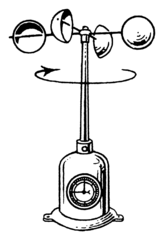
This weather instrument is an...
a)
wind vane
b)
anemometer
c)
barometer
d)
thermometer
23.
This weather instrument is a...
a)
thermometer
b)
anemometer
c)
rain gauge
d)
barometer
24.
This weather instrument is a...
a)
anemometer
b)
Christmas ornament
c)
wind vane
d)
barometer