wayground logo

Free Printable Worksheets

Font size

S
M
L
XL
Worksheets

Energy

Total questions: 132

Worksheet time: 3hrs 45mins

Name
Class
Date
1.

What is energy?

a)

moving energy

b)

stored energy

c)

renewable energy

d)

The ability to do work.

2.

What is potential energy?

a)

moving energy

b)

stored energy

c)

renewable energy

d)

non renewable energy

3.

What is kinetic energy?

a)

moving energy

b)

potential energy

c)

stored energy

d)

renewable energy

4.

What is NOT a renewable energy source?

a)

coal

b)

wind

c)

solar

d)

water

5.

Which of these things is an example of potential energy?

a)

a car motor

b)

firewood

c)

battery

d)

a fan

6.

Which of these is an example of kinetic energy?

a)

a bicycle

b)

a battery

c)

a solar panel

d)

firewood

7.

Heat always travels from...

a)

Warm to cool

b)

Cool to warm

c)

Warm to warm

d)

Cool to cool

8.

A hot air balloon rising is an example of ...

a)

conduction

b)

convection

c)

radiation

d)

connection

9.

A snowman melting in the sun

a)

convection

b)

conduction

c)

radiation

d)

connection

10.

Eggs cooking in a frying pan

a)

convection

b)

conduction

c)

radiation

d)

connection

11.

Heating a kettle on a hot stove (burner)

a)

convection

b)

conduction

c)

radiation

d)

connection

12.

A stove top will cook your food because of ___________.

a)

convection

b)

conduction

c)

radiation

d)

connection

13.

A blow dryer uses __________ to dry your hair.

a)

convection

b)

conduction

c)

radiation

d)

connection

14.

Thermal energy that is transferred from one substance to another.

a)

heat

b)

temperature

c)

thermal energy

d)

radiation

15.

Warming up near a campfire is an example of ...

a)

conduction

b)

convection

c)

radiation

d)

connection

16.

Warming up near a campfire is an example of ...

a)

conduction

b)

convection

c)

radiation

d)

connection

17.

At what point does the biker have the greatest Kinetic Energy?

a)

Point A

b)

Point B

c)

Point C

d)

Point D

18.

At what point does the biker have the greatest Potential Energy?

a)

Point A

b)

Point B

c)

Point C

d)

Point D

19.

At what point does Potential Energy transform into Kinetic Energy?

a)

Point A

b)

Point B

c)

Point C

d)

Point D

20.

Which Apple has the greatest Gravitational Potential Energy?

a)

Apple A

b)

Apple B

c)

Apple C

d)

Apple D

21.

Which Apple has the greatest Gravitational Potential Energy?

a)

The object with a mass of 3kg because its mass is less.

b)

The object with a mass of 50kg because its mass is greater.

c)

Both objects because they are at the same height.

d)

Neither of the objects because they are at the same height.

22.

What type of energy is transformed in the Energy Conversion shown in the image below?

a)

Nuclear Energy

b)

Chemical Energy

c)

Thermal Energy

d)

Electrical Energy

23.

What is the Energy Conversion that is shown in the image?

a)

Radiant to Thermal

b)

Thermal to Chemical

c)

Chemical to Radiant

d)

Radiant to Chemical

24.

What is the Energy Conversion that is shown in the image?

a)

Chemical to Mechanical

b)

Thermal to Chemical

c)

Chemical to Thermal

d)

Mechanical to Chemical

25.

Which of the following is an example of a Thermal Conductor?

a)

Plastic

b)

Styrofoam

c)

Wood

d)

Copper

26.

Which of the following is an example of a Thermal Insulator?

a)

Iron

b)

Aluminum

c)

Wood

d)

Copper

27.

What is energy?

a)

moving energy

b)

stored energy

c)

renewable energy

d)

The ability to do work.

28.

What is potential energy?

a)

moving energy

b)

stored energy

c)

renewable energy

d)

non renewable energy

29.

What is kinetic energy?

a)

moving energy

b)

potential energy

c)

stored energy

d)

renewable energy

30.

Two factors that determine work are

a)

force

b)

acceleration

c)

mass

d)

distance

e)

velocity

31.

units of force are

a)

newtons

b)

grams

c)

joules

d)

meters

32.

units for work are

a)

newtons

b)

joules

c)

meters

d)

seconds

33.

if you push a cart with a force of 60 N for 2 m... how much work have you done

a)

120 J

b)

30 J

c)

120 N

d)

30 N

34.
What is the formula for work?
a)
Force = work x distance
b)
Distance = force x work
c)
Work = force x distance
d)
Work = force x mass
35.
A kid applies a force of 70 N to a ball over 1.1 meters. How much work did he do on the ball? 
a)
77 J
b)
7.7 J 
c)
0.7 J 
d)
770 J 
36.
You do 90 joules of work in 30 seconds. How much power have you generated?
a)
30 watts
b)
3 watts
c)
120 watts
d)
270 watts
37.
Which of the following would produce the most power?
a)
A mass of 10 kilograms lifted 10 meters in 10 seconds 
b)
A mass of 10 kilograms lifted 10 meters in 5 seconds
c)
A mass of 5 kilograms lifted 10 meters in 5 seconds
d)
A mass of 5 kilograms lifted 5 meters in 10 seconds
38.

At which point of the roller coaster is potential energy the greatest?

a)

W

b)

X

c)

Y

d)

Z

39.

The faster an object moves, the ________ kinetic energy it has.

a)

more

b)

less

40.

What type of energy is elastic energy?

a)

Kinetic Energy

b)

Potential Energy

c)

Chemical Energy

d)

Mechanical Energy

41.

Which of these types of energy are examples of Kinetic energy?

a)

Mechanical, Thermal

b)

Elastic, Gravitational

c)

Electrical, Chemical

d)

Nuclear, Thermal

42.

____________________ is the storage of energy

a)

Chemical Energy

b)

Potential Energy

c)

Mechanical Energy

d)

Kinetic Energy

43.

Which of the following shows an example of Potential Energy?

a)

A football flying through the air

b)

Two kids high-fiving

c)

A rock sitting on top of a high ledge

d)

A flashlight shining brightly

44.

(Select all that apply) As a person flies in a hot air balloon does the person have Potential or Kinetic Energy?

a)

Potential; Gravitational Energy that pulls him toward ground

b)

Potential; Motion Energy as the balloon flies

c)

Kinetic; Gravitational Energy that pulls him toward ground

d)

Kinetic; Motion Energy as the balloon flies through the air

45.

What is it called when two surfaces pass across one another creating heat?

a)

Thermal Energy

b)

Friction

c)

Motion Energy

d)

Photosynthesis

46.

Four balls are thrown at the same velocity, with different masses. Which ball has the most kinetic energy?

a)

The 20g ball

b)

The 50g ball

c)

The 24g ball

d)

The 40g ball

47.

As a two kids play on a teeter totter (seesaw) when do they have the most potential energy?

a)

When they are at their highest point

b)

Just before their muscles push them upward

c)

As they begin coming down

d)

When they reach the lowest point

48.

Two kids are bowling and both choose the same ball. Whose ball will have the most force?

a)

The one who is tallest

b)

The one who has the best shoes

c)

The one who can throw the ball the fastest

d)

The one who uses the heaviest ball

49.

Design an experiment that adds or removes energy to a chemical reaction

a)

If we heat water and change it to a gas

b)

If we heat an ice cube, to see if it will melt faster.

c)

Heat water and add salt, to see if the salt will dissolve faster.

d)

Heat vinegar and add baking soda, to see if it will react faster.

50.

Where does your body get its potential energy?

a)

From Sleep

b)

From Food

c)

From the Sun

d)

From Rainbows

51.

What type of potential energy provides the energy needed to burn wood?

a)

Nuclear

b)

Chemical

c)

Thermal

d)

Elastic

52.

When lighting a match, why must it be drawn rapidly along a rough surface?

a)

It is traditional

b)

To provide an electrical spark

c)

The rough surface shortens the match

d)

To provide heat to start the reaction

53.

Sound is caused by?

a)

Force

b)

Vibrations

c)

Instruments

d)

Air

54.

At which point is potential energy greatest?

a)

W

b)

X

c)

Y

d)

Z

55.

What kind of energy is stored energy?

a)

Potential

b)

Kinetic

c)

None of the above

d)

All of the above

56.

The faster an object moves, the ________ kinetic energy it has.

a)

more

b)

less

c)

none of the above

d)

same

57.
What kind of energy is in a moving skateboard?
a)
Potential
b)
Kinetic
c)
Both potential and kinetic energy
d)
none of the above
58.

The faster an object moves, the ________ kinetic energy it has.

a)

more

b)

less

c)

none of the above

d)

same

59.
What kind of energy is in a moving skateboard?
a)
Potential
b)
Kinetic
c)
Both potential and kinetic energy
d)
none of the above
60.
What kind of energy is in a rock at the edge of a cliff?
a)
Potential
b)
Kinetic
c)
Both potential and kinetic energy
d)
none of the above
61.
Which is the best example that something has kinetic energy?
a)
a. a car parked on a steep hill 
b)
b. a tennis ball rolling across the court
c)
c. a picture hanging on the wall 
d)
d. a piece of coal before it's burned 
62.
Energy due to motion is ____________ energy. 
a)
Potential 
b)
Energy
c)
Kinetic
d)
Friction
63.
What kind of energy is in a person climbing a ladder?
a)
Potential
b)
Kinetic
c)
Both
64.
What kind of energy is in a person climbing a ladder?
a)
Potential
b)
Kinetic
c)
Both
65.
When a pendulum swings, at which point is kinetic energy highest?
a)
1
b)
2
c)
3
d)
4
66.
When a pendulum swings, at which point is kinetic energy highest?
a)
1
b)
2
c)
3
d)
4
67.
When a pendulum swings, at which point is potential energy at its greatest?
a)
1
b)
2
c)
3
d)
4
68.
What would have the greatest kinetic energy?
a)
A car driving down a hill.
b)
A person running down a hill. 
c)
A ball rolling down a hill. 
d)
leaves rolling down a hill 
69.
The measure of motion. It can increase, decrease or stay the same. We call this _____ .
a)
force
b)
kinetic energy
c)
gravity
d)
speed
70.
Click to look at the picture. 
The picture is an example of _____ .
a)
gravity
b)
potential energy
c)
kinetic energy
d)
friction
71.
Click to look at the picture.
The picture is demonstrating an example of ______ . 
a)
gravity
b)
speed
c)
kinetic energy
d)
potential energy
72.
Click to look at the picture.
The picture is demonstrating an example of ______ . 
a)
gravity
b)
speed
c)
kinetic energy
d)
potential energy
73.

An apple sitting on the edge of the table.

a)

Potential

b)

Kinetic

74.

An apple rolling on a table

a)

potential

b)

kinectic

75.
A stretched rubberband
a)
potential
b)
kinetic
76.
Sitting on a stair step
a)
potential
b)
kinetic
77.
Jason kicks the soccer ball into the goal
a)
potential
b)
kinetic
78.
When is the potential energy the greatest in a roller coaster?
a)
a. at the bottom of the first hill
b)
b. at the top of the first hill
c)
c. at the top of the second hill
d)
d. at the bottom of the second hill
79.
When is the potential energy the greatest in a roller coaster?
a)
a. at the bottom of the first hill
b)
b. at the top of the first hill
c)
c. at the top of the second hill
d)
d. at the bottom of the second hill
80.

When you eat fruits and vegetables, chemical bonds are releasing stored energy, this is...

a)

a. thermal energy

b)

b. sound energy

c)

c. electrical energy

d)

d. chemical energy

81.
Any time an energy conversion takes place, some of the original energy is converted to which one of the following?
a)
a. sound energy
b)
b. potential energy
c)
c. light energy
d)
d. thermal energy
82.
Which of the following is a conversion from light energy to chemical energy?
a)
a. turning on a stove to heat dinner
b)
b. turning on a lamp
c)
c. growing an apple tree
d)
d. making toast in a toaster
83.
After an energy conversion, you end up with the same total amount of energy as the original amount of potential energy. Which of the following laws explains this rule?
a)
a. law of energy changes
b)
b. law of conservation of energy
c)
c. law of power and energy
d)
d. law of potential energy
84.

The ability to do work

a)

A. chemical energy

b)

B. Friction

c)

C. electrical energy

d)

D. Energy

85.
After an energy conversion, you end up with the same total amount of energy as the original amount of potential energy. Which of the following laws explains this rule?
a)
a. law of energy changes
b)
b. law of conservation of energy
c)
c. law of power and energy
d)
d. law of potential energy
86.

The ability to do work

a)

A. chemical energy

b)

B. Friction

c)

C. electrical energy

d)

D. Energy

87.
a.  Energy stored in the nucleus of an atom.
a)
A. Sound Energy
b)
B. Potential Energy
c)
C. Nuclear Energy
d)
D. Thermal energy
88.
The energy of moving electrons
a)
A. Energy
b)
B. Energy Conversion
c)
C. Chemical Energy
d)
D. Electrical Energy
89.
Where is the potential energy the greatest?
a)
A
b)
B
c)
C
d)
D
90.
Energy from light waves.
a)
Radiant Energy 
b)
Chemical Energy 
c)
Nuclear Energy 
d)
Radiation 
91.

A student is holding the end of a pendulum. The student releases the pendulum. What energy transfers are taking place?

a)

potential energy is transferred to kinetic energy

b)

chemical energy to thermal energy

c)

mechanical energy to chemical energy

d)

kinetic energy is tranferred to potential energy
92.
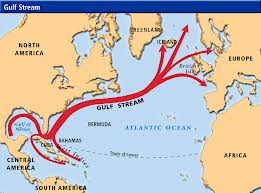
The Gulf Stream is a current that brings warm ocean water from the south to the north.
a)
conduction
b)
convection
c)
radiation
93.
Walking on the warm sand sand with your bare feet.
a)
conduction
b)
convection
c)
radiation
94.
Which direction will the heat flow while this person holds a hot cup of tea?
a)
from the cup to her hand
b)
from her hand to the cup
c)
no heat is transferred
95.
Which direction will the heat flow while this ice cap melts?
a)
there is no heat transfer
b)
from the icecap to the water
c)
from the water to the icecap
96.
In this experiment, the WARM red dye and the COLD blue dye was placed in the water at the same time. The warm red dye rose to the top while the cold blue dye sank to the bottom.
a)
conduction
b)
convection
c)
radiation
97.
Heat transfers from an area of ____temperature to an area of ___ temperature.
a)
high to low
b)
low to high
c)
high to high
98.
High temperature is connected to:
a)
Low kinetic energy.
b)
High kinetic energy.
c)
Zero net energy.
d)
Equal kinetic energies.
99.
High temperature is connected to:
a)
Low kinetic energy.
b)
High kinetic energy.
c)
Zero net energy.
d)
Equal kinetic energies.
100.
What is thermodynamics?
a)
movement of heat
b)
it's magic
c)
measurement of heat
d)
none of them
101.
What is thermodynamics?
a)
movement of heat
b)
it's magic
c)
measurement of heat
d)
none of them
102.
Energy due to motion is ____________ energy. 
a)
Potential 
b)
Energy
c)
Kinetic
d)
Friction
103.
According to which law of energy, energy can't be created or destroyed?
a)
First law of motion
b)
The law of tacos
c)
Laws of Energy
d)
law of conservation of energy
104.
What type of energy includes both kinetic and potential energy?
a)
mechanical energy
b)
chemical energy
c)
heat energy
d)
sound energy
105.

Potential energy depends on ____________ & ______________.

a)

mass, speed

b)

mass, position

c)

speed, position

d)

mass, weight

106.

Kinetic energy depends on _____________ & _____________.

a)

mass, speed

b)

mass, position

c)

mass, weight

d)

speed, distance

107.

A windmill is an example of ________________energy.

a)

thermal

b)

mechanical

c)

light

d)

electrical

108.

When energy changes from one form to another, we call it a _______________.

a)

transformation

b)

creation

c)

expiration

d)

compilation

109.
Energy stored in atomic bonds that form molecules
a)
Thermal Energy
b)
Chemical Energy
c)
Electrical Energy
d)
Electromagnetic Energy
110.
Energy stored in atomic bonds that form molecules
a)
Thermal Energy
b)
Chemical Energy
c)
Electrical Energy
d)
Electromagnetic Energy
111.
Energy of electric charges moving through conductors
a)
Electrical Energy
b)
Electromagnetic Energy
c)
Thermal Energy
d)
Chemical Energy
112.
Energy that travels in waves( ex. microwaves, radio waves, energy from the sun)
a)
Chemical Energy
b)
Electrical Energy
c)
Electromagnetic Energy
d)
Thermal Energy
113.
Energy stored in the nucleus of an atom, released when protons or neutrons are added to or removed from the nucleus 
a)
Chemical Energy 
b)
Electrical Energy 
c)
Mechanical Energy 
d)
Nuclear Energy 
114.
Energy derived from sources that are continually replenished(* wind, solar, biomass, geothermal, hydropower)
a)
Nonrenewable Energy 
b)
Renewable Energy 
c)
Energy Transformation 
d)
Electromagnetic Energy 
115.
Resources consumed by humans much faster than nature can produce(ex: oil, natural gas) 
a)
Nonrenewable Energy 
b)
Renewable Energy 
c)
Energy Transformation 
d)
Electromagnetic Energy 
116.
Nonrenewable energy source formed from remains of living organisms, , which cause pollution ( coal, natural gas, petroleum) 
a)
Fossil Fuel 
b)
Rocket fuel 
c)
Renewable Energy 
d)
Sugar
117.
Fossil fuel made of mostly carbonized plant matter. 
a)
Petroleum 
b)
Solar Energy 
c)
Natural Gas
d)
Coal 
118.
A girl on a motorbike passes by at a speed of 15 m/s. Her mass is 40 kg. What is her kinetic energy
a)
300 Joules
b)
600 Joules
c)
950 Joules
d)
4500 Joules
119.
Calculate the potential energy of a roller coaster at the top of a 72 m hill that has a mass of 112 kg.
a)
79,027 J
b)
790,720 J
c)
7,020 J
d)
790,700 J
120.
At what position does the pendulum have the greatest gravitational potential energy?
a)
Position D
b)
Position C
c)
Position B
121.
At what position does the pendulum have the greatest kinetic energy?
a)
Position D
b)
Position C
c)
Position B
122.
Which character has the greatest gravitational potential energy?
a)
Character A
b)
Character B
c)
Character C
d)
Character D
123.
Which skier has the greatest kinetic energy?
a)
Skier A
b)
Skier B
c)
Skier C
d)
Skier D
124.
Calculate the kinetic energy of a 2 kg rock that rolls down the hill with a velocity of 8 m/s.
a)
64 Joules
b)
16 Joules
c)
128 Joules
d)
8 Joules
125.
Calculate the kinetic energy of a truck that has a mass of 2900 kg and is moving at 55 m/s.
a)
4,386,250 J
b)
159,500 J
c)
79,750 J
d)
8,772,500
126.
Barry Bonds swings a bat which has a mass of 1.5 kg at a velocity of 55 m/s. How many joules of kinetic energy could he give to a baseball?
a)
2269 Joules
b)
83 Joules
c)
41 Joules
d)
4 Joules
127.
Calculate the kinetic energy of a car which has a mass of 1000 kg and is moving at the rate of 20 m/s.
a)
200,000 Joules
b)
20,000 Joules
c)
10,000 Joules
d)
40,000 Joules
128.
Calculate the potential energy of a rock with a mass of 55 kg while sitting on a cliff that is 27 m high.
a)
14,553 Joules
b)
1,485 Joules
c)
2 Joules
d)
743 Joules
129.
A cinder block is sitting on a platform 20 m high. It has a mass of 8 kg. Calculate the potential energy of the cinder block.
a)
1,568 Joules
b)
160 Joules
c)
3 Joules
d)
28 Joules
130.
A cinder block is sitting on a platform 20 m high. It has a mass of 8 kg. Calculate the potential energy of the cinder block.
a)
1,568 Joules
b)
160 Joules
c)
3 Joules
d)
28 Joules
131.
There is a bell at the top of a tower that is 45 m high. The bell has a mass of 20 kg. Calculate the potential energy of the bell. 
a)
8,820 Joules
b)
900 Joules
c)
2 Joules
d)
65 Joules
132.
A 20 kg object is at a height of 20 meters. Calculate the potential energy of the object.
a)
3,920 Joules
b)
400 Joules
c)
40 Joules
d)
20 Joules