

wayground logo

Free Printable Worksheets

Font size

S
M
L
XL
Worksheets

APUSH Unit 8

Total questions: 64

Worksheet time: 53mins

Name
Class
Date
1.
What did the Meat Inspection Act accomplish?
a)
Banned the use of assembly lines
b)
Allowed the government to have unlimited power
c)
Cleaned up food producing factories
d)
Advocated for minority groups
2.
Who wrote the expose piece of literature that revealed the extensive corrupt monopolistic business practices of Standard Oil?
a)
Ida Tarbell
b)
Lewis Hines 
c)
Jacob Riis
d)
Upton Sinclair
3.
Whose book led to the direct passage of the Meat Inspection Act and indirect of the Pure Food and Drug Acts?
a)
Jacob Riis
b)
Lewis Hines
c)
Ida Tarbell
d)
Upton Sinclair
4.
Which of the following is a Recall?
a)
People have the right to choose who will run for President
b)
People have the right to remove an elected official from office
c)
People have the right to propose a new law
d)
People have the right to vote on any law passed by their government for approval/veto
5.
Writers that dig up the bad things going on in society
a)
Suffragists
b)
Muckrakers
c)
Students
d)
Chaffinators
6.
The Sherman anti-trust act was passed to
a)
break up monopolies
b)
give equal rights to women
c)
help people living in poverty
d)
end racism
7.
A way for people to vote directly on a proposed new law
a)
Recall
b)
Referendum
c)
Initiative
d)
Primary
8.

Which amendment allowed the government to collect income taxes?

a)

16

b)

17

c)

18

d)

19

9.

which amendment let people elect their senators?

a)

16

b)

17

c)

19

d)

18

10.

What happened at the Triangle Shirtwaist factory?

a)

There was a fire and people were trapped inside without fire exits

b)

The roof collapsed

c)

The workers were fired for demanding the right to vote

d)

Immigrant workers were savagely attacked for "stealing white jobs"

11.
What term describes building an empire by conquering other nations?
a)
Isolationism
b)
Repubicanism
c)
Militarism
d)
Imperialism
12.
Made America the world's policeman
a)
Monroe Doctrine
b)
Roosevelt Corollary
c)
Domestic Policy
d)
Imperialism
13.
Threatening use of force in Latin America if need be
a)
Dollar Diplomacy
b)
Moral Diplomacy
c)
Big Stick Diplomacy
d)
Shuttle Diplomacy
14.
The _____  allowed the US to place a military base in Cuba. 
a)
Monroe Doctrine
b)
 Platt Amendment 
c)
Roosevelt Corollary
d)
Teller Amendment
15.
The _____  was intercepted and published in the news papers, calling the president weak 
a)
DeLome Letter 
b)
Platt Amendment 
c)
Teller Amendment
d)
Zimmerman Note
16.
The _________ was passed to ensure that the US would not claim Cuba for its own after the Spanish 
American War
a)
Foraker Act
b)
Teller Amendment
c)
Platt Amendment
d)
Leave me alone amendment 
17.
In March 1901, the United States Congress approved an agreement with Cuba in which the Cuban government consented “that the United States may exercise the right to intervene for the preservation of Cuban independence, the maintenance of a government adequate for the protection of life, property, and individual liberty, and for discharging the obligations with respect to Cuba imposed by the treaty of Paris on the United States, now to be assumed and undertaken by the government of Cuba.”
This passage describes what agreement approved by the United States Congress?
a)
the Monroe Doctrine
b)
the Platt Amendment
c)
the Roosevelt Corollary
d)
the Treaty of Guadalupe Hidalgo
18.
The passing of what piece of United States legislation sparked the Boxer Rebellion?
a)
the Platt Amendment
b)
the Monroe Doctrine
c)
the Open Door Policy
d)
the Chinese Exclusion Act
19.
What was is the Open Door Policy? 
a)
Document stating America's control over China.
b)
Principles stating that all countries have equal acess to Chinese Ports. 
c)
Document explaining the intense competion between world powers. 
d)
Document explaing the "spheres of influence." 
20.
Prior to 1903, which country owned the land of Panama?
a)
United States
b)
Panama
c)
Mexico
d)
Colombia
21.

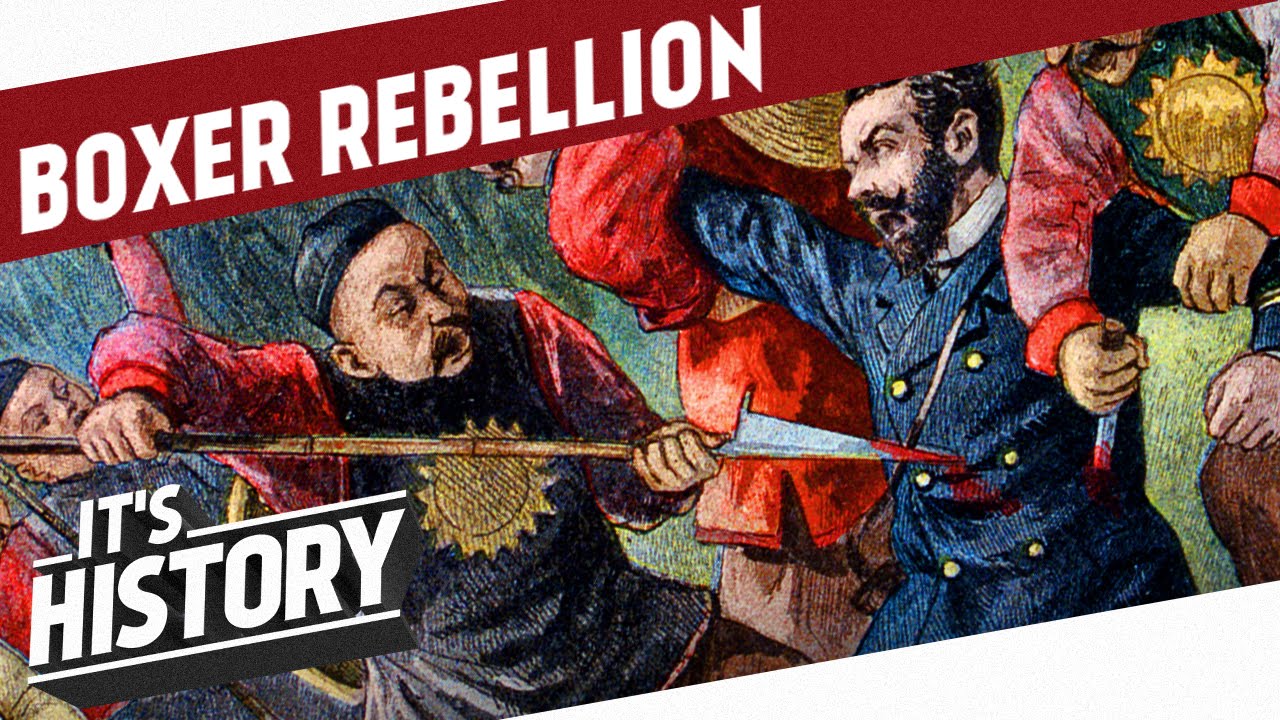
Who did the Boxers kill?

a)

Members of the Fists of Harmony and Justice

b)

Chinese Muslim

c)

All Qing nobels

d)

Christian missionaries and Western diplomats
22.
A major goal of the Boxer Rebellion in China was to:
a)
rid their countries of foreigners
b)
expand their respective territories
c)
receive international military support
d)
restore an absolute monarch to the throne
23.
Who was responsible for triggering the war through an assassination? 
a)
Franz Ferdinand
b)
Gavrilo Princip
c)
Kaiser Wilhelm
d)
Woodrow Wilson
24.
The attack on this ship killed over 100 AMericans in WWI.
a)
Titanic
b)
Santana
c)
Sullivan
d)
Lusitania
25.
Who was the most powerful country of the Central powers? 
a)
Germany 
b)
Bulgaria
c)
France
d)
Serbia
26.
What event sparked the beginning of World War I in Europe?
a)
The assassination of Archduke Ferdinand of Austria
b)
German threats across Europe
c)
The use of chemical weapons by the Germans
27.
Name two of the Allied Powers
a)
Great Britain, France
b)
United States, Norway
c)
Spain, Russia
28.
Explain what the Zimmerman Telegram was.
a)
It was a secret message the U.S. intercepted from Germany telling Mexico to attack the U.S. 
b)
It was a message from Germany that admitted that they were losing the war. 
c)
It was a telegram that showed the Central Powers' war plans. 
29.
Name one right the Sedition Act restricted for Americans?
a)
The right to travel freely. 
b)
Freedom of speech to talk about the war or the US government. 
c)
The Government took control of social media. 
30.
What was the Great Migration and why did it happen?
a)
Lots of Americans went to Europe to help fight. 
b)
Native Americans left for Canada to avoid fighting in the war. 
c)
Southern Blacks moved north for jobs and to escape racism. 
31.
Why did England and France reject Wilson's 14 Points Plan?
a)
They didn't think the plan punished Germany enough after the war. They wanted Germany punished. 
b)
They didn't trust President Wilson. 
c)
They didn't like that the US was going to take a bunch of European land in the deal. 
32.
Why did the US Congress not sign the Treaty of Versailles?
a)
Because it punished Germany too harshly after the war. 
b)
Because it included the The League of Nations which meant we would have to back up our Allies if they got in another war. 
c)
It said the US had to help our allies rebuild after the war. 
33.

What prize wa given to President Roosevelt for helping Russia and Japan reach a peace agreement?

a)

Nobel Peace Prize

b)

Nobel Literature Prize

c)

Nobel Chemistry Prize

34.
Which political party founded by Theodore Roosevelt divided the Republican vote in 1912 and allowed a Democrat to be elected president?
a)
Socialist Party
b)
Progressive Party
c)
Free Soil Party
d)
Federalist Party
35.
Which of the following laws expanded the Interstate Commerce Commission & stopped free passes on the railroad?
a)
Elkins Act
b)
Hepburn Act
c)
Newlands Act
d)
Reclamation Act
36.
TR's plan to help start the Progressive Movement at the national level was called the
a)
Triple Wall of Privilege
b)
Fair Deal
c)
Square Deal
d)
New Deal
37.

What was the name of President Wilson's plan for peace?

a)

Zimmerman Telegram

b)

Sussex Pledge

c)

Treaty of Versailles

d)

Fourteen Points

38.

What was formed by the gov't to freeze prices and wages and control production of war goods?

a)

National War Labor Board

b)

War Industries Board

c)

Committee on Public Information

d)

League of Nations

39.

Whose job was to encourage American support for WWI?

a)

J. Edgar Hoover

b)

War Propaganda Board

c)

War Industries Board

d)

Committee on Public Information

40.

Which legislation silenced criticism of the war at home?

a)

Committee on Public Information

b)

Espionage and Sedition Acts

c)

The Red Scare

d)

Palmer Raids

41.

Which ruled that states could not restrict rights of employers and employees to enter a work agreement and could not force workers to work certain hours?

a)

Lochner v. New York

b)

Muller v. Oregon

42.

Which limited women's hours?

a)

Lochner v. New York

b)

Muller v. Oregon

43.

Political reform first came to the state level when Wisconsin voters elected as governor, Republican

a)

Charles Edward Russell

b)

Frederick W. Taylor.

c)

Jacob Riis.

d)

Robert La Follette

44.

To restore public confidence in the banking system, Wilson supported the establishment of a

a)

loan system

b)

gold-based currency system.

c)

Federal Reserve system.

d)

Federal Trade Commission.

45.
Why did Gifford Pinchot accuse Richard Ballinger of sabotaging the government's efforts as conservation?
a)
he was angry that Ballinger had refused to support the conservation of the prairies of the Midwest
b)
Ballinger had ignored industrial waste in the Mississippi River
c)
Ballinger made a speech proclaiming that America needed to promote business more than it needed  to "save a few trees"
d)
Ballinger allowed businessman to purchase protected land in Alaska
46.

Which of the following is an independent country today?

a)

Puerto Rico

b)

The Philippines

c)

Hawaii

d)

Guam

47.

Which of the following was made into an American Protectorate after the Platt Amendment?

a)

Cuba

b)

Puerto Rico

c)

Hawaii

d)

Philippines

48.

All of the Americans supported the annexation of the Philippines

a)

TRUE

b)

FALSE

49.

When did the US grant the Philippines its independence?

a)

June 12, 1898

b)

July 4, 1946

c)

December 10, 1898

d)

October 20, 1944

50.

How did the Filipinos react to the American annexation of the Philippines?

a)

The Filipinos revolted against American rule.

b)

They accepted their fate.

c)

They asked the Japanese to help them achieve their freedom from the Americans

d)

None of the above.

51.

Who was the Filipino general who led the revolutionary group in their fight against American imperialism?

a)

Gen. Gregorio Del Pilar

b)

Gen. Miguel Malvar

c)

Gen. Emilio Aguinaldo

d)

Gen. Macario Sakay

52.
What phrase describes Wilson's philosophy for peace after WWI?
a)
"Peace with honor"
b)
"Peace without victory"
c)
"Make the world safe for democracy"
d)
"What do you mean I can't get Chic-fil-a breakfast at four in the afternoon?!"
53.
The De Lome letter complimented President McKinley on the hard work he had done during the Spanish-American War
a)
True
b)
False
54.

Leading opponent of the United States becoming involved in the League of Nations.

a)

Henry Cabot Lodge

b)

Woodrow Wilson

c)

Alvin York

d)

John J. Pershing

55.

American fighting force in WWI led by John J. Pershing.

a)

American Expeditionary Force

b)

Rough Riders

c)

21st Cavalry

d)

101st Airborne

56.

Supreme Court ruling limiting free speech when it poses a “clear and present danger”.

a)

Plessy v. Ferguson

b)

Brown v. Board of Education

c)

Sweatt v. Painter

d)

Schenck v. US

57.

Extension of the Monroe Doctrine in 1904 in which the U.S. claimed the right to protect its economic interests by means of military intervention in the affairs of Western Hemisphere nations

a)

Dollar Diplomacy

b)

Open Door Policy

c)

Roosevelt Corollary

d)

Moral Diplomacy

58.

The U.S. policy of using the nation's economic power to exert influence over other countries

a)

Moral Diplomacy

b)

Dollar Diplomacy

c)

Open Door Policy

d)

Big Stick Diplomacy

59.

Which country was Germany proposing an alliance with in the Zimmerman Telegram?

a)

America

b)

Canada

c)

Britain

d)

Mexico

60.

When did the armistice go into effect ending WWI?

a)

June 6, 1944

b)

May 2, 1919

c)

November 11, 1918

d)

December 7, 1918

61.

What major country left the war in 1918 due to a Communist revolution?

a)

Turkey

b)

United States

c)

Russia

d)

Middle Powers

62.

an extension of the Monroe Doctrine formulated by James Blaine in the 1880s that aimed to rally Latin American nations behind US leadership and to open their markets to US traders

a)

Dollar Diplomacy

b)

Big Sister Policy

c)

Gentlemen's Agreement

d)

Root-Takahira Agreement

63.

the 1905 agreement with Japan in which the US pledged to respect each other's territorial possessions and to uphold the Open Door policy in China

a)

Dollar Diplomacy

b)

New Nationalism

c)

Monroe Doctrine

d)

Root-Takahira

64.

Treaty between U.S. and Great Britain agreeing that neither country would try to obtain exclusive rights to a canal across the Isthmus of Panama.

a)

Roosevelt Corollary

b)

Clayton Bulwer Treaty

c)

Versailles Treaty

d)

Treaty of Paris
