
 Worksheets
Chemical Bonding
Total questions: 25
Worksheet time: 6hrs 15mins
Which type of bond creates a "sea" of electrons between atoms?
Ionic Bonds
Covalent Bonds
Metallic Bonds
Saving Bonds
Why do atoms bond?
They typically don't bond
To add or take away energy levels
To have a full valance shell.
To have a full inner shell
Covalent bonding is between a
nonmetal and nonmetal
metal and nonmetal
metal and metal
It depends on the situation
Ionic bonding is between a
nonmetal and nonmetal
metal and nonmetal
metal and metal
Depends on the situation
What happens when magnesium loses 2 electrons?
It stabilizes to a net charge of 0
It turns into an atom
It becomes negatively charged
It becomes positively charged
Predict the bond between Mg and Cl
covalent
ionic
metallic
none of the above
What is the correct Lewis structure for BF3?
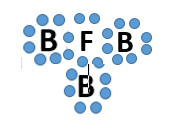
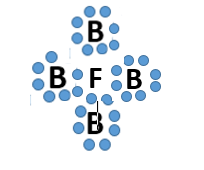

BF3 (The formula is the Lewis Structure)
What is the chemical formula for Lithium Nitride?
Li3N
LiN3
NLi3
N3Li
What is the ionic formula for a bond between Calcium and Phosphorus?
Ca2P3
Ca3P2
Ca2P5
P5Ca2
______ molecules are found in nature as pairs of two atoms of the same type covalently bonded together.
Diatomic
Monatomic
Polyatomic
Network

Which compound is held together by electrostatic forces?
NO2
CaSO4
Aluminum
P4O10
A positively or negatively charged particle.
covalent bond
ion
oxidation number
subscript
Ions change from positive and negative, and back in forth, this is called the ______________________
Molecule number
Ionic number
Polar number
Oxidation number
An ion that is negative is called a ____________________.
polar ion
nonpolar ion
anion
cation
An ion that is positively charged is called a ________________.
polar ion
cation
anion
positive ion
What is the basis of a metallic bond?
the attraction of neutral metal atoms.
the attraction between protons and neutrons.
the attraction between negative ions and interlocking electrons.
the attraction between positive metal ions and free floating electrons.

