wayground logo

Free Printable Worksheets

Font size

S
M
L
XL
Worksheets

Photosynthesis

Total questions: 25

Worksheet time: 16mins

Name
Class
Date
1.

What is the food manufacturing process in plants?

a)

reparation

b)

glucose

c)

chlorophyll

d)

photosynthesis

2.

TRUE or FALSE: Plants make their own food and use the energy from the food that is made.

a)

True

b)

False

3.

What two things are the product (end result) of photosynthesis?

a)

Oxygen

b)

Glucose

c)

Chloroplasts

d)

Carbon Dioxide

4.

What is the waste product of photosynthesis?

a)

Oxygen

b)

Carbon Dioxide

c)

Glucose

d)

Chlorophyll

5.

What time of day do plants photosynthesize?

a)

Nighttime only

b)

daytime and night time

c)

daytime only

d)

only in the summer

6.

Where do the stem and leaves get their green color from?

a)

glucose

b)

carbon dioxide

c)

oxygen

d)

Chlorophyll

7.
What three things do plants need?
a)
Water, air, and sunlight.
b)
Water, soil, and sunlight.
c)
Water, soil, and air.
d)
Love, family, and Cheetos.
8.
What does chlorophyll capture?
a)
Chlorophyll captures water from the air.
b)
Chlorophyll captures carbon dioxide from the air.
c)
Chlorophyll captures the energy of sunlight.
d)
Chlorophyll captures baseballs.
9.
The leaf has a shiny, waxy cuticle around it to
a)
increase the rate of photosynthesis
b)
attract more light
c)
control water loss
d)
stop carbon dioxide and oxygen gases escaping
10.
Most of the chloroplast cells are found in the
a)
upper epidermis
b)
pallisade mesophyll layer
c)
lower epidermis
d)
stomata
11.
The water needed for photosynthesis comes into the leaves through the
a)
upper epidermis
b)
stomata
c)
guard cells
d)
xylem cells
12.
The important gases, carbon dioxide and oxygen, enter and leave the leaf through the
a)
upper epidermis
b)
phloem
c)
stomata
d)
guard cells
13.
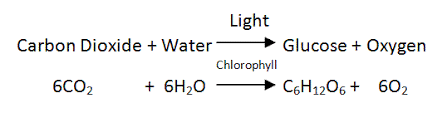
The reactants needed for photosynthesis to occur are:
a)
carbon dioxide & water
b)
carbon dioxide & oxygen
c)
oxygen & water
d)
carbon dioxide, oxygen & water
14.
The role of the guard cell is to
a)
help control the temperature of the plant
b)
control how much water enters the leaf
c)
control how much glucose is stored
d)
control the movement of water vapour & gases 
15.
Plants need to take in oxygen gas for respiration
a)
only at night 
b)
only during the day
c)
both during the day & the night
16.
Transpiration helps the plant
a)
make more sugars at night
b)
move water from the roots to the stem and leaves
c)
move sugars from the leaf to be stored in the stem & roots
d)
make more chloroplasts
17.

#2 & #5 - outermost layer of cells; provides protection from outside elements.

a)

Epidermal cells

b)

Palisade cells

c)

Phloem cells

d)

Waxy cuticle

18.

#4 - layer of irregular cells with space in between the cells

a)

Pallisade mesophyll

b)

Phloem

c)

Spongy mesophyll

d)

Xylem

19.

#3 - layer of tall, columnar cells that contain many chloroplast for photosynthesis

a)

Epidermal cells

b)

Guard cells

c)

Pallisade mesophyll

d)

Spongy mesophyll

20.

#6 - porous opening in the bottom of the leaf that allows for gaseous exchange

a)

Pallisade mesophyll

b)

Spongy mesophyll

c)

Stomata

d)

Vein

21.

#7 - two cells that surround each porous opening; regulates gaseous exchange by opening and closing the pore.

a)

Epidermal cells

b)

Guard cells

c)

Stomata cells

d)

Xylem cells

22.

#8 - Cell tissue that makes up part of each vein that transports glucose and nutrients throughout the plant

a)

Epidermal cells

b)

Guard cells

c)

Phloem cells

d)

Xylem cells

23.

#9 - Cell tissue that makes up part of each vein that transports water throughout the plant

a)

Epidermal cells

b)

Guard cells

c)

Phloem cells

d)

Xylem cells

24.

The outermost layer of CELLS of the leaf is the

a)

cuticle

b)

epidermis

c)

spongy mesophyll

d)

bundle sheath

25.

Which number is pointing to the stomata?

a)

6

b)

7

c)

8

d)

9