
 Worksheets
Bio A final exam review Part 1
Total questions: 40
Worksheet time: 20mins
The work of Scientists usually begins with
Drawing conclusions
testing a hypothesis
careful observations and asking questions
creating experiments
Suppose that a scientific idea is well tested and can be used to make predictions in numerous new situations, but cannot explain one particular event. This idea is a
theory that may need revision
theories are the same as hypothesis
hypothesis combine the idea of several theories to explain events.
hypothesis are the dominant view among scientists.
The process which organisms keep everything inside their bodies constant is called?
evolution
metabolism
photosynthesis
homeostasis
Why do some scientist consider viruses nonliving organisms?
they cannot be passed to other organisms
they must use the cells of a host to reproduce
they cannot move
they are made up.
When we choose to breed dogs that have certain characteristics that we like, this is an example of
artificial selection
adaptations
mutations
natural selection
The creation of a new species is called
natural selections
DNA
behavioral isolations
speciation
When a harmless species has similar color or pattern to a poisonous species, increasing the harmless species' chances for survival is an example of:
geographic isolation
genetic equilibrium
mimicry
predation
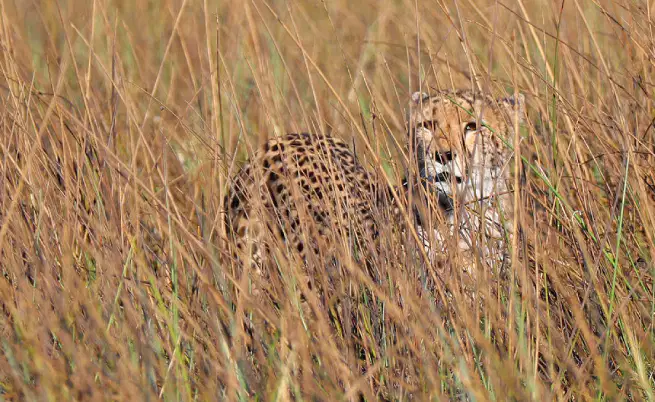
This cheetah’s pattern helps it to be a successful hunter in the African savannah. The coat coloration is an example of
geographic isolation
camouflage
mimicry
predation
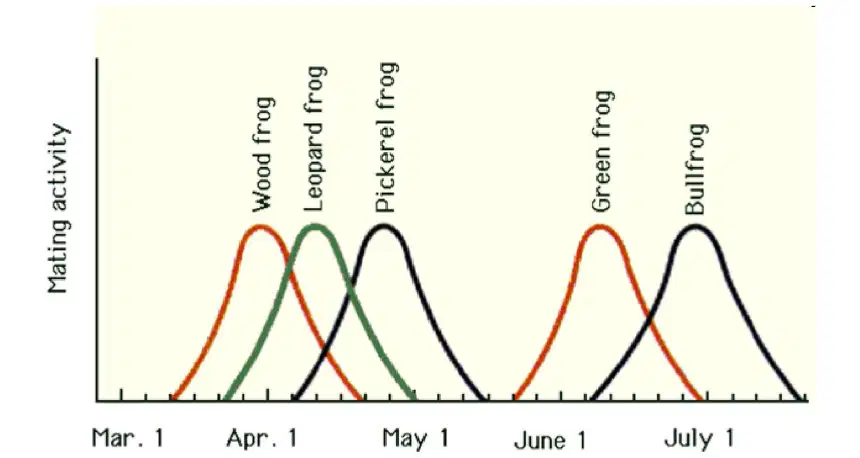
Which isolation type would the mating behavior of frogs in the figure?
geographic isolation
bottleneck effect
temporal isolation
behavioral isolation
Which of the following ideas is supported by Darwin's observation of bird beaks in Finches in the Galapagos Islands
different adaptations for their environment
types of artifical selection
acquired characteristics
tendency towards perfection
If a mutation introduces a new fur color in Rock Pocket Mice, which factor might determine whether the trait will increase in a population
no factors will influence the new skin color
whether the mutation makes some mice for fit for their environment than the other mice
how many phenotypes the population has
whether the mutation was caused my nature or by humans.
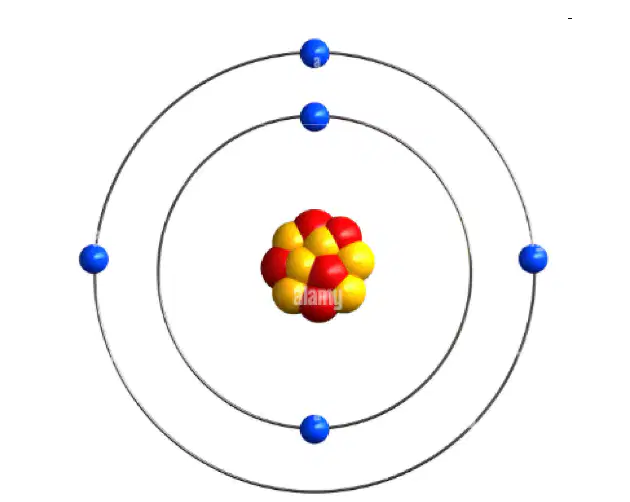
What is found outside of the nucleus of atoms?
protons
electrons
positrons
neutrons
Which describes the theory of evolution by natural selection
Organisms transmit characteristics acquired by use and disuse to their offspring
Organisms tend to produce few offspring than others in a population
Organisms that are "best fit" to survive their environment
Organisms perpetuate unfavorable changes in a species.
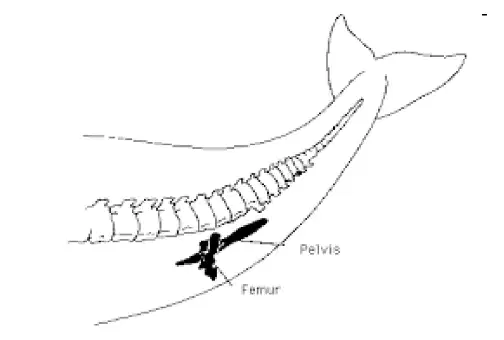
Femur and pelvis bones of a whale are examples of
homologous structures
vestigial structures
artificial selection
acquired characteristics
Mercury that accumulates in the tissues of fish, increasing at higher trophic levels, is called
pollution
concentration
organ systems
biomagnification
The three subatomic particles are
protons, neutrons, and isotopes
Neutrons, isotopes, and electrons
positives, negatives, and neutrals
protons, electrons, and neutrons
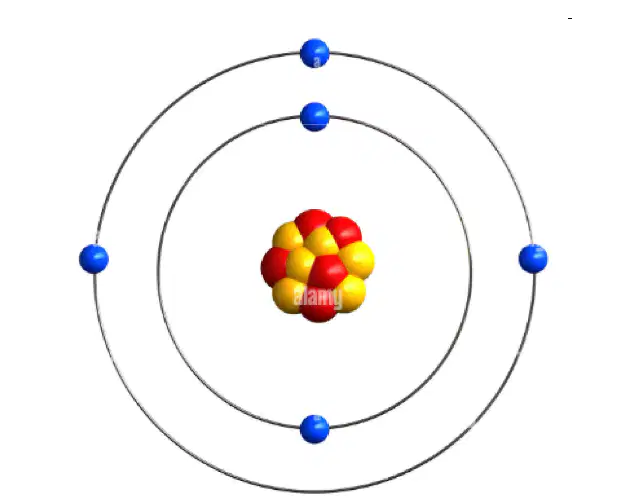
The image shows the Bohr model of which element?
boron
carbon
flourine
chlorine
The cohesion of water molecules to other water molecules is caused by
Hydrogen bonds
ionic bonds
covalent bonds
none of these
Amino acids make
carbohydrates
lipids
nucleic acids
proteins
An enzyme
raises the activation energy of a reaction
lowers the activation energy of a reaction
is used up in a reaction
bonds with the active site on a substrate molecule.
In which scientific study would an ecologist take part?
observe how coral colonizes a sunken ship
classify three new rainforest insect species
compare fossilized any species in amber
assess the rabies risk of wild raccoons
Which of the following are autotrophs?
wolf
daisy
earthworm
mushroom
Which is part of the biogeochemical cycle?
carbon trapped on the ocean
solar radiation traveling to earth
helium gas escaping into space
lava flowing from an active volcano
A black widow spider trapping an insect to eat is an example of an organism called a(n)
autotroph
heterotroph
decomposer
omnivore
Which of these factors could cause a slow growth rates?
increasing the birthrate
a constant death rate
decreasing the birthrate
a constant birthrate
As resources in the population become less available and the birthrate slows, the population
declines rapidly
increases slowly
reaches its carrying capacity
enters a phase of exponential growth
Which explains why secondary succession generally occurs more rapidly in an area than does primary succession?
soil formation has already occurred
average precipitation is higher
moderate climatic conditions exist
pioneer species are microscopic
The most important factor affecting the biosphere is
precipitation
the biotic community
solar radiation (sun)
wind
Which of the following is a density-independent limiting factor?
competition for resources
predator/prey relationships
eruption of a volcano
parasitism and disease
What happens during photosynthesis
heterotrophs consume ATP
heterotrophs produce ATP
Plants consume sugars
Plants produce sugars
Plants gather energy with light-absorbing molecules called
Kreb's cycle
yeast
chlorophyll
glucose
Which is a characteristic of exponential population growth?
The lag phase follows rapid growth
initial population growth is rapid
resources are consumed exponentially during all phases
growth rate in inversely proportional to population size.
most plants appear green because chlorophyll
reflects green light.
reflects red light.
absorbs green light.
absorbs violet light.
What are the disk-shaped structures called, where the light-dependent reactions of photosynthesis take place?
granum
stroma
stoma
thylakoids
A student is collecting gas from the bubbles formed by the leaves of a water plant. What is the gas they collected?
Methane
Carbon dioxide
Oxygen
Nitrogen
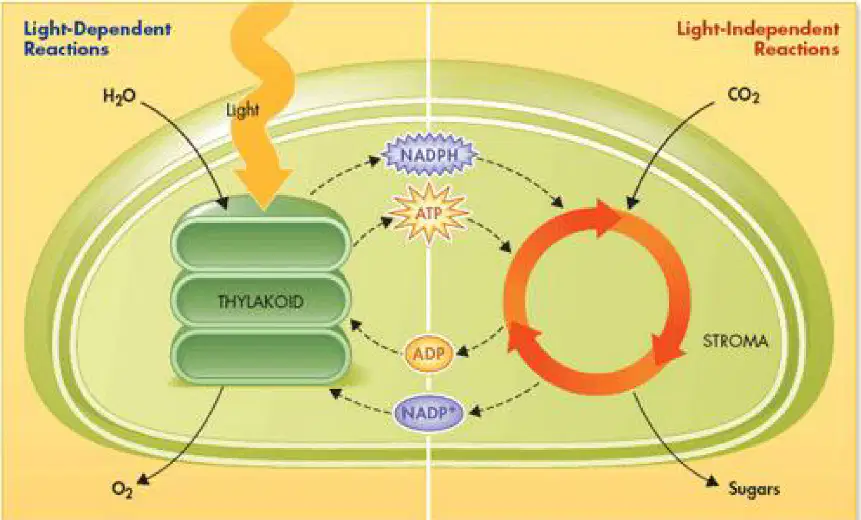
Which molecule is MADE during the LIGHT-INDEPENDENT reactions?
Light
Carbon dioxide
Oxygen
Sugars
What is the correct equation for
cellular respiration
?
6O2 + C6H12O6 -->
6CO2 + 6H2O + ATP
6O2 + C6H12O6 + ATP->
6CO2 + 6H2O
6O2 + 6H2O -->
6CO2 + C6H12O6 + ATP
6CO2 + 6H2O + ATP --> 6CO2 + C6H12O6
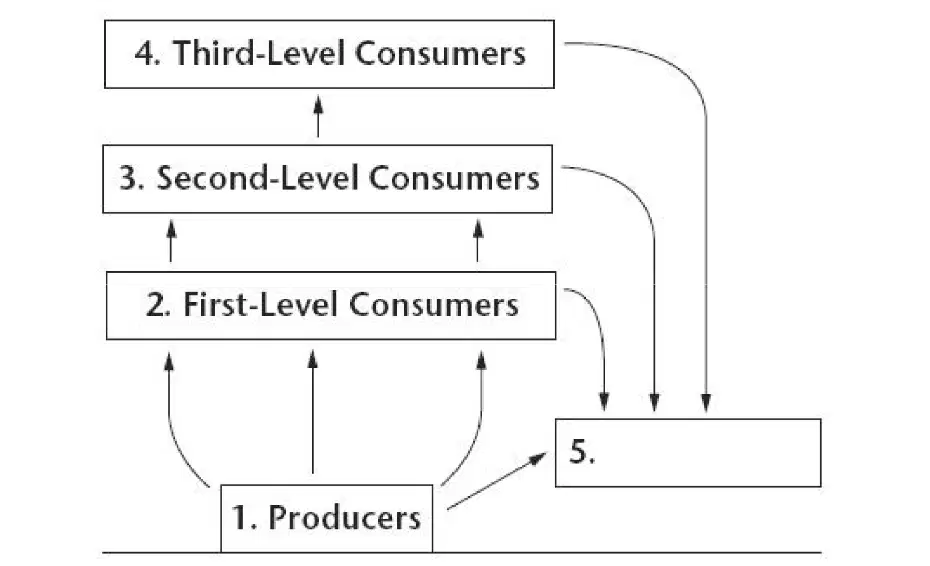
What's missing in box #5?
herbivore
autotrophs
carnivores
decomposers
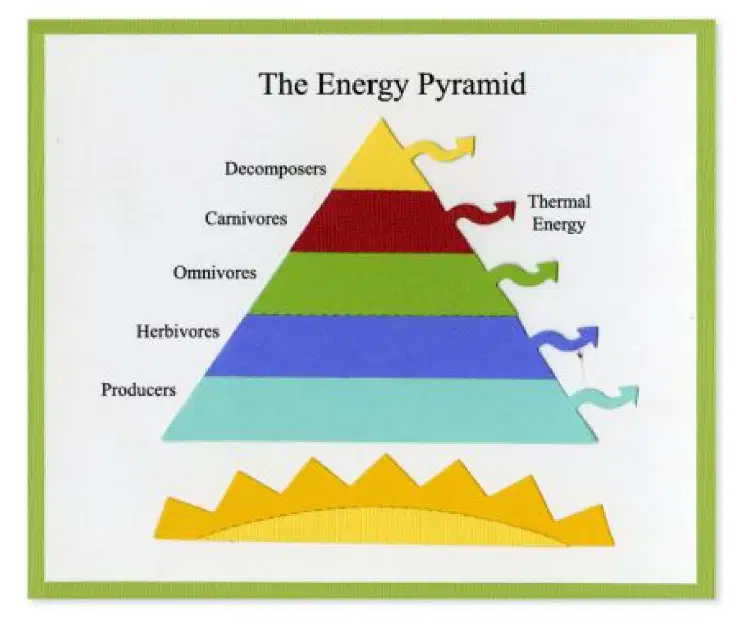
From the energy pyramid which type of consumer gets only 10% of the energy stored in producers?
herbivore
omnivores
carnivores
decomposers
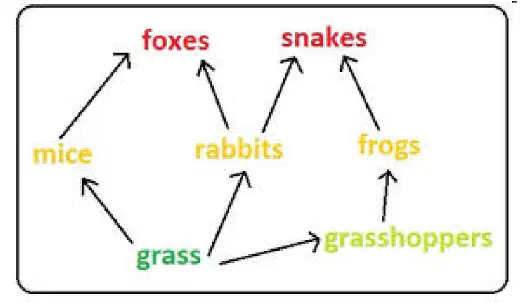
All of the following statements about the diagram are correct EXCEPT:
The grasshopper is an herbivore.
The mouse and rabbit are at the same
trophic level.
Only two
trophic levels are depicted
The grass is a producer.

