
 Worksheets
4.12 Climate Unit Wrap-Up
Total questions: 25
Worksheet time: 4hrs 10mins
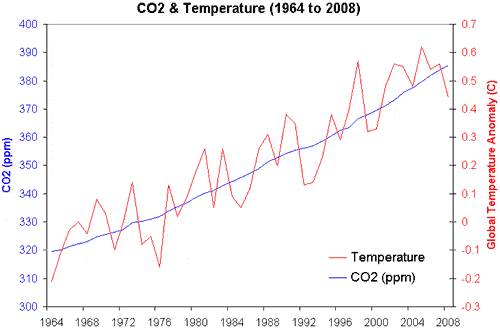
Which of the following things in the atmosphere protects us from harmful UV radiation?
Ozone
Water Vapor
Methane
Sulfur Dioxide
Carbon Dioxide
Which of the following is a greenhouse gas?
Carbon dioxide
Methane
Nitrous oxide
All answers are correct
Which of these surfaces has the highest albedo?
Clean Snow
Forests
Dirt
Oceans
A renewable resource is
a resource that forms much more slowly than it is consumed
a natural resource that can be replaced at the same rate at which it is consumed
any natural material that is used by humans
A nonrenewable resources is
any natural material that is used by humans
a natural resource that can be replaced at the same rate at which it is consumed
a resource that forms much more slowly than it is consumed
All of the following are considered renewable energy sources EXCEPT –
Wind
Coal
Biomass
Solar
Scientists and engineers often use this process to gain access to natural gas & oil sources...
Fracking
Fusion
Fission
Depleting
In order to use the energy inside of fossil fuels, the fuel must be...
burned
melted
crushed
cut
Fusion is the process of
Combining atoms to form new atoms
Splitting atoms to make smaller atoms
Chemical reactions
Destroying atoms
Fission is the process of
Combining atoms to form new atoms
Splitting atoms to make smaller atoms
Chemical Reactions
Destroying atoms
Which process is used in nuclear power plants?
Fission
Fusion
Fracking
Melting
Which element is used in nuclear power plants for energy?
Carbon
Oxygen
Uranium
Methane
Where does fusion occur naturally?
Underwater
In convection ovens
In radioactive waste
In the sun

What does this image represent?
a process naturally occurring in the sun
a fusion chain reaction
a fission chain reaction
a process naturally occurring in the ocean
Floating sea ice melts...
and causes sea levels to rise because it adds water to the ocean.
but does not cause sea levels to rise because the ice displaces the same amount of ocean water as the melted ice would displace.
What is coal made of?
decomposed plant remains
decomposed trash
lava
all of the above

How does ocean acidification impact marine organisms?
It weakens the shells of clams and oysters
It kills fish
It makes the water too warm for them
It breaks down sharks' teeth

