wayground logo

Free Printable Worksheets

Font size

S
M
L
XL
Worksheets

IIT-JEE & NEET FOUNDATION LEVEL- 17 (8-O)

Total questions: 100

Worksheet time: 2hrs 40mins

Name
Class
Date
1.
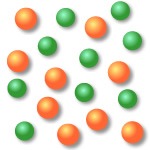
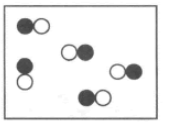
This picture represents: 
a)
Element
b)
Compound
c)
Mixture of Elements
d)
Mixture of Compounds
2.
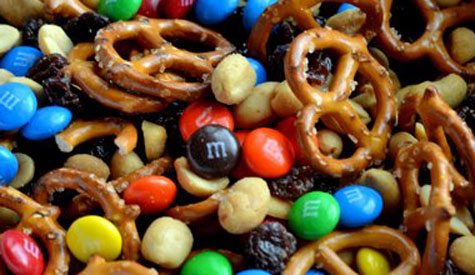
What type of mixture is this?
a)
homogenous mixture
b)
chemical
c)
heterogeneous mixture 
d)
solid mix
3.
A substance with two or more elements that are combined in a fixed proportion
a)
colloid
b)
compound
c)
element
d)
solution
4.
A substance in which all the atoms are the same
a)
colloid
b)
homogeneous mixture
c)
solution
d)
element
5.
A mixture in which different materials can be identified easily
a)
element
b)
heterogeneous mixture
c)
homogeneous mixture
d)
solution
6.
Which of the following is an element?
a)
Sugar
b)
Salt
c)
Water
d)
Oxygen
7.
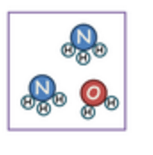
This picture represents which of the following?
a)
element
b)
compound
c)
mixture
8.

Are made from a combination of 2 or more different elements...

a)

Molecules

b)

Compounds

9.
A mixture that is NOT evenly distributed is called ....
a)
Compounded
b)
Homogenous
c)
Heterogenous
d)
Salty
10.
This picture represents: 
a)
Element
b)
Compound
c)
Mixture of Elements
d)
Mixture of Compounds
11.
This picture represents: 
a)
Element
b)
Compound
c)
Mixture of Elements
d)
Mixture of Compounds
12.
Are made from a combination of 2 or more elements in a constant ratio...
a)
Atome
b)
Mixture
c)
Compounds
d)
Elements
13.
A combination that can be separated by physical processes is a .....
a)
Atom
b)
Compound
c)
Element
d)
Mixture
14.
What is a homogeneous mixture?
a)
a mixture that is the same throughout.
b)
a mixture that is made up of one type of atom.
c)
a mixture that is made up of one type of compound
d)
a mixture that cannot be separated through physical changes
15.

What is a type of mixture that is evenly mixed so you cannot see the parts and it looks all the same (Ex. Paint)

a)

Element

b)

Compound

c)

Heterogeneous mixture

d)

Homogeneous mixture

16.

Red litmus paper turns blue in the presence of an acid.

a)

True

b)

False

17.

A base is a compound that makes hydroxide ions (OH-) when dissolved in water.

a)

True

b)

False

18.

Is the following a pure substance or mixture? Baking Soda ( NaHCO3NaHCO_3 

a)

pure substance

b)

mixture

19.

Is the following an element or compound? hydrogen peroxide (H2O2)

a)

element

b)

compound

20.

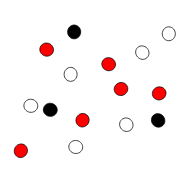
Classify the particle diagram.

a)

element

b)

compound

c)

mixture of elements

d)

mixture of compounds

e)

mixture of elements and compounds

21.

The diagram shows

a)

refraction of light.

b)

absorption of light.

c)

reflection of light.

d)

scatter of light.

22.

Which is the reflected ray?

a)

A

b)

B

c)

C

d)

D

23.

Which is the reflected ray?

a)

A

b)

B

c)

C

d)

D

24.

Which is the reflected ray?

a)

A

b)

B

c)

C

d)

D

25.

Which is the reflected ray?

a)

A

b)

B

c)

C

d)

D

26.

Which is the reflected ray?

a)

A

b)

B

c)

C

d)

D

27.

What is the object helps the dentist to see the patient's dental condition?

a)

periscope

b)

hand held mirror

c)

plane mirror

d)

dental mirror

28.

What is the object helps the customers at a show store to choose their favourite shoes?

a)

periscope

b)

hand held mirror

c)

plane mirror

d)

dental mirror

29.

What is the object helps the customers at a salon to look the new hair style of his back of head?

a)

periscope

b)

hand held mirror

c)

plane mirror

d)

dental mirror

30.

What is the object helps navy personnel in a submarine to see an object at the surface at the sea?

a)

periscope

b)

hand held mirror

c)

plane mirror

d)

dental mirror

31.
The imaginary line perpendicular to a reflecting surface is called _____.
a)
crooked line
b)
parallel line
c)
angular line
d)
normal line
32.
Why can you see most objects? 
a)
they emit light
b)
light refracts through them
c)
light reflects off them
d)
They absorb light
33.
Law of reflection state that - The angle of incidence is .................. to the angle of reflection.
a)
equal
b)
double
c)
half
34.

Images in a plane mirror are

a)

real

b)

larger

c)

same size

d)

smaller

35.
What is an image called that forms when light rays actually meet
a)
virtual image
b)
real image
c)
diffuse reflection
d)
regular reflection
36.

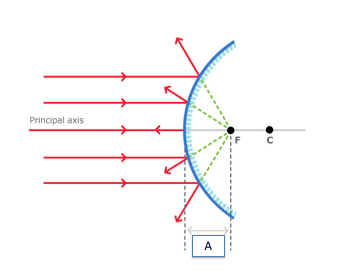
In the image, all the rays meet at F, What is F

a)

focal length

b)

focal point

c)

center of curvature

d)

reflection

37.
Convex Mirrors produce...
a)
only virtual images
b)
virtual or real images
c)
only real images
d)
inverted images
38.
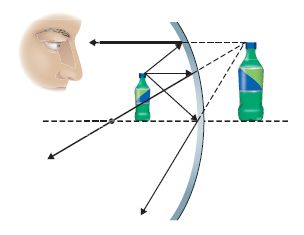
Which terms describe the reflection seen in this image?
a)
virtual, upright
b)
virtual, inverted
c)
real, upright
d)
real, inverted
39.
Which terms describe the reflection seen in this image?
a)
virtual, upright
b)
virtual, inverted
c)
real, upright
d)
real, inverted
40.

If 'R' is radius of curvature and 'f' is focal length of a spherical mirror then the correct relation between the two is

a)

R = f

b)

R = f/2

c)

f = 2R

d)

f = R/2

41.
How much of your DNA do you receive from your mother?
a)
25%
b)
50%
c)
75%
d)
100%
42.
How is sprem created.
a)
In the males ovaries?
b)
In the woman's ovaries?
c)
In the males testes?
d)
In the woman's testes?
43.
The male part of the flower is________
a)
pistil
b)
sepal
c)
ovaries
d)
stamen
44.
The pollen grains are found in this part of the stamen.
a)
anther
b)
style
c)
pistil
45.
The part of the flower on which the pollen grains land.
a)
pistil
b)
stamen
c)
sepals
d)
stigma
46.
The enlarged base of the pistil that stores the eggs of the plant is the ___.
a)
ovary
b)
ovule
c)
stigma
d)
style
47.
Brightly colored parts of flowers that attract insects.
a)
petals
b)
pistils
c)
stamen
d)
filaments
48.
They enclose the egg cells inside the ovaries.
a)
ovules
b)
anther
c)
seeds
d)
stamen
49.
The female part of a flower is
a)
pistil
b)
stamen
c)
filament
d)
sepal
50.

Why do living things reproduce?

a)

Living things do not have a choice.

b)

To ensure continuity of their kind.

c)

To ensure consistency in their kind.

51.

What are NOT being passed down from parent plant to their young olant?

a)

feathery stigma

b)

type of fruit

c)

brightly coloured flowers

d)

fertile soil

52.

Which of the following is the right order?

a)

Pollination -- Dispersal -- Germination -- Fertilisation

b)

Pollination -- Fertilisation -- Germination -- Dispersal

c)

Pollination -- Dispersal -- Fertilisation -- Germination

d)

Pollination -- Fertilisation -- Dispersal -- Germination

53.

What is NOT a characteristic of seeds dispersed by wind?

a)

wing-like structures

b)

feathery

c)

light

d)

Has pods

54.

Which is NOT a characteristic of flowers that are pollinated by wind?

a)

feathery stigma

b)

light

c)

sweet nectar

d)

small petals

55.

Which of the following is NOT a characteristic of seeds dispersed by water?

a)

has fibrous husks

b)

has hooks

c)

has waterproof covering

d)

can stay afloat on water

56.

When we prevent overcrowding of plants, we reduce the competition for ________________________________________.

a)

Water, Minerals and Light

b)

Water, Nutrients and Minerals

c)

Water, Nutrients, Light and Minerals

d)

Water, Light and Space

57.

Which of the following is describes Self-Pollination?

a)

Pollen grains are transferred from anther to stigma of another flower.

b)

Pollen grains are transferred from filament to stigma of the same flower.

c)

Pollen grains are transferred from anther to stigma of the same flower.

d)

Pollen grains are transferred from stigma to anther of the same flower.

58.
I am a flower that produces nectar. What is the function of the nectar?
a)
To provide food for the flower
b)
To attract pollinators
c)
To attract animals to disperse the fruits
d)
To produce perfumes for Man
59.
Which structure is not essential in wind-pollinated flowers?
a)
anther
b)
ovary
c)
petal
d)
stigma
60.
Many wind-pollinated flowers have __________.
a)
feathery stigmas and light pollen.
b)
feathery stigmas and sticky pollen.
c)
short stigmas and light pollen.
d)
short stigmas and sticky pollen. 
61.

Classify the polynomial:

4x2 + 2x - 1

a)

Polynomial

b)

Binomial

c)

Trinomial

d)

Monomial

62.

Classify the polynomial:

5x3y2

a)

Binomial

b)

Trinomial

c)

Uninomial

d)

Monomial

63.
Simplify:
5(3x+2)
a)
3x+10
b)
15x+10
c)
15x-10
d)
3x-10
64.
Find the product
(x +2)(x + 3)
a)
x2 + 5x + 6
b)
x2 + x + 6
c)
x2 + 5x + 5
d)
x2 + 6x + 6
65.
Classify the polynomial and give the degree:
4x2 + 2x - 1
a)
Binomial, 3
b)
Binomial, 2
c)
Trinomial, 3
d)
Trinomial, 2
66.
Classify the polynomial and give the degree:
5x3y2
a)
Monomial, 3
b)
Uninomial, 3
c)
Uninomial, 5
d)
Monomial, 5
67.
What is the degree of the polynomial? 3x2 + 5xy - 4x7y
a)
7
b)
8
c)
2
d)
3
68.
5x(2x + 3)
a)
10x+ 15x
b)
7x + 15x
c)
7x2 + 8x
d)
25x2
69.
What is the GCF of 18k and 15k3
a)
3k2
b)
3k3
c)
3k
d)
5k
70.
What is the degree classification of this polynomial?
x²+4x-8
a)
binomial
b)
trinomial
c)
quadratic
d)
cubic
71.
Which is an example of a linear polynomial?
a)
x²-5
b)
6x+4
c)
5x⁵
d)
2x³-9x²
72.
Which is an example of a cubic binomial?
a)
x³+5
b)
x²+3
c)
x²+5x-6
d)
5x³
73.

What is the term classification of the following polynomial?

x3 - 7x2 +3

a)

monomial

b)

binomial

c)

trinomial

d)

polynomial

74.

What is the constant of this polynomial? 2x3 - 8x2 + 3x - 7

a)

2

b)

-8

c)

3

d)

-7

75.

Classify the polynomial by its number of terms 4x2 - 2

a)

monomial

b)

binomial

c)

trinomial

d)

polynomial

76.

Which is an example of a quadratic monomial?

a)

x3 + 5

b)

x2 + 3

c)

x2 + 5x - 6

d)

-5x2

77.

Terms in a polynomial are separate by what?

a)

A. Parenthesis

b)

B. multiplication/division

c)

C. constant

d)

D. addition/ subtraction

78.

Which of the following is a polynomial?

a)

x½ + 6

b)

x3 + 8 - 3x-2

c)

1/2 x -3

d)

x4 + 8 - 3

79.
Classify the polynomial by its degree.
x2 + 2x3 - 4
a)
A
binomial
b)
B
trinomial
c)
C
quadratic
d)
D
cubic
80.
Classify the polynomial by its number of terms.
 4x² - 2
a)
A
monomial
b)
B
binomial
c)
C
trinomial
d)
D
polynomial
81.

For the given sets A and B, which statement is true?

a)

A ⊂ B

b)

B ⊂ A

c)

A = B

d)

A' = B

82.
Given that
R = { factors of  36 }. 
n(R) = 
a)
6
b)
9
c)
12
d)
15
83.
Given that
set  V = { m, n, o, p },
find the number of subsets  V.
a)
16
b)
12
c)
10
d)
8
84.

What type of set is denoted as either { } or ∅?

a)

Superset

b)

Empty (or Null) Set

c)

Disjointed Set

d)

Subset

85.

Which of the following statements are true for the Venn diagram shown?

a)

A is a subset of B

b)

B is a subset of A

c)

A = B

d)

A and B are disjoint sets

e)

B is a superset of A

86.

How many subsets will this set have? A= {a, b, c} ?

a)

8

b)

6

c)

3

d)

0

87.

Which of the following means proper subset?

a)

 \subset  

b)

 \subseteq  

c)

 \in  

d)

=

88.

Which of the following is the symbol for element of?

a)

b)

 \subset  

c)

 \in  

d)

 ⊄\not\subset  

89.

If

P = {0, 1, 2, 3, 4}, Q = {4, 6, 8}

R = {6, 12, 18} Then what is (P ∩ Q) ∪ (Q ∩ R)?

a)

{4}

b)

{4, 6}

c)

{4, 6, 8}

d)

{1, 2, 3, 4, 6, 8}

90.

If

P = {0, 1, 2, 3, 4}, Q = {4, 5, 6, 7}

R = {3, 6, 9}, and S = {6, 12, 18}

Then what is (P ∪ Q) ∩ (S ∪ R)?

a)

{6}

b)

{3, 6}

c)

{4, 6}

d)

{1, 2, 3, 4, 5, 6, 7, 9, 12, 18}

91.

If

A = {1, 3, 5, 15},

B = {2, 3, 5, 7}

C = {2, 4, 6, 8}

then what is (A U B) ∩ C ?

a)

{1,3,5}

b)

{1,2,3}

c)

{2,3,5}

d)

{2}

92.

If

U (the universal set) = {1, 3, 5, 7, 9, 11, 13, 15, 17} and W = {5, 7, 9, 11}, then W' = . . ..

a)

{1, 3, 13, 15, 17}

b)

{1, 3}

c)

{2, 4, 6, 8, 10, 12, 14, 16}

d)

{1, 3, 5, 7, 9, 11, 13, 15, 17}

93.

From the above Venn diagram, what is the set (S ∪ T) ∩ V?

a)

{casey, drew, jade, glen}

b)

{alex, glen, hunter, jade}

c)

{casey, drew, glen}

d)

{drew, jade}

94.

Let A={1, 3, 4} and B={x|x is an even whole number less than 9}. Find A U B

a)

{1, 3, 4}

b)

{1, 2, 3, 4, 6,8}

c)

{1, 2, 3, 4, 5, 6, 7, 8}

d)

{1, 2, 3, 4, 5, 6, 7}

95.

Let A={1, 3, 4} and B={x|x is an even whole number less than 9}. Find A ∩ B

a)

{1, 3, 4}

b)

{1, 2, 3, 4, 6,8}

c)

{4}

d)

{2, 4}

96.
How many senior boys play football but do not wrestle?
a)
9
b)
12
c)
18
d)
104
97.

shade the required region   

a)
b)
c)
98.
a)

21

b)

46

c)

44

99.

shade the required region

a)
b)
c)
100.

The Venn diagram above shows information about the number of students who study Music (M ), Drama (D) and Geography (G).

How many students study Music?

a)

14

b)

16

c)

5