
 Worksheets
Woodwork Hand Saws
Total questions: 18
Worksheet time: 9mins

What tool is this?
Round saw
Coping saw
Tenon saw
File
The coping saw is used for cutting ...
Straight lines
Big pieces of timber
Curved lines and unusual shapes
Metal
What is a ruler useful for?
Cutting
Measuring
Drawing
Nothing
When marking out timber, what tool do you use to ensure a line is straight and at a right angle to edge of the timber?
Nothing
Ruler
Tri-square
Pencil
A cutting tool is a type of hand tool used to cut wood to length.
True
False

Name the tool shown?
Coping saw
Wood saw
Panel saw
Tenon Saw
Bench hook

Name the tool shown?
Coping saw
Wood saw
Panel saw
Tenon Saw
Bench hook

Name the tool shown?
Coping saw
Wood saw
Panel saw
Tenon Saw
Bench hook

What is the cutting tool shown used for?
To cut curves, shapes and slots in wood.
To cut straight lines.
To help hold the wood securely when you are cutting.
To cut most wood joints

What is the cutting tool shown used for?
To cut curves, shapes and slots in wood.
To cut straight lines.
To help hold the wood securely when you are cutting.
To cut very large sections of wood down to size.
Which saw is used to make a cut parallel to the direction of the wood grain?
Tenon Saw
Panel Saw
Rip Saw
Cross Cut Saw
Which saw is used to make a cut at a right angle to the direction of the wood grain? (Choose 2)
Tenon Saw
Panel Saw
Rip Saw
Cross Cut Saw
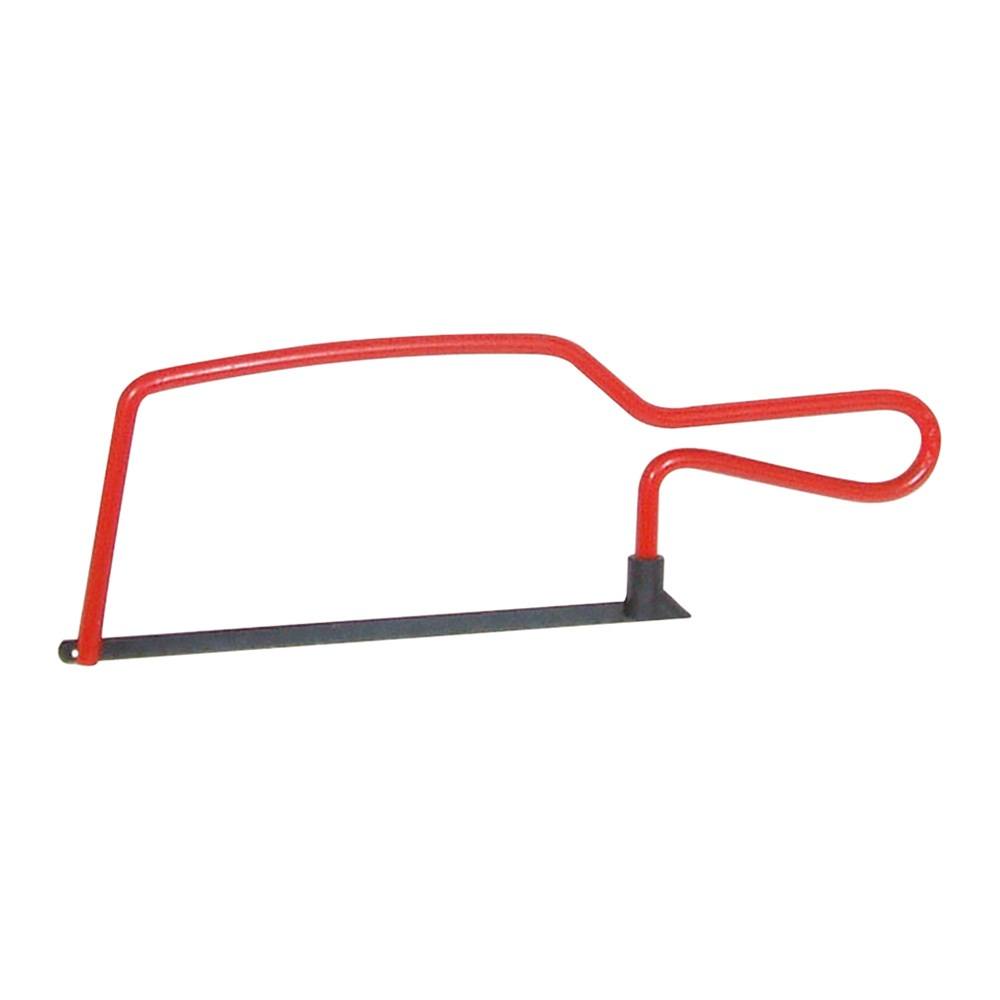
Name the tool;
Hacksaw
Junior hacksaw
Tenon saw
Coping saw

Which of the following statements best describes the purpose of the Handle of the saw?
The part you hold the saw at
The end of the saw closest to the handle
The end of the saw farthest from the handle
The edge with the teeth (the bottom)
The edge opposite the teeth (the top)
What does TPI stand for?
Teeth point index
Thickness point index
Teeth per inch
Taper per inch
What does the term Kerf mean?
Kerf is the width of the saw cut
Kerf is the width of the saw blade
Kerf is the length of the saw blade
Kerf is the angle of the teeth on the saw blade
Why do saw blades have a kerf?
The kerf is needed to cut a bigger range different types of materials
The kerf is needed to stop the user cutting to far into the wood.
To make it easier to saw, the kerf stops the saw clogging and helps to stop it jamming.
The kerf is needed to stop the user from cutting things at the wrong angle
Why may you need multiple saws with various TPI's
Certain TPI's are suited to different materials, having a range means you can cut more materials easier.
Certain TPI's are suited to cutting at various angles, having a range of TPI's means that you can cut more angles.

