
 Worksheets
Chemical Bonds Post Test
Total questions: 51
Worksheet time: 2hrs 42mins
Why do atoms share electrons in covalent bonds?
to become ions and attract each other
to attain a noble-gas electron configuration
to become more polar
to increase their atomic numbers
Which of the following elements can form diatomic molecules held together by triple covalent bonds?
carbon
oxygen
fluorine
nitrogen
Which of the following diatomic molecules is joined by a double covalent bond?
O2
Cl2
N2
He2

If the polar bears represent atoms and the ice cream scoops represent electrons, what type of bond is represented in the illustration below?
ionic
polar covalent
nonpolar covalent
nonpolar ionic

If the polar bears represent atoms and the ice cream scoops represent electrons, what type of bond is represented in the illustration below?
ionic
polar covalent
nonpolar covalent
nonpolar ionic

Which type of bond could be shown by a polar bear taking the ice cream cone completely away from the penguin?
ionic
polar covalent
nonpolar covalent
nonpolar ionic
Which of the following best explains what happens in an ionic bond?
The bonded electrons are equally shared between the atoms.
The bonded electrons spend more time around the more electronegative atom.
An electron (or electrons) is given up to the more electronegative atom.
An electron (or electrons) is given up to the less electronegative atom.
Which of the following best explains what happens in a polar covalent bond?
The bonded electrons are equally shared between the atoms.
The bonded electrons spend more time around the more electronegative atom.
An electron (or electrons) is given up to the more electronegative atom.
An electrons spend more time around the less electronegative atom.
Which of the following best explains what happens in a nonpolar covalent bond?
The bonded electrons are equally shared between the atoms.
The bonded electrons spend more time around the more electronegative atom.
An electron (or electrons) is given up to the more electronegative atom.
The bonded electrons spend more time around the less electronegative atom.
How would the atoms in a CH4 molecule be portrayed in the comic strip—as polar bears, penguins, or both?
The C would be the polar bear and the H’s would be penguins.
The C would be the penguin and the H’s would be polar bears.
All of the atoms would be represented as polar bears.
All of the atoms would be represented as penguins.
How do atoms achieve noble-gas electron configurations in single covalent bonds?
One atom completely loses two electrons to the other atom in the bond.
Two atoms share two pairs of electrons.
Two atoms share two electrons.
Two atoms share one electron.
Which of the following compounds contains the Mn3- ion?
MnS
MnBr2
Mn2O3
MnO
Which of the following compounds contains the lead(II) ion?
PbO
PbCl4
Pb2O
Pb2S
Which set of chemical name and chemical formula for the same compound is correct?
iron(II) oxide, Fe2O3
b. aluminum fluorate, AlF3
c. tin(IV) bromide, SnBr4
d. potassium chloride, K2Cl2
What is the correct formula for potassium sulfite?
KHSO3
b. KHSO4
c. K2SO3
d. K2SO4
What is the ending for the names of all binary compounds, both ionic and molecular?
-ide
-ite
-ade
-ate
Select the correct formula for sulfur hexafluoride.
S2F6
F6SO3
F6S2
SF6
What is the correct name for the compound CoCl2?
cobalt (I) chlorate
cobalt (I) chloride
cobalt (II) chlorate
cobalt (II) chloride
Which of the following is the correct name for N2O5?
nitrous oxide
dinitrogen pentoxide
nitrogen dioxide
nitrate oxide
The indium (II) ion and indium (III) ion
have the same charge
an polyatomic ions
have charges of 1+ and 2+ respectively
have charges of 2+ and 3+ respectively
What is the formula for the compound formed by the barium ion, Ba2+ and the hydroxide ion, OH- ?
BaOH
BaOH2
Ba(OH)2
Ba(OH)
Name the compound Ni(ClO3)2 ,
nickel chlorate
nickel chloride
nickel chlorite
nickle peroxide
Name the compound Zn3(PO4)2 .
zinc potassium oxide
trizinc polyoxide
zinc phosphate
zinc phsphite
In a double bond, two atoms share a total of _______ electrons,
two
three
four
sic
When naming a transition metal ion that can have more than one common ionic charge, the numerical value of the charge is indicated by a
prefix
suffix
Roman numerical following the name
superscript after the name
Binary molecular compounds are made of two
metallic elements
nonmetallic elements
polyatomic ions
cations
In naming a binary molecular compound, the number of atoms of each element present in the molecule is indicated by
Roman numerals
superscripts
prefixes
suffixes
Which of the following correctly shows a prefix used in naming binary molecular compounds with its corresponding number?
deca-. 7
nona-, 9
hexa-, 8
octa-, 4
When dissolved in water, acids produce _______
negative ions
polyatomic ions
hydrogen ions
oxide ions
When the name of an anion that is part of an acid ends in -ite, the acid name includes the suffix ______
-ous
-ic
-ate
-ite
What type of ions have names ending in -ide ?
only cations
only anions
only metal ions
only gaseous ions
When naming acids, the prefix hydro- is use when the name of the acid anion ends in _________.
-ide
-ite
-ate
-ic
Which of the following shows both the correct formula and correct name of an acid?
HClO3 , chloric acid
HNO3, hydronitrous acid
H3PO4, phosphoric acid
HI, iodic acid
What is the name of H2SO4 ?
hyposulfuric acid
hydrosulfuric acid
sulfuric acid
sulfurous acid
What is the formula for acid?
H2PO3
H3PO4
HPO2
HPO4
Which of the following is a binary molecular compound?
BeHCO3
PCl5
AgI
MgS
Which of the following formulas represents a molecular compound?
ZnO
Xe
SO2
BeF2
What does an -ite or -ate ending in a polyatomic ion mean?
Oxygen is in the following.
Sulfur is in the formula
Nitrogen is in the formula
Bromine is in the formula
How many valence electrons are every atom trying to obtain?
2
4
6
8


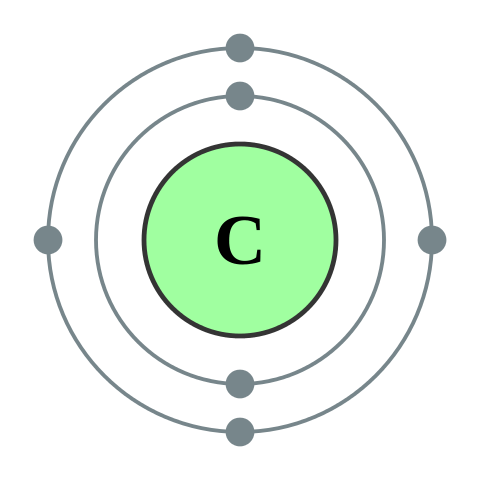
How many valence electrons does carbon have?
4
5
6
7
USE THE PERIODIC TABLE
How many valence electrons does Phosphorus have?
31
5
15
4

Is this the correct Lewis Dot Structure for Boron?
Yes
No, missing electrons
No, too many electrons
No, dots are in wrong place.

This could be the dot diagram of
Mg
Cl
C
O

This is a correct dot diagram for neon (Ne)
true
false
The octet rules states that most elements want to have _____ valence electrons.
2
4
6
8
What does the prefix di- mean?
One
Two
Three
Four
What does the prefix hepta- mean?
Five
Six
Seven
Eight
What type of bond would form between O and H?
Polar Covalent
Nonpolar Covalent
Ionic
What type of bond would form between O and O?
Polar Covalent
Nonpolar Covalent
Ionic

