wayground logo

Free Printable Worksheets

Font size

S
M
L
XL
Worksheets

2.o Respiration

Total questions: 18

Worksheet time: 9mins
Name
Class
Date
1.
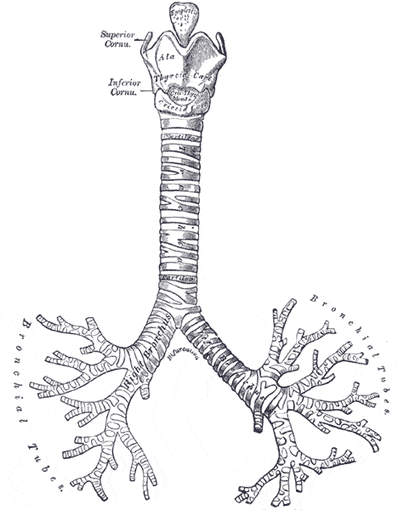
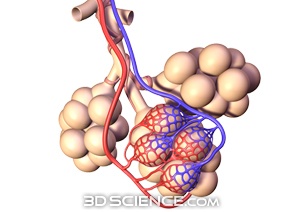
The place in the lungs where oxygen and carbon dioxide are exchanged 
a)
Diaphragm
b)
Alveolus
c)
Bronchi Tube
d)
Trachea
2.
When you breathe, your lungs take in ___ and remove ___. 
a)
air/oxygen
b)
oxygen/carbon dioxide 
c)
carbon dioxide/waste 
d)
waste/air 
3.
The two main branches from the trachea (one to each lung)
a)
bronchi
b)
alveoli
c)
capillaries
d)
bronchioles
4.
Letter D is pointing to which Respiratory organ?
a)
Alveoli
b)
Diaphragm
c)
Lung
d)
Bronchi
5.
What type of cells carry oxygen?
a)
red blood cells
b)
white blood cells
c)
neurons
6.
What does the cilia do in the respiratory syestem ?
a)
The cilia carries food and air through the respiratory system. 
b)
The cilia is known to be part of a cell. 
c)
Cilia filters particles that enter the nose. 
d)
Cilia contains the vocal chords. 
7.
When inhaling, the diaphragm muscle contracts causing the volume of the chest cavity to _____________, which causes pressure in the lungs to ________________, and air to move _______. 
a)
 increase / decrease / in
b)
increase / increase / in
c)
decrease / increase / out
d)
decrease / decrease / out
8.
When exhaling, the diaphragm muscle relaxes causing the volume of the chest cavity to _____________, which causes pressure in the lungs to ________________, and air to move _______. 
a)
 increase / decrease / in
b)
increase / increase / in
c)
decrease / increase / out
d)
decrease / decrease / out
9.

What is cellular respiration?

a)

the use of oxygen and glucose to release energy

b)

the breakdown of glucose to release nutrients

c)

the breakdown of glucose to release oxygen

10.

The composition of the oxygen in inhaled air is

a)

21%

b)

16%

c)

4%

d)

0.04%

11.

What is diffusion process?

a)

Molecules move from a region of lower concentration to a region of higher concentration

b)

Molecules move from a region of higher concentration to a region of lower concentration

12.

What is the name of the compound found in the red blood cells

a)

Oxyhaemoglobin

b)

Haemoglobin

c)

Hormones

d)

Enzymes

13.

How do plants breathe?

a)

Through the stem

b)

Through the stomata

c)

Through the chloroplast

14.

Name this process

a)

respiration

b)

photosynthesis

c)

gaseous exchange

15.

Diagram 2 shows an insect. The insect respiratory system is through the organ of

a)

Lungs

b)

Trachea

c)

Membrane cell

d)

Alveolus

16.

What is represented by cotton in Diagram 3?

a)

Trachea

b)

Bronchus

c)

Lungs

d)

Diaphragm

17.

What is Y?

a)

Stomata

b)

Guard cell

c)

Nucleus

d)

Mitochondria

18.

Stoma will _________ in the presence of light (photosynthesis process) and __________ when it becomes dark or too much water loss especially on a hot day.

a)

close , close

b)

close , open

c)

open , open

d)

open, close