Wayground logo

Free Printable Worksheets

Font size

S
M
L
XL
Worksheets

Minerals + Rocks

Total questions: 56

Worksheet time: 42mins

Name
Class
Date
1.
The color of a mineral in powder form is called the mineral's 
a)
hardness
b)
specific gravity
c)
luster
d)
streak
2.
How light reflects off of a mineral is called the mineral's 
a)
luster
b)
streak
c)
cleavage
d)
fracture
3.
Diamond has a hardness of ___ on Mohs Hardness Scale.
a)
1
b)
5
c)
8
d)
10
4.
By definition, a mineral has which of the following characteristic(s)?
a)
definite chemical composition
b)
crystal structure
c)
naturally occuring
d)
all of the above
5.
How do you test the hardness of a mineral? 
a)
Throw it against a wall
b)
Step on it
c)
Scratch Test
d)
Kick it until it breaks
6.
What mineral is salt?
a)
quartz
b)
sulfur
c)
halite
d)
calcite
7.
The solid, geometric form of a mineral produced by a repeating pattern of atoms
a)
crystal
b)
density
c)
element
d)
fracture 
8.
What mineral is the softest mineral on Moh's Hardness Scale and the main ingredient in baby powder?
a)
feldspar
b)
talc
c)
gypsum
d)
kaolinite
9.
Which mineral smells like rotten eggs?
a)
talc
b)
sulfer
c)
mica
d)
pyrite
10.
The mineral halite is formed by 
a)
hot water solutions
b)
cooling of magma
c)
cooling of lava
d)
evaporation
11.
A rock which contains a useful mineral is call a/an
a)
gem
b)
quarry
c)
ore
d)
alloy
12.
The mineral in the picture has a ____________ luster.
a)
Nonmetallic
b)
Metallic
c)
Pearly
d)
Earthy
13.
A mineral breaks into pieces like are shown in the picture. How would you describe its breakage?
a)
Fracture
b)
Cleavage
c)
Glassy
d)
Waxy
14.
A mineral breaks into pieces like are shown in the picture. How would you describe its breakage?
a)
Fracture
b)
Cleavage
c)
Glassy
d)
Waxy
15.
Which mineral property is being shown here?
a)
luster
b)
hardness
c)
cleavage
d)
streak
16.
Scientists test for the hardness of a mineral by doing which of the following?
a)
Measuring the mass of the mineral, and comparing it against other minerals
b)
Observing how light reflects off the mineral and how the mineral looks as a result
c)
Observing the color of a mineral and comparing it against other minerals
d)
Scratching the mineral against other substances of known hardness
17.
Refer to the Mohs Hardness Scale. A mineral with a hardness of 7 can scratch -
a)
orthoclase feldspar, but cannot scratch talc
b)
calcite, but cannot scratch apatite.
c)
topaz, but cannot scratch fluorite
d)
gypsum, but cannot scratch corundum
18.
The property of splitting easily along flat surfaces
a)
fracture
b)
hardness
c)
cleavage
d)
streak
19.
How a mineral splits apart when it does not break evenly:
a)
streak
b)
hardness
c)
cleavage
d)
fracture
20.
Minerals are the building blocks of _____________.
a)
elements
b)
atoms
c)
fossils
d)
rocks
21.
Minerals are inorganic which means that
a)
they were once parts of living things.
b)
renewable
c)
they were never part of anything living.
d)
they are nonrenewable
22.

The size and shape of pieces of materials in a rock.

a)

Structure

b)

Texture

c)

Luster

d)

Hardness

e)

Streak

23.

Which of the following minerals has a metallic luster, a black streak, and could scratch Gold?

a)

Magnetite

b)

Graphite

c)

Galena

d)

Hematite

24.

Which mineral could Fluorite scratch?

a)

Diamond

b)

Calcite

c)

Quartz

d)

Apatite

25.

What mineral is known as "fools gold"?

a)

graphite

b)

quartz

c)

galena

d)

pyrite

26.

This mineral is used in pencils. It also it made out of the same element as a diamond.

a)

feldspar

b)

magnetite

c)

graphite

d)

kaolinite

27.

True or False:

Minerals are the building blocks of rocks.

a)

True

b)

False

28.

True or false:

Minerals can be man-made.

a)

True

b)

False

29.

True or false:

Liquid mercury is a mineral.

a)

True

b)

False

30.

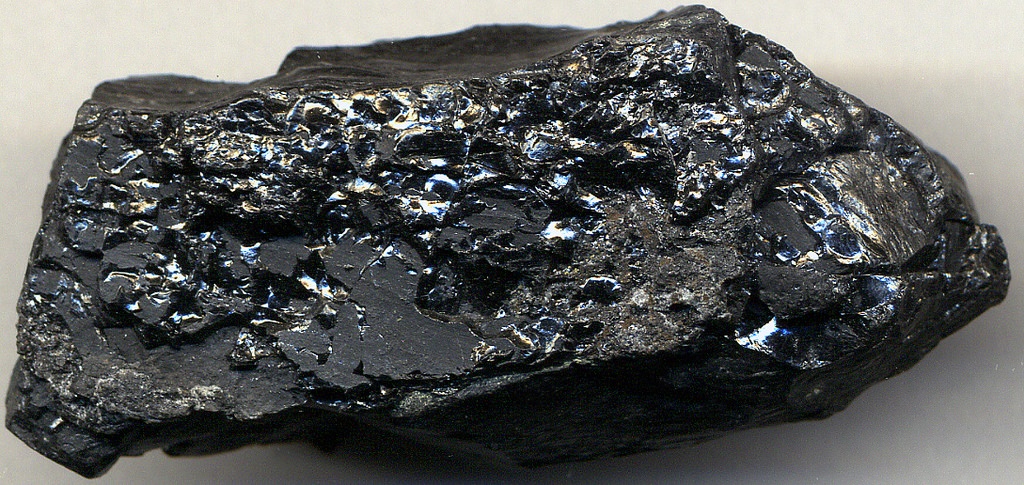
Coal is not considered a mineral because

a)

Coal is usually a liquid.

b)

Coal has too many ingredients.

c)

Coal doesn't have a fixed chemical formula.

d)

Coal is organic.

31.

Which type of rock is formed from the solidification of magma or lava?

a)

igneous

b)

sedimentary

c)

metamorphic

d)

bioclastic

32.

Where is magma located?

a)

above ground

b)

below ground

c)

in the stratosphere

d)

in the thermosphere

33.

Where is lava located?

a)

above ground

b)

below ground

c)

in the core

d)

in the mantle

34.

Describe the texture of the following igneous rock.

a)

glassy

b)

rough

c)

vesicular

d)

coarse

35.

Describe the rate of cooling for the following igneous rock (grain size 1-10 mm).

a)

slow cooling

b)

rapid cooling

36.

Describe the rate of cooling for the following igneous rock.

a)

slow cooling

b)

rapid cooling

37.

Describe the environment of formation for the following igneous rock (grain size 1-10 mm).

a)

above ground

b)

below ground

38.
Igneous rock that forms from lava on Earth's surface
a)
Organic Rock
b)
Intrusive Rock
c)
Extrusive Rock
39.
Igneous rock that forms when magma hardens beneath Earth's surface
a)
Intrusive Rock
b)
Compaction
c)
Extrusive Rock
40.
This rock was found near the mouth of a volcano. What type of rock is this?
a)
Sedimentary
b)
Igneous
c)
Metamorphic
41.
Extrusive rocks that form quickly above the Earths surface have
a)
small crystals
b)
large crystals
c)
small and large crystals
d)
no crystals
42.

Extrusive igneous rocks have _________crystals because they cool ________.

a)

small/quickly

b)

large/quickly

c)

small/slowly

d)

large/slowly

43.

What factors can lead to the formation of a sedimentary rock?

a)

melting and solidification

b)

extreme heat and pressure

c)

compaction and cementation

44.

What factors can lead to the formation of a sedimentary rock?

a)

evaporation and precipitation

b)

melting and solidification

c)

extreme heat and pressure

45.

Which of the following is an organically formed sedimentary rock?

a)

obsidian

b)

coal

c)

siltstone

d)

shale

46.
How is sediment formed?
a)
Weathering and Erosion
b)
Melting
c)
Pressure
47.
What is deposition?
a)
Pieces of sediment come to rest on a surface
b)
Movement of sediment
c)
Breaking down of sediment 
48.

Describe the texture of limestone.

a)

bioclastic

b)

clastic

c)

vesicular

d)

glassy

49.

Describe the texture of breccia.

a)

vesicular

b)

clastic

c)

crystalline

d)

bioclastic

50.
How do metamorphic rocks form? 
a)
Heat and Pressure
b)
Compaction & Cementation
c)
Cooling of Magma
d)
Sediments & Glue
51.
Metamorphic rocks form from ___.
a)
igneous rocks
b)
other metamorphic rocks
c)
sedimentary rocks
d)
all types of rocks
52.
__________ metamorphism occurs when magma heats the surrounding rock and changes it.
a)
Regional
b)
Forced
c)
Igneotrophic
d)
Contact
53.
__________ metamorphism occurs when rock formations in the crust collide and build pressure
a)
Regional
b)
Forced
c)
Igneotrophic
d)
Contact
54.
__________  metamorphic rocks have mineral grains that are not arranged in distinct bands.
a)
Conglomerate
b)
Non-foliated
c)
Foliated
d)
Permeated
55.
Which texture best describes the rock above?
a)
porphyritic 
b)
nonfoliated
c)
foliated
d)
clastic
56.
This pink and black striped rock can be classified as
a)
foliated metamorphic
b)
unfoliated metamorphic
c)
clastic sedimentaary
d)
organic sedimentary