
Font size
 Worksheets
Unit 1 Review The Solar System
Total questions: 51
Worksheet time: 43mins
Earth orbits _____________.
the Sun
the Moon
the planet Saturn
the planet Neptune
The Moon orbits _________________.
Mercury
Venus
Earth
The sun’s heat energy causes water on Earth to _________________.
boil
evaporate
freeze
become polluted
The sun, together with all the planets and other bodies that revolve around it, is known as the _________________.
Solar System
Circle of Life
Milky Way Galaxy
Planet System
What causes day and night on Earth?
rotation
revolution
asteroid belt
the stars
What are the causes of our seasons?
Earth's tilted axis and our rotation
Our revolution around the moon
The revolution of Earth around the sun and Earth's tilted axis
Stars in our universe
Why does the sun seem so much larger than other stars?
it's the closest star to the earth
it's the biggest star in the universe
it's not a star
The Sun is a planet.
true
false
These are the four planets FARTHEST from the Sun; Jupiter, Saturn, Uranus, and Neptune.
the inner planets
dwarf planets
the outer planets
solar planets
These are the 4 planets closest to the sun (Mercury, Venus, Earth, Mars).
the outer planets
dwarf planets
solar planets
the inner planets
What is the name of the moon phase that shows no light?
quarter
gibbus
new
full
How long does Earth's orbit around the sun take?
24 hours
one month
2 weeks
365 and 1/4 days
This is the phase of the moon when the moon looks like a thin sliver (less than half of the moon's nearside is sunlit).
crescent
new
full
quarter
_________ are stationary.
Planets
Stars
How long does it take for the Earth to make a full rotation?
24 hours
365 1/4
one month
2 weeks
This is the phase of the moon that looks ALMOST full.
new
gibbous
full
quarter
Inner planets are mostly made of_______________.
rock and metals
gases
The outer planets are mostly made of ___________________.
rock and metals
gases
Stars are mostly made of
rock and metals
gases
This is the third planet from the Sun.
Earth
Mars
Mercury
Venus
The moon creates its own light.
true
false
If the northern hemisphere is experiencing summer, the southern hemisphere is experiencing ____________.
summer
spring
winter
fall

What are the Inner planets?
Select ALL that apply.
Mars
Venus
Mercury
Earth
Saturn
The inner planets are the ______ planets to the sun.
biggest
closest
farthest
coldest
The inner planets are _______ than the outer planets.
colder
bigger
warmer
smarter

What planet is closest to the sun?
Mercury
Venus
Earth
Neptune

What planet is the same size as earth?
Pluto
Mars
Saturn
Venus

What is the only planet that supports life?
Mars
Neptune
Earth
Saturn

What planet is known as the red planet because of its red looking surface?
Earth
Saturn
Uranus
Mars

_________ is the planet that takes the shortest time to revolve around the sun.
Neptune
Mars
Earth
Mercury

What are the outer planets?
Select ALL that apply.
Mars
Jupiter
Saturn
Uranus
Neptune

What is the largest planet in the solar system?
Mercury
Neptune
Jupiter
Mars

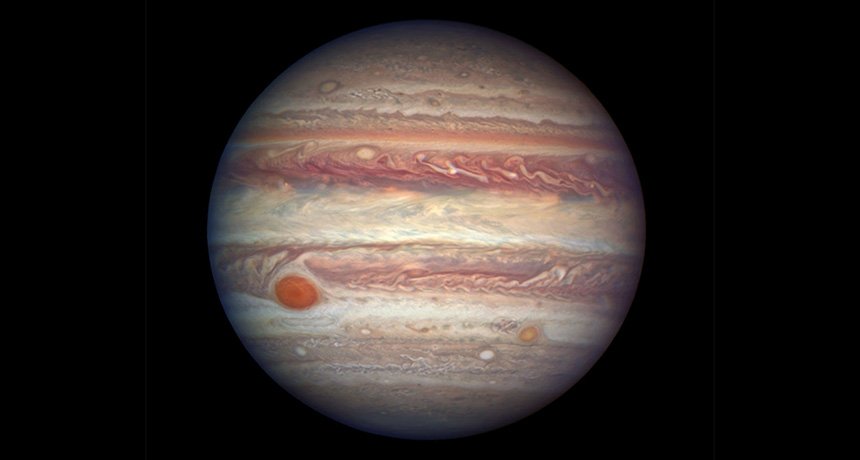
What is the name of the storm on Jupiter?
The Great Red Spot
The Spot
The Red
The Storm

What planet has thousands of beautiful, tiny rings made of chunks of ice and rock?
Neptune
Earth
Saturn
Mars

What planet rotates on a tilted axis and looks like it is laying on its side?
Earth
Mars
Pluto
Uranus

What planet has a Great Dark Spot similar to the spot on Jupiter and also has 8 moons?
Neptune
Earth
Mars
Uranus
Which of these statements BEST describes the Sun?
it has a shiny surface that reflects light.
It is a ball of hot glowing gas.
It is a hard, solid surface.
It has craters on its surface.
Do constellations move?
Yes, I've seen them move!
No, I am moving on Earth so they just look like they are moving.
We live in the __________________ hemisphere.
Northern
Southern
Earth
Mars

A constellation is a group of visible ____ that form a pattern when viewed from Earth.
stars
planets
patterns

