
 Worksheets
3/22 Probability TEST REVIEW
Total questions: 31
Worksheet time: 3hrs 35mins
What does it mean when an experiment is conducted WITH replacement?
WITH replacement means an item is placed back in the experiment; denominator stays the same
WITH replacement means an item is placed back in the experiment; denominator decreases
What does it mean when an experiment is conducted WITHOUT replacement?
WITHOUT replacement means an item is taken out of the experiment; denominator stays the same
WITHOUT replacement means an item is taken out of the experiment; denominator decreases.
You have a bag of 18 marbles. There are 4 blue, 6 green, 2 red, and 6 yellow. What is the probability of drawing a blue OR yellow?
66.7%
11.1%
55.5%
Not enough information

You roll a six sided die. What is the probability of rolling a 4 OR 5?
32
65
21
31
A fruit basket contains:
9 apples, 3 bananas, 7 oranges, 5 pears, and 1 grapefruit.
Kyle randomly chooses a fruit. What is the probably that he chooses an apple OR a pear?
60%
24%
44%
56%

What is the sample space for flipping a dime twice?
H, T
HH, HT, TH, TT
HH, TT
2
What is sample space?
a process with an uncertain result
a possible result of an action
a list of all possible outcomes of an event
a single outcome or group of outcomes

Using the picture of Gummy Bears, what is the sample space?
6 bears
orange, green, red, white, yellow
1/6
2 red bears

A coin is flipped and 6-sided die is rolled. Which of the following represents the sample space for the scenario?
H1, H2, H3, H4, H5, H6
H1, H2, H3, H4, H5, H6, T1, T2, T3, T4, T5, T6
T1, T2, T3, T4, T5, T6
H, T, 1, 2, 3, 4, 5, 6
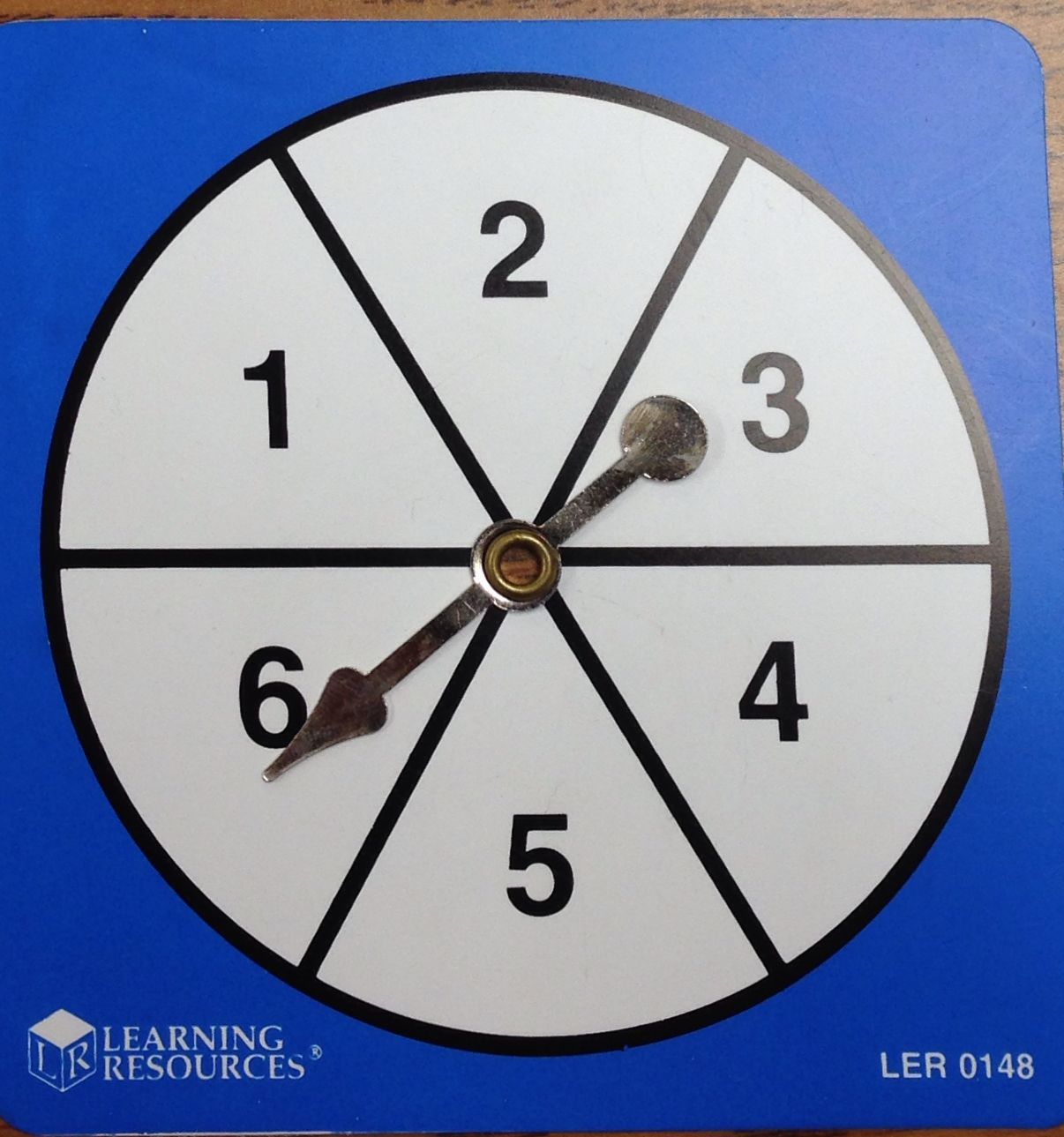
What is the probability of spinning an even number?
30%
33%
50%
67%
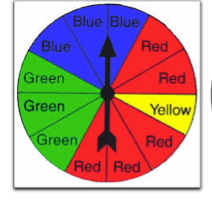
What is the probability of spinning yellow?
111
121
41
43

Find the theoretical probability of NOT landing on yellow if you spin the spinner.
81
87
1
7

What is the theoretical probability of landing on red?
43%
33.3%
40%
36%

You spin the spinner pictured here. How many possible outcomes are in the sample space?
4
8
1
6
What does it mean to have overlapping results?
There are multiple desired outcomes.
That a desired outcome falls into multiple categories and we must subtract the “overlapping” results.
Define empirical probability.
What WILL happen
What DOES happen
What SHOULD happen
What I WANT to happen
Define theoretical probability.
What SHOULD happen
What DOES happen
What COULD HAVE happened
What I WANT to happen

Shannon has a bag of jelly beans. She removed one jelly bean, recording the color, and then replaced it. She repeated the process 44 times and record her results in the table. What is the experimental probability of her selecting a red jelly bean?


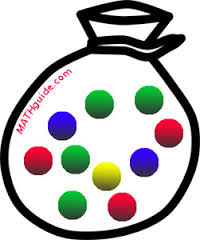
A bag of marbles has 4 green, 3 red, 2 blue and 1 yellow. What is the theoretical probability of pulling a red?
103
21
91
31

A single, 6-sided dice is rolled twice. What is the probability of getting a 6 on the first roll, then a number less than 5 on the second roll? P(6 AND less than 5)
32
365
91
361

You have a bag of 17 marbles. There are 4 blue, 6 green, 2 red, and 5 yellow. What is the probability of drawing a green marble, putting it aside, and then drawing a red marble?
683
28912
689
You roll a single, 6-sided dice three times. What is the probability of rolling an even number three times in a row? P(even AND even AND even)
1003
21
61
81

A coin and a single dice with the numbers 1 through 6 are tossed. What is the probability of flipping a tails and rolling the number 3?
121
41
81
21

A standard 52-card deck is shown. What is the probability of drawing a king? P(King)?
131
261
133
134

A standard 52-card deck is shown. What is the probability of drawing a face card? P(Face Card)?
133
132
131
134

A standard 52-card deck is shown. What is the probability of drawing a red king? P(red King)
263
261
131
134

Given a standard deck of cards, what is the probability of randomly choosing a 7 OR 8?
131
41
132
21

Given a standard deck of cards, what is the probability of randomly choosing a red card, putting it back AND then drawing a face card?
P(red AND face):
25%
50%
23.1%
11.5%

Given a standard deck of cards, what is the probability of randomly choosing a red OR black card?
50%
100%
25%
76.9%
A single, 6-sided dice is rolled 4 times. How many possible outcomes would be in the sample space?
24
10
4,096
1,296

