
 Worksheets
Unit 2 Test Review - PT and Electrons
Total questions: 42
Worksheet time: 1hrs 24mins
Valence electrons are the
outer most electrons in an atom
total electrons in an atom
USE THE PERIODIC TABLE
How many valence electrons does Phosphorus have?
31
5
15
4
How many valence electrons does Carbon have?
4
6
14
12
A conductor is something that ..
is heavy for its size
Which is expected to be the largest atom, based on its location on the periodic table?
Na
Mg
Ca
K
Which photon has the longest wavelength?
blue
red
infrared
ultraviolet
As you move down the periodic table atoms get bigger. This is because ___.
The atoms have more mass.
The atoms have more protons.
The atoms have more energy levels
The atoms have more nuetrons
Which is NOT correctly matched?
Na = alkaline earth metal
Ni = transition metal
N = nonmetal
Rn = noble gas
An electron falls from a high to low energy level. What happens?
the electron lands in the nucleus
the atom shrinks in size
a photon of light is released
a beam of radioactivity is released
Which element is most chemically similar to oxygen?
Carbon
Nitrogen
Fluorine
Phosphorus
Selenium
What is the distance between two peaks of a wave?
Wavelength
Frequency
Amplitude
Oscillation
The number of waves that pass a fixed point in 1 second.
Wavelength
Frequency
Amplitude
Oscillation
period
Elements that occur in vertical columns on the periodic table.
A horizontal row of elements in the periodic table
Found in group two of the periodic table; highly reactive
A subatomic particle that has a negative charge
Elements that occur in vertical columns on the periodic table.
Neutron
metalloids (semimetals)
groups
Proton
metalloids (semimetals)
Elements that occur in vertical columns on the periodic table.
an element that has both metallic and nonmetallic properties
not able to conduct heat or electricity, little to no metallic luster
found in group one of the periodic table; highly reactive
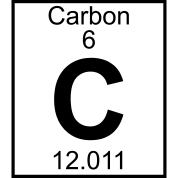

What period is Lead (Pb) in?
6
4
Metals
14
Light is given off from an atom when...
electrons move to a higher shell
electrons drop from a higher shell


The _______________ determines the color of visible light.
wavelength (and frequency)
speed
amplitude
particles of the medium
The low level energy state for an electron is called the ______________________.
excited state
low state
ground state
elevated state


The unknown emissions spectra belongs to the element
Hydrogen
Mercury
Neon
Sodium
What is the configuration for Carbon?
1s2 2p2
1s2 2s2 2p2
1s1 1s2 2s2 2p2
Which element is 1s2 2s2 2p6 3s2 3p6 4s2 3d7?
Cobalt
Nickel
Manganese
Chromium
Choose the correct configuration for Zinc
1s2 2s2 2p6 3s2 3p6 4s2 3d10
1s2 2s2 2p6 3s2 3p6 4s2 3d9
1s2 2s2 2p6 3s2 3p6 3s2 3d10
1s2 2s2 2p6 3s2 3p6 4s2 3d8
What does Pauli exclusion principle state ?
states that each electron occupies the lowest energy orbital available
states that -no two electrons in the same orbital can have the same spin
states that single electrons electrons with the same spin must occupy each-energy orbital before additional electrons with opposite spins can occupy the same orbitals
What is the maximum number of electrons that an s orbital can have?
1 electron
2 electrons
3 electrons
4 electrons
How many electrons can the d sublevel hold?
8
10
2
4
How many electrons can be found in a p sublevel?

Which element has the highest electronegativity?

